Explore the best places
Heritage in Portugal


Núcleo de Marcos Miliários de Antas
- heritage
Antas
4940-682, Rubiães
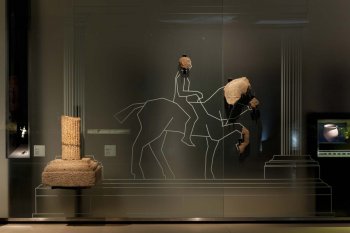
This is just one of the 14 milestone markers that exist in the municipality of Paredes de Coura. They are located on the road that led to Braga, then called Bracara Augusta. Only 5 of the markers show the number of miles, because, while initially used to measure distances, they later served to record the honorary titles of various emperors, their affiliations, and public offices, thus explaining the appearance of several milestones in the same location.
Igreja Românica de Rubiães
- heritage
EN201
4940-686, Rubiães
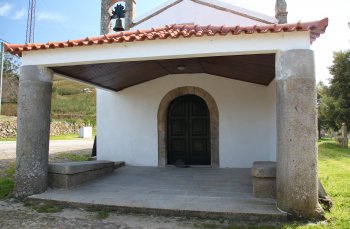
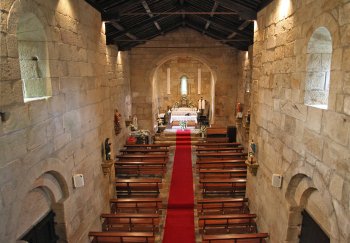
The most notable feature of the original Romanesque church is the portico with three archivolts, whose arches rest on columns with capitals ornamented with zoomorphic motifs. The central columns are formed by well-sculpted human figures.
Eira Comunitária e Moinhos de Porreiras
- heritage
Porreiras
4940, Porreiras
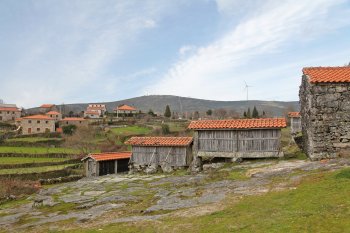
A group of eight granaries has become a true postcard image for visitors to Paredes de Coura. Anyone passing by can't help but take a picture of this threshing floor, so perfectly integrated into the greenery and rural architecture of the region. It is located seven kilometers from Paredes de Coura.
Museu Regional de Paredes de Coura
- heritage
Rua 25 de Abril, 3
4940-526, Paredes de Coura
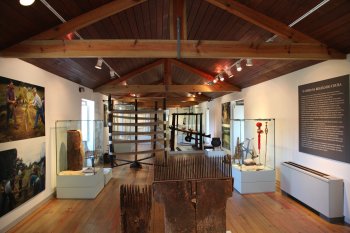
Located in the 18th-century Casa da Veiga, this space aims to promote the study, preservation, and dissemination of the municipality's cultural heritage, especially its artistic, archaeological, and ethnographic heritage.
Honra de Barbosa
- heritage
Rua de Honra de Barbosa
4560, Rans
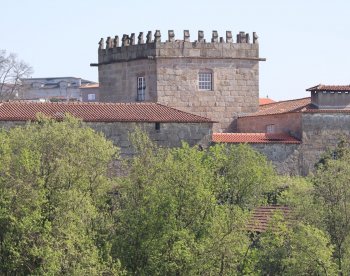
This is a medieval complex comprising a manor house, tower, residence, pillory, gallows, barracks/prison, fountains, and chapel. This architectural ensemble constitutes an important testament to the genesis and evolution of the manor house in Portugal from the 12th century onwards.
Percurso Pedonal das Varandas de Ferro
- heritage
Centro pedonal de Penafiel
4560, Penafiel
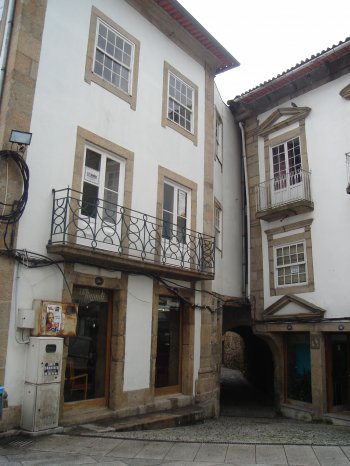
A route along the aforementioned streets, where on the right-hand side you can see well-preserved houses, notable for their iron balconies.
Anta de Santa Marta / Dólmen da Portela
- heritage
Portela do Monte
4560, Santa Marta
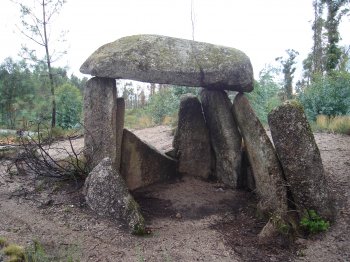
Prehistoric granite dolmen, of which only the chamber remains, with the covering slab supported by three upright stones. It is worth noting the existence of four more upright stones, which are fragmented. Note that Neolithic peoples inhabited this area, leaving traces of dolmenic and castro cultures.
Quinta da Aveleda
- heritage
Rua da Aveleda, 2
4560-570, Penafiel
It is the most well-known and important farm in the municipality, marking the landscape with its vineyards. Of particular note is the Quinta's manor house (from the 18th century) and the romantic garden that surrounds it, where you will find the Torre das Cabras (Tower of the Goats), the Tea House (in Victorian style and decorated internally with Portuguese faience), the Fountain of the Four Seasons (executed by Master João da Silva), ancient trees and, above all, the Janela da Reboleira (Reboleira Window), in Manueline style, which is a national monument.
Mosteiro do Salvador de Paço de Sousa
- heritage
Largo do Mosteiro
4560-347, Paço de Sousa
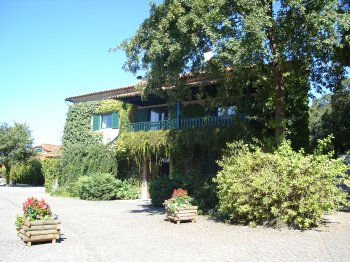
The first references to the monastery date back to 994 in the will of Abbot Randulfo, fleeing a monastery further south during the incursions of Almanzor. Although the original church does not correspond to the current Romanesque temple, its architecture left its mark on the construction that would be erected in the 13th century, thus denoting a transitional style from Romanesque to Gothic. King Henry donated the monastery to the Ribadouro family, from which Egas Moniz came, who, in turn, bequeathed half of his fortune to the monastery to be buried there. The church contains the tomb of Egas Moniz, …
Museu Municipal de Penafiel
- heritage
Rua do Paço
4560-485, Penafiel
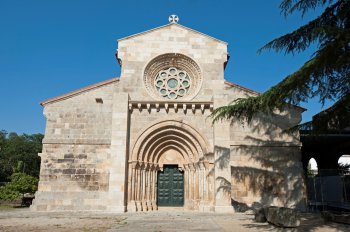
The museum was created in 1948 on the initiative of Abílio Miranda, its first director. It has diverse archaeological collections constantly enriched with artifacts from excavations in the municipality, which began to be gathered at the end of the 19th century. Visitors can enjoy the five thematic rooms of the permanent exhibition dedicated to Identity, Territory, Archaeology, Crafts, and Land and Water.