Explore the best places
Results for check main MAKEMUR.com how to get out of jail fast for money in Portugal


Herdades da Frupor
- hotels
Brejo Redondo - Brejão
7630-569, Brejão
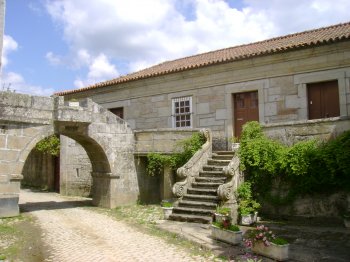
The Manors Of Frupor lies in the Brejão, a small village of rural and nature located in the Natural Park of Southwest Alentejo, near the beaches of Carvalhal and Zambujeira of Sea. Inserted in an agricultural property, with 3 villas, completely independent, with modern standards of comfort, but with a rustic and traditional appearance. The houses are surrounded by landscaped gardens, which open out onto private patios. This is a unit that invites to full rest, in contact with nature.

Monte Filipe Hotel & Spa
- hotels
EN 245, Alpalhão
6050-048, Alpalhão
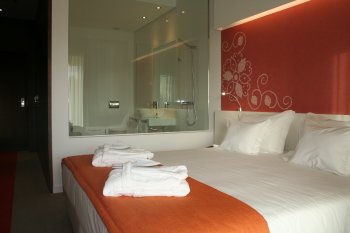
Opened in 2013, mount Philip Hotel & SPA is a modern accommodation that stands out for its harmonious environment with the surrounding landscape. Its decoration based in light tones, and the comfort of its 48 rooms, make this special hotel, joining biological swimming pools, a restaurant of regional flavors and a spa. This accommodation is associated to the Geopark Naturtejo, which makes it possible to enjoy activities related with nature.
Castelo de Penela
- heritage
Rua do Castelo, 5
3230-280, Penela
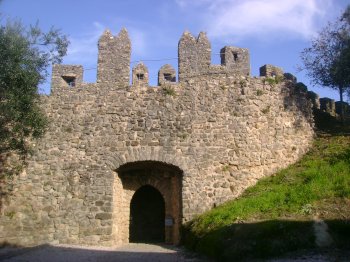
Castle overlooking the town, where the Church of São Miguel, dating from the 15th century, and a set of anthropomorphic graves from the late Middle Ages stand out. It has a polygonal, irregular shape and is made up of walls and several towers from the 15th and 16th centuries. It preserves the Vila Door and the Betrayal Door, the latter with Moorish influences. This is the second-largest castle on the Mondego defensive line.
Museu Francisco Tavares Proença Júnior
- heritage
Largo Doutor José Lopes Dias, 1
6000-462, Castelo Branco
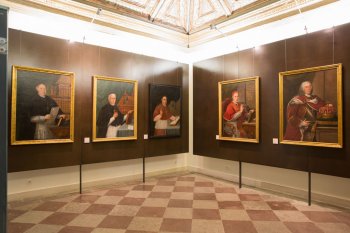
Situated in the former Episcopal Palace since 1971, it was created in 1910 in the Convent of the Capuchos, by the archaeologist and personality of several interests in science and the arts for whom it bears the name. The original organization was based on the founder's archaeological collection, later reinforced with pieces from the Episcopal Palace and with archeology spoils and the typical embroidered bedspreads. In the temporary exhibitions, works of textile art, sacred art and ethnography stand out.
Casa da Boa Fonte
- hotels
Rua da Fonte, 234
4990-655, Ponte de Lima
The House of good source represents the typical constructions for Minho of the twentieth century, without forgetting the traditional rain-fed. All the remodeling of the space was carefully thought out, in order to maintain the original, without forgetting the comfort necessary for a pleasant stay. Its location gives prominence to the shrine of Lord do Socorro. In addition to the swimming pool, guests have a wide range of leisure activities.
Igreja e Claustro do Convento de São Francisco
- heritage
Rua 31 de Janeiro
2000-142, Santarém
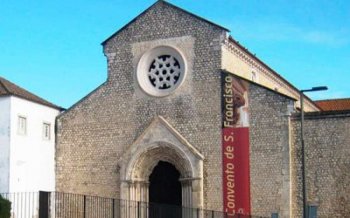
Built in the 13th century, it underwent several modifications over the years, its structure bearing marks of various styles such as Gothic, Baroque, Manueline, and Renaissance. Inside, one can observe high-quality decorative elements such as the Renaissance arch of the Chapel of Saint Anne or the Mannerist design of the Chapel of Souls. In the central nave, the upper choir stands out, where the tomb of King D. Fernando is located.
Mamoa de Madorras
- heritage
CM1262
5060-408, São Lourenço de Ribapinhão
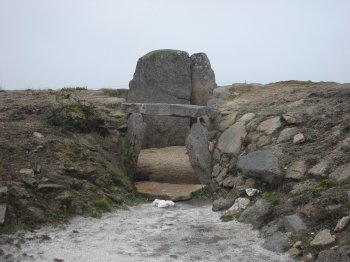
With around 30 meters in diameter and around two meters in maximum height, it is a prehistoric tomb built around 6000 years ago. It was discovered in 1912 by Albino Lopo and was first excavated between 1983-1988. It stands out for its monumentality and state of conservation, which led to some scientific interventions that provided innovative and important results for the knowledge of the communities that built this imposing tomb and inhabited the region.
Marco Miliário de Cervos
- heritage
Arcos
5470-051, Cervos
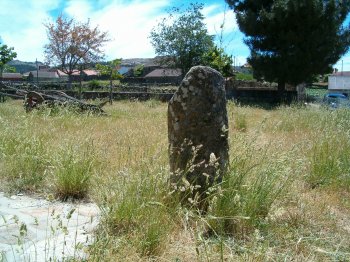
Milestone anepígrafo from Pindo, arches, later being transferred to the school garden of deer. It is a medium-grained granite cylinder the rude, well cut out about one meter tall. Was fractured at the top, where there seem to be traces of letters. It is believed that signaled the Via XVII of the Antonine itinerary, which connected Bracara Augusta (Braga) to Asturica Augusta (Astorga) through Aquae Flaviae (Keys).
Muralhas de Setúbal
- heritage
Centro Histórico de Setúbal
2900, Setúbal
Setúbal was once surrounded by two belts of walls. The first, called Muralha Afonsina for being constructed during the reign of King D. Afonso V, traced out the boundaries of Setúbal. This wall was made to protect this fishermen community from the attacks of pirates. The second wall was constructed during the reign of King D. João IV and was made to protect the village that expanded outside the first walls.

Quinta da Macieira
- heritage
Rua Visconde do Rosário, 9
5400-727, Redondelo
This manor house with rectangular plan and two floors has an attached chapel which was constructed under the command of Manuel Alvares Calvão, between 1747 and 1759. It has a peculiar balcony laying on one side in a high wall and on the other side is settled on a thick column and on the pathway. Its granite composition also stands out. This is a private property recently classified as a Building of Public Interest.