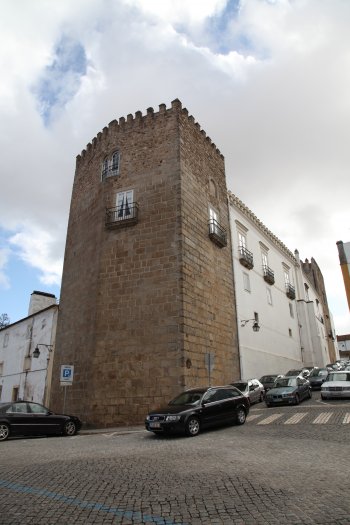
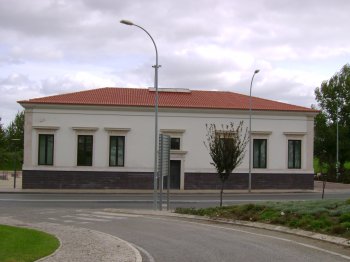
This is a large, sober construction from the XVII century, ordered by the minister António de Sousa Macedo, well integrated at the urban mesh. It started in a primitive nucleous where the chapel stands. The palace developed occupying the entire quarter, having the main façade facing north. It keeps panelling of glazed tiles from the XVII and XVIII centuries.
Built in the 17th century, is currently busy for various purposes. The entrance portal is surmounted by a triangular pediment stopped. The large building has two floors ripped by Bay Windows with a uniform pace.
Building from the second half of the XVII century that, since the earthquake of 1755, has been suffering works of repair and conservation, with a conception of romantic interior quite visible in the covering glazed tiles, painted ceilings and walls revetment. From the XVII century construction there is still the noble façade, at north, where the portal stands out.
This is a sixteen hundreds building that although it is in a ruined stage, symbolizes the aristocrat environment in this region. It stands out the main façade monumentality, the colonnade above the garden and the 17th century glazed tiles.
19TH-century building where they worked, between 1887 and 1893, the first town of Loures. Currently, the original Palace adossa a contemporary building. After suffering restoration and expansion, houses the Municipal Assembly.