Explore the best places
Results for PROBLEMGO.com d Net-Opname vun engem Strofverfahren kafen in Portugal


Castelo Novo
- country
- heritage
Castelo Novo
6230-160, Fundão
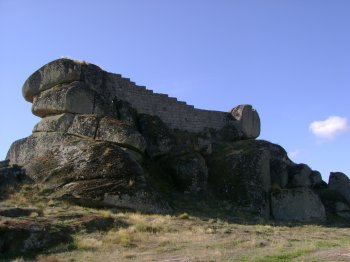
Village located at an altitude of about 700 meters, at the foot of the Serra da Gardunha, where traces of occupation in the Roman period are visible. In this locality stand out the medieval castle, in ruins, with the keep, the Manueline pillory, the D. João V fountain, the Igreja Matriz, of Pombaline design, several manor houses and Lagariça. The miniatures in wood and iron, lace and regional embroidery constitute the local handicraft.
São Gregório
- country
- heritage
São Gregório
7150, Rio de Moinhos
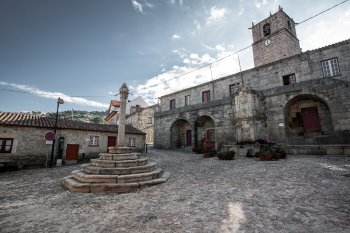
Village created in the 15th century, whose lands were owned by D. Luís Galvão Coutinho Freire. Its populations lived, essentially, at the expense of agriculture, given the fertility of the land for cultivation. Since it was close to Vila Viçosa, Estremoz and Borba, abandonment became inevitable. It had almost 40 inhabitants, but in the 80s it was abandoned, until, in 1998, it was acquired and recovered to give rise to the Village Tourism.
Jardim Botânico de Lisboa
- country
- leisure
Rua da Escola Politécnica, 58
1250, Lisboa
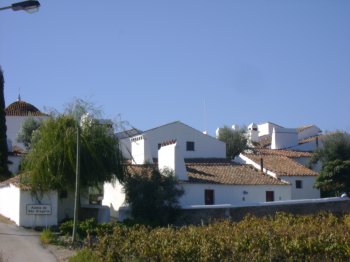
Beginning in 1873, it was considered to be, during a long time, the best Botanic garden in Europe. The space, with 4ha, is quite picturesque with its staircases in wood and ashlar masonry. You can find here varied rare or endangered botanic species. The walk through the garden is made on earth roads sided by leafy trees. The Infante D. Luís Geophysical Institute and the Astronomic Observatory are at the garden’s upper level.
Capela de Nossa Senhora da Encarnação
- heritage
Rua Doutor Roberto Alves, 52
4520-220, Santa Maria da Feira
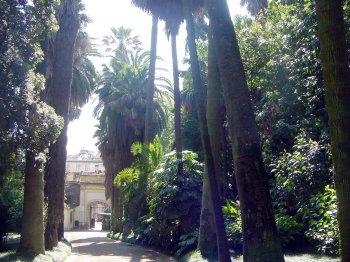
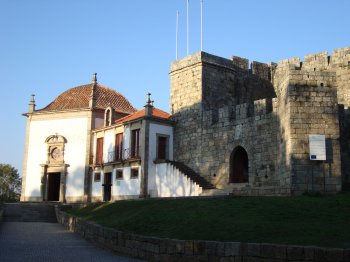
This chapel is attached to the walls of Feira Castle, having been built in 1656 by order of the Countess of Feira, D. Joana Forjaz Pereira de Meneses e Silva. It is a learned building, with a hexagonal section, revealing the influence of important centrally planned chapels in the region. Inside, the floor forms a radial design from the center, and there are gilded altarpieces on five walls. Attached to the chapel is the chaplain's house.
Igreja Matriz de Arcos de Valdevez
- heritage
Praça Municipal
4970-437, Arcos de Valdevez
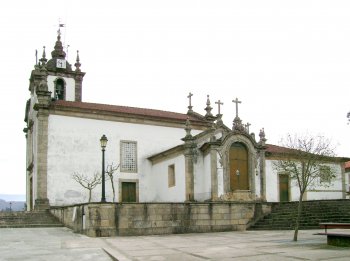
This church has a plan in Latin cross and one only nave. The carving on the main altarpieces is inserted on the National style. The chapels’ covers with coffers in painted carving were reproduced in the nave tunnel vault. It is worthy to mention the candleholders angels, in D. João V style, the polychrome wooden frontal representing “The Last Supper” and the panel, also polychrome, representing the hell on the Gospel collateral altarpiece.
Igreja e Claustro do Convento de São Francisco
- heritage
Rua 31 de Janeiro
2000-142, Santarém
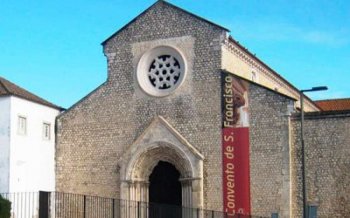
Built in the 13th century, it underwent several modifications over the years, its structure bearing marks of various styles such as Gothic, Baroque, Manueline, and Renaissance. Inside, one can observe high-quality decorative elements such as the Renaissance arch of the Chapel of Saint Anne or the Mannerist design of the Chapel of Souls. In the central nave, the upper choir stands out, where the tomb of King D. Fernando is located.
Torre de Menagem de Leiria / Castelo de Leiria
- heritage
Largo Doutor Manuel de Arriaga
2400, Leiria
The Torre de Menagem (donjon) was built by D. Dinis order in 1324. The tower and the enclosed space were used as royal prison from the XIV to the XVIII century. The inside, completely remodelled with a modern iron and wood structure, lodges an interesting museological nucleus, which illustrates the medieval military techniques and the fighting instruments. The castle can be also known through a series of audiovisual documents.

Convento e Igreja de Santo António
- heritage
Terreiro de Santo António, 6
7920-020, Alvito
This building was built by Manuel Lopes, first judge of the Confraria de Santo António, and by D. João Lobo, eighth baron of Alvito. Inside it is possible to observe the 17th century tile ceiling, highlighting the flowers and birds. Also, noteworthy is the mural painting on the chancel's barrel vault. This painting depicts an episode from the life of the Patron Saint. It is also worth highlighting the Mannerist pictorial set of oil on wood.
Quinta da Penha Verde
- heritage
Estrada da Pena
2710-445, Sintra
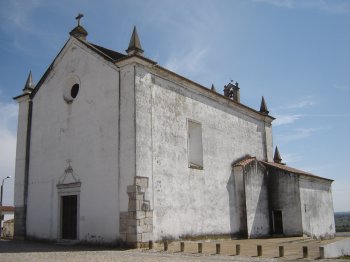
This residential estate was built by orders of D. João de Castro, viceroy in India and afterwards it suffered profound changes. It is possible to find several chapels throughout the estate, one of which is named Nossa Senhora do Monte and it is a construction under the Renaissance style, from 1542. It has a circular plan and on its inside it is possible to see six columns with capitals and ashlars in tiles from the XVII century.
Ruínas do Castelo de Moreira de Rei
- heritage
Moreira de Rei
6420-506, Trancoso
This Fortress construction is placed on the 18th century, even though some historians refer the existence of buildings previous to the Moorish conquest on the 10th century. It is said that Moreira do Rei owes it name to D. Sancho II who was here installed before leaving to the exile in Toledo. Placed at 800 metres high and surrounded by cliffs and rocks, only a few traces from this castle still exist today.