Explore the best places
Heritage in Portugal


Santuário da Nossa Senhora do Pilar
- heritage
Monte do Pilar
4830-343, Póvoa de Lanhoso
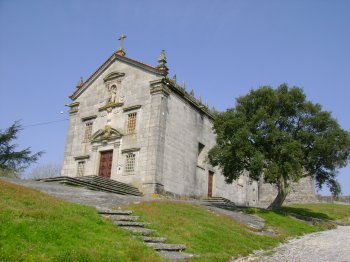
Chapel located next to Lanhoso Castle, composed of five Stations of the Cross chapels, representing some stages of the drama of Golgotha. The image of the Saint originates from the Sanctuary of Monte do Pilar, in Vila Nova de Gaia, arriving in Póvoa de Lanhoso through the devout André da Silva Machado, a wealthy merchant and native of Valdemil, in the year 1680.
Ponte de Mem Gutierres
- heritage
EM599-1
4830, Esperança
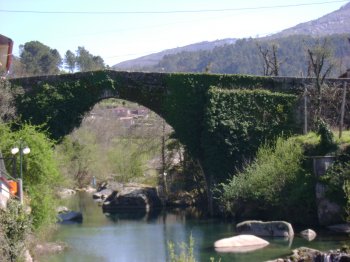
A bridge with a trestle profile resting on a high, broken arch. The railings are made of granite masonry and the pavement has been asphalted.
Igreja de Fontarcada
- heritage
Avenida Padre David Novais
4830-198, Fonte Arcada
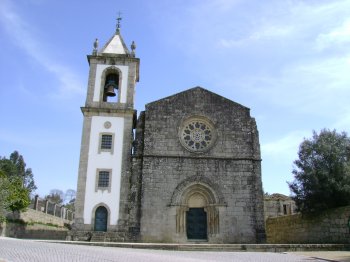
Romanesque temple, built in the 12th century as part of a convent erected in 1067, constructed of granite ashlar. It features a portico with three archivolts supported by six small columns with sculpted capitals and projecting abaci. The rose window on the main facade is Gothic. The interior has a single nave, covered with wood, and a round, vaulted chancel with two bays, organized on two levels.
Castro de Lanhoso
- heritage
Rua João Carvalho, 155
4830-513, Póvoa de Lanhoso
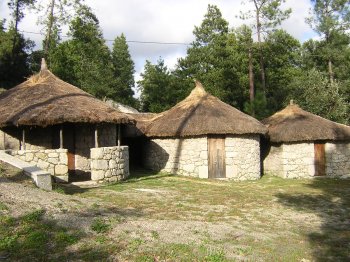
A settlement from the Iron Age (1st millennium BC - 4th century AD), this archaeological site is of great interest and has been the subject of successive interventions. It consists of the ruins of fortified settlements located at the northern foot of the hill on which Lanhoso Castle stands, now reconstructed and well preserved. Among the finds discovered, the set of 3 gold torques (Archaic Golden Jewels – distinctive objects of military leaders) worked with filigree applications stands out, anticipating the local art of gold working by more than 3,000 years. The most significant find was the Celtic Helmet, a …
Castelo de Póvoa de Lanhoso
- heritage
EN205, 560
4830-597, Póvoa de Lanhoso
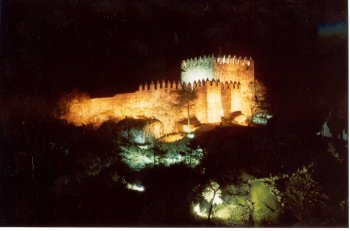
This military defensive structure is located in a mountainous area with an impressive panoramic view. Traces of various types of construction within the tower attest to its longevity. It houses the Lanhoso Castle Museum.
Cristo Rei de Castelo Rodrigo
- heritage
Serra da Marofa
6440, Figueira de Castelo Rodrigo
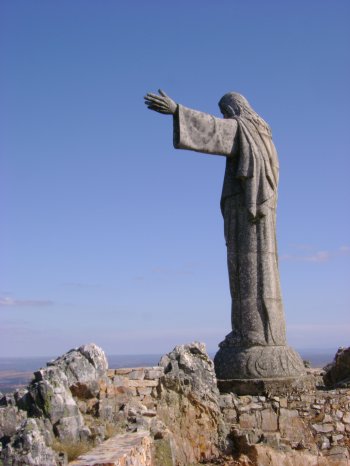
Statue located in the Serra da Marofa mountain range, at an altitude of approximately 977 meters. The magnificent views offered by this location are a highlight.
Cais de Barca D'Alva
- heritage
Cais de Barca D'Alva
6440-071, Figueira de Castelo Rodrigo
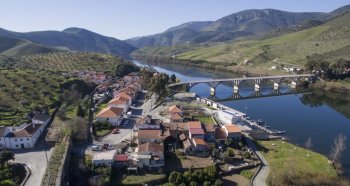
A small pier that can be a starting point for a cruise on the Douro River, or simply a nice place for a stroll.
Igreja Matriz de Escarigo / Igreja de São Miguel
- heritage
Largo da Igreja Matriz
6440-091, Figueira de Castelo Rodrigo
This Gothic temple has a longitudinal plan with a nave, a narrower chancel, and attached sacristy, bell tower, and belfry. It features lateral buttresses, a decorated cornice, and a small porch on the south facade. What distinguishes this church are the 16th-century Mudéjar ceilings, which employ stylized geometric and vegetal decorative themes.
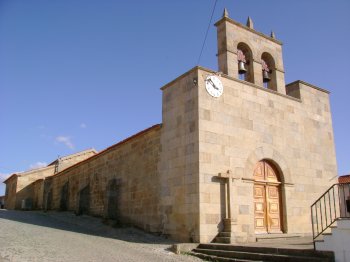
Cisterna em Castelo Rodrigo
- heritage
Rua da Cadeia, 5
6440, Figueira de Castelo Rodrigo
A cistern with an irregular rectangular plan, featuring three blank facades and a main facade pierced by two portals, without a roof. The interior presents a single space intended for water storage.
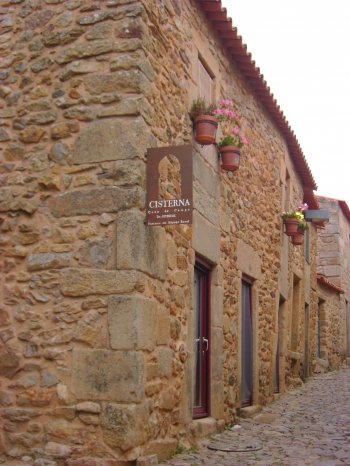
Museu da Casa de Freguesia de Escalhão “Artes e Ofícios”
- heritage
Rua de Barca d’Alva, 14
6440-072, Escalhão
This museum displays a collection of objects representative of the daily life of a rural community, namely objects related to rural work, traditional crafts, domestic life, religion, and leisure.