Explore the best places
Heritage in Portugal


Castelo de Alegrete
- heritage
Alegrete
7300-126, Portalegre
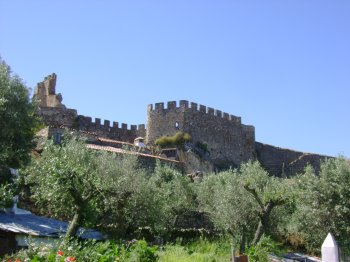
A castle located in a border area that was the scene of many war campaigns. The construction of the wall, reinforced with semi-cylindrical towers, was the result of a deal between the people of Alegrete and King Dinis: the residents would build the wall, and the monarch would grant the charter. In addition to repopulating the village, Dinis built the keep and, in 1319, continued the work begun by his father, Dom Afonso III. The old town clock stood at the main gate of the old fence.
Convento do Beato António
- heritage
Alameda do Beato, 40
7300-042, Portalegre
Nothing remains of the original church, completed in 1389. The cloisters and other outbuildings were modified in the 15th and 16th centuries, and they also underwent several alterations in the 18th century. From the former 18th-century convent, a portion of the ground-floor cloister survives today.
Mosteiro de São Bernardo
- heritage
Avenida George Robinson
7300-070, Portalegre
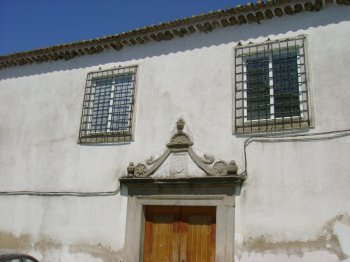
Built in 1530, the temple underwent several alterations, mainly during the 18th century. From the original design, it retains the giants that support the main chapel. It features a round-arched portico with cherubs. Inside, one can see the tomb of Jorge Melo, dating from 1540, one of the most sumptuous in Portugal.
Casa-Museu José Régio
- heritage
Rua José Régio
7300-024, Portalegre
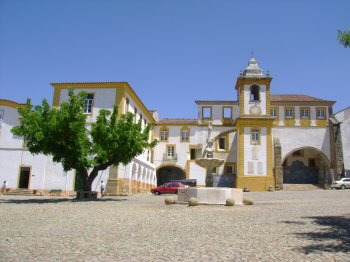
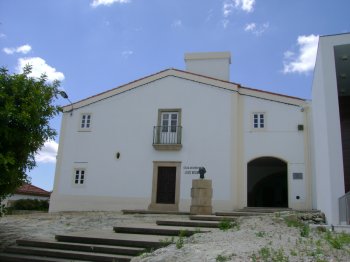
The house where José Régio lived for 34 years, enrolled at the Mouzinho da Silveira High School in Portalegre. It began as a boarding house and was gradually acquired by the poet until he became the only guest. Here, you can admire some of the pieces the poet collected throughout his life. Among the collections, religious art sculptures and regional crafts stand out.
Sé de Portalegre
- heritage
Largo do Município
7300-110, Portalegre
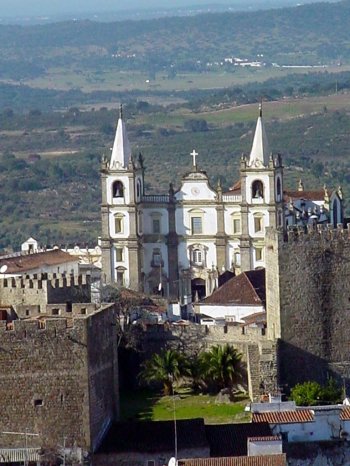
Built in the 16th century, it underwent profound changes, particularly to the exterior, during the 18th century. The altarpieces, dating from the 16th and 17th centuries, form the largest collection of Mannerist paintings in Portugal. The cloister, dating from the 18th century, is a highlight.
Museu da Tapeçaria de Portalegre Guy Fino
- heritage
Rua da Figueira, 9
7300-231, Portalegre
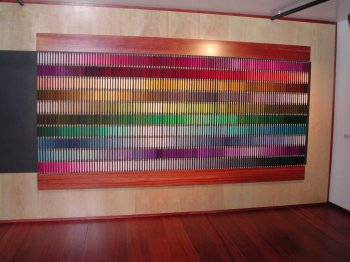
A museum dedicated to the presentation, conservation, and study of the Portalegre Tapestries. The name Guy Fino honors the person who actively contributed to Portugal's inclusion among the world's leading tapestry producers. On the ground floor, you can learn about the history of the Portalegre Tapestries manufacturing process and their technical execution techniques; on the upper floor, you'll find exclusive tapestry works presented chronologically.
Santuário de Nossa Senhora da Penha
- heritage
Alto de São Tomé
7300-051, Portalegre
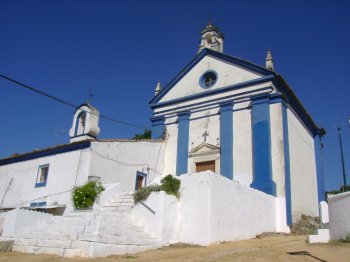
The Sanctuary of Our Lady of Penha features a 17th-century Baroque chapel, consisting of a single nave, a chancel, and a bell tower. Inside, the frescoes are a highlight.
Porta da Devesa
- heritage
Rua 5 de Outubro
7300, Portalegre
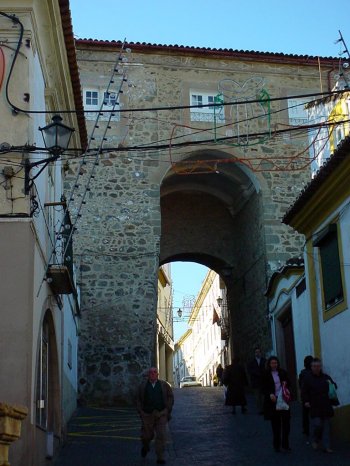
The Porta da Devesa dates back to the 13th and 14th centuries and forms an archway over Rua 5 de Outubro. Its name comes from the fact that it separated the town proper from the fertile countryside that followed it at the time, or even because it was the terminus of that same town.
Museu da Lourinhã
- heritage
Rua João Luís de Moura, 95
2530-158, Lourinhã
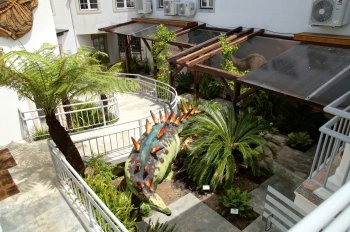
Founded in 1984 by the Lourinhã Ethnology and Archaeology Group, the Lourinhã Museum boasts the largest collection of Upper Jurassic dinosaur fossils in the Iberian Peninsula and one of the most important in the world.
Convento de Santo António
- heritage
Praça Coronel António Maria Baptista
2530-125, Lourinhã
The National Monument classification covers the former Convent of Santo António da Lourinhã, including the Church of Santo António, also known as the Church of the Convent of Santo António da Lourinhã and the Church of Our Lady of the Annunciation. The monument is in Mannerist, Baroque, Rococo, and Neoclassical styles. The decoration is primarily Baroque in inspiration, except for the altarpieces, which are Neoclassical.