Explore the best places
Results for MAKEMUR.COM comment sortir de prison sans payer la totalité in Portugal


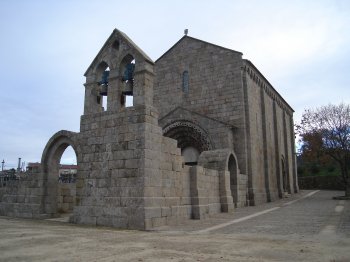
Mosteiro de São Pedro de Ferreira
- heritage
Rua do Cruzeiro, 124
4590-827, Ferreira
The monastery of Ferreira is a typical example of an ecclesiastical establishment of agrarian roots. It is a remarkable rural Romanesque construction dating from the last quarter of the 12th century. The facade is torn by a portal that is unparalleled in the Cathedral of Zamora. Its architectural ensemble is part the Church of S. Pedro de Ferreira, being your frame a single copy in the country. The interior is just one ship, with more than 15 meters in height. A monument of a unique beauty and a magnificent surrounding landscape.
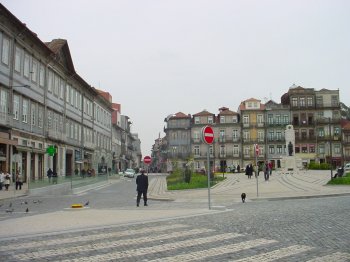
Conjunto urbano na Rua de Cedofeita e Praça Carlos Alberto
- heritage
Rua Cedofeita, 1
4150, Porto
The Cedofeita Street was built into structure as a main thoroughfare of the walled city and, in 1784, João de Almada e Melo ordered to cut through the Quinta da Torrinha. Most of the constructions are from the XVIII, XIX and XX centuries, although you can still find some buildings from the XVII century. Balconies, terraces, irons, glazed tiles, ashlars-work, ceramics and mansards are some the architectonical elements that contribute to particularize this thoroughfare, which has equally a big historic and cultural importance.
O Bairro Alto nos Caminhos do Barroco
- heritage
Bairro Alto
1200, Lisboa
Organized by the Centro Nacional de Cultura, this walk takes you to know the Portuguese Baroque, characterized both for the sobriety of the architectonical space as for the exuberance of its decoration. The golden chromium plated woodcarving, the glazed tiles, the decorative paintings, the stucco, the furniture and, generally, the plastic and decorative arts, combine to create the ostentation of the Baroque. The references of this tour are notable exemplars of the Portuguese art (civil and religious architecture), through which you can be integrated in the spirit of a time that marked the XVII and XVIII centuries.
Holmes Place
- leisure
Rua do Centro Empresarial, Edifício 9 - Beloura Office Park
2710-444, Sintra
Although it is set in a luxury condo, this healthclub is accessible to anyone who wants to take care of body and mind. Enjoys excellent natural lighting and a relaxing and familiar environment, and has 3,500 m2 area spread over 3 floors, gym with cardiovascular and weight training equipment with views of the serra de Sintra, studios with more than 100 weekly group lessons and Zensations SPA, among other facilities. The smaller ones can also count on a series of activities prepared especially for them.
Bifes de Atum com Tomate
- leisure
Vila Real de Santo António
8900, Vila Real de Santo António
O atum é um peixe rico em proteínas, nomeadamente em Ómega 3, essencial ao bom funcionamento do coração e do cérebro. É um prato tão vulgar no Algarve que em terras do Sota-vento, onde é particularmente apreciado, chamam-lhe o "porco-do-mar", por não haver praticamente nenhuma parte do atum que não sirva de alimento.
Avô
- country
- heritage
Avô
3400, Avô
The name of this village originated in Couto de Avão, because there was no bridge over the Alva River and the Moura Stream, so the old town could only be entered by fording (ad vadum). The warrior-poet Brás Garcia Mascarenhas, author of the epic poem "Viriato" (18th century), lived here. This land was inhabited by the Romans, perhaps the founders of the ruined castle. Among the monuments, the main church, presumably commissioned by King Afonso Henriques, is noteworthy, as is a 16th-century manor house, a pillory, and a chapel.
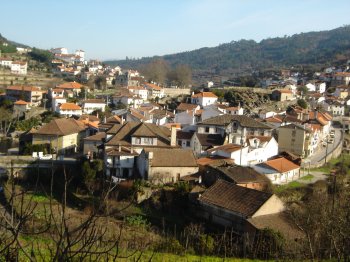
Bobadela
- country
- heritage
Bobadela
3405, Bobadela
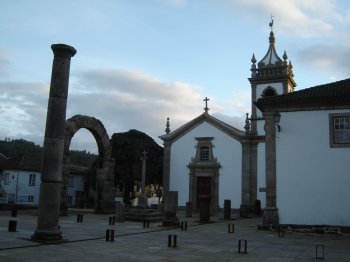
The siege of the "municipium" in the roman days, in the 1st to 4th centuries bC, and later on th siege of a small mdieval parish. Its architectural heritage includes the Roman Arch, a National Monument, the pillory, the mother church, the roman amphitheatre, the roman bridge of Ribeira de Cavalos, the chapls of Our Lady of Luz (Light), Our Lady of Socorro (Help) and of Saint Sebastião, the menhir of the Pimheiro dos Abraços and several manors. A special note to the museum at the Godinhos houses, with a manuelin window, as well.
São Gião
- country
- heritage
São Gião
3400-655, São Gião
A very old village located on the foothills of the Serra da Estrela, it has a section of Roman road. The main church, known as the Catedral das Beiras, stands out. It is a large temple with gilded carvings, a ceiling with 102 paintings, and liturgical vestments. Nearby, the "Curral dos Romanos," also known as the Dólmen da Sobreda (Property of Public Interest), a curious olive press from the medieval period, in the town of Rio de Mel, and the Penedo da Moura, a natural cave, are worth a visit.
Casa-Museu Ferreira de Castro
- heritage
Rua Escritor José Maria Ferreira de Castro
3720-189, Ossela
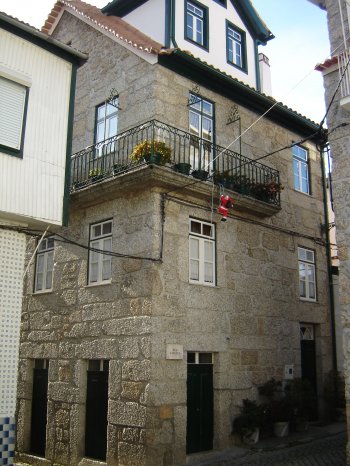
This is the former home of writer José Maria Ferreira de Castro (1898-1974), author of books such as "A Selva", which describes the drama of emigrants and the exoticism of the Amazon jungle, and "Volta ao Mundo", a description of his almost two-year journey shortly before the Second World War. This building, dating from the mid-19th century, is now a museum that brings together the writer's books, manuscripts and personal objects, including the shoes and suitcase that accompanied him on this trip around the world.
Hotel de Moura
- hotels
Praça Gago Coutinho, 1
7860-010, Moura
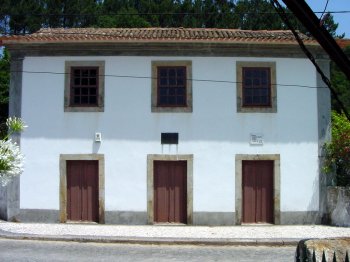
House dating from 1870, situated in the Centre of Moura, with significant historic value, architectural and artistic. Was the former convent of the hospitaller order of St. John of God, founded in the 17th century, and adapted for Grande Hotel de Moura in the year 1900. All of the accommodations feature air conditioning, television and bathroom. The Hotel comprises 36 rooms, including single, double and triple rooms, and 3 apartments, 2 1 T2 and T1, with living room, kitchen or kitchenette and respectively two and one quarter.