Explore the best places
Heritage in Portugal


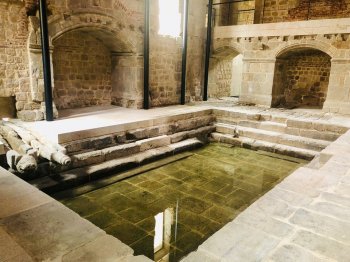
Termas Romanas de São Pedro do Sul / Balneário Romano
- heritage
Rua Doutor António José de Almeida
3660-692, Termas de São Pedro do Sul
On one of the banks of the Vouga River, next to the new thermal baths of São Pedro do Sul, lies one of the oldest Roman thermal baths, making it one of the most important archaeological monuments from this period. It is a Roman thermal area composed of a tepidarium, a caldarium, a sudatorium, and a laconicum (dry greenhouse), comprising a set of five pools. It is also known as the Dom Afonso Henriques Pool.
Palácio de Reriz
- heritage
Praça da República
3660-442, São Pedro do Sul
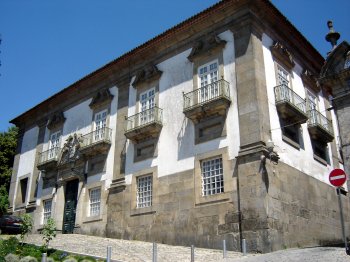
The Reriz Palace was built in the 18th century and is characterized by its grated facades and stonework. The main facade features four rectangular windows, dominated by broken pediments and protected by grated balconies. The manor's gardens are located in the inner courtyard.
Convento dos Franciscanos / Convento de São José
- heritage
Largo de São Sebastião
3660-441, São Pedro do Sul
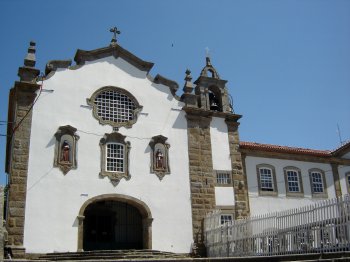
A former monastery founded in 1725 to serve as a hospital and hostel for the friars of the Third Order who used the thermal baths. The convent area consists of the temple, cloister, and monastic outbuildings. Of the former monastery, only the church remains, with the interior featuring tiles and the image of the Virgin and Child. It has a working carillon and is occasionally open for classical music and traditional regional music concerts.
Castro do Cárcoda
- heritage
Carvalhais
3660-075, Carvalhais
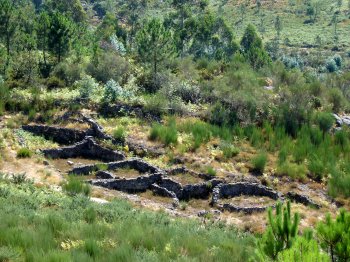
The hillfort is located midway up the slopes of the Serra da Arada, covering an area of over seven hectares and rising 610 meters above sea level. Carvings of the basic rock art typology of the Northwest Peninsula were discovered, concluding that it was inhabited between the 7th century BC and the 4th century AD. Remains of over 25 houses with circular, oval, and rectangular plans remain. The settlement was defended by a triple wall with a perimeter of 660 meters.
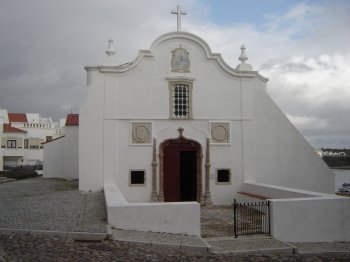
Igreja de Porto Covo
- heritage
Largo Marquês de Pombal
7520, Porto Covo
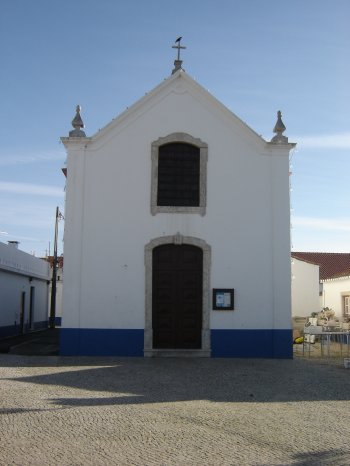
Church with a stepped plan consisting of a nave and a narrower chancel, with the sacristy to the right.
Forte da Ilha do Pessegueiro / Forte de Santo Alberto do Pessegueiro
- heritage
Herdade do Pessegueiro e Ilha do Pessegueiro
7520-421, Ilha do Pessegueiro
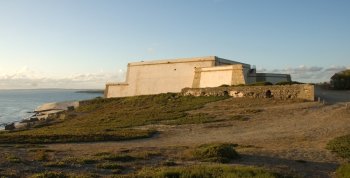
This fort, built by Philip III in 1603, is located on Pessegueiro Island, south of Porto Covo. During the Restoration War, this fortification suffered several Castilian attacks and was severely damaged. At the end of the 17th century, during the reign of King Pedro II, a new fort was built, which currently lies in ruins.
Museu de Sines / Casa de Vasco da Gama
- heritage
Largo Poeta Bocage - Castelo de Sines
7520-152, Sines
The main building of the Sines Museum and the Vasco da Gama House, located in the castle's inner buildings, were inaugurated in 2008. The main building houses an exhibition dedicated to the 20th century in Sines, as well as some archaeological collections. Some parts of the facilities dedicated to Vasco da Gama are of great interest, including his biography, the house where he lived, and his role in Portuguese maritime history.
Tesouro de Nossa Senhora das Salas
- heritage
Largo da Igreja de Nossa Senhora das Salas
7520, Sines
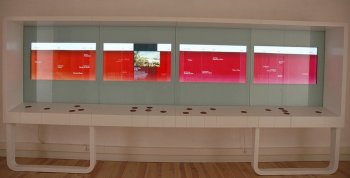
This historic building was rebuilt in 1585 by King Felipe I and converted to cultural use in 1990. The museum includes pieces from the Paleolithic to the Baroque. Its main collection is the punic treasure of Gaio.
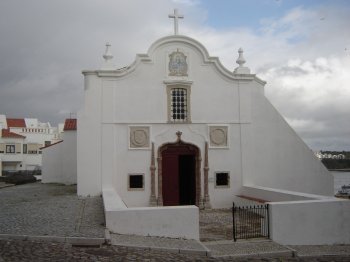
Igreja Matriz de São Salvador
- heritage
Largo Muro da Praia
7520, Sines
It was here that, at the age of 11 or 12, Vasco da Gama, along with three of his brothers, received his prima tonsure and became a member of the Order of Santiago. In the 18th century, the medieval church, already too small for the number of believers who wanted to attend Mass, required extensive remodeling, giving it its current appearance, typical of the Joanine Baroque.
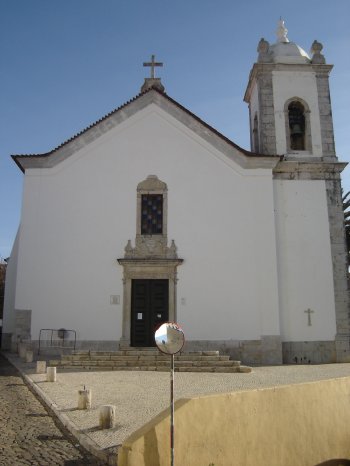
Capela de Nossa Senhora das Salvas ou das Salas
- heritage
Largo de Nossa Senhora das Salvas
7520-147, Sines
This 16th-century chapel preserves the Manueline portal and inscribed tombstones on its main façade. On both sides are buttresses, topped by conical pinnacles, supporting the coffered vault covering the chapel's single nave. The walls are covered in 18th-century tiles. It has a single nave and a chancel with star-shaped vaults supported by corbels, Manueline decorative elements on the clasps, vault-flush corbels, and also on the portal.