Explore the best places
Heritage in Portugal


Castelo de Sines
- heritage
Largo Porta do Bocage
7520-152, Sines
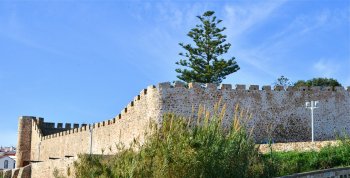
A medieval castle, it has undergone several restorations over the centuries. All that remains of the original castle are the battlemented walls flanked by thick masonry turrets, the keep with twin windows, and the Alcaide-Mor Palace. On the ceiling of the fortress's armory, you can see interesting paintings of armor, war trophies, and the royal shield of King João V. Visigothic architectural elements are visible on the walls.
Torre da Porta Nova
- heritage
Largo da Porta Nova
4750-329, Barcelos
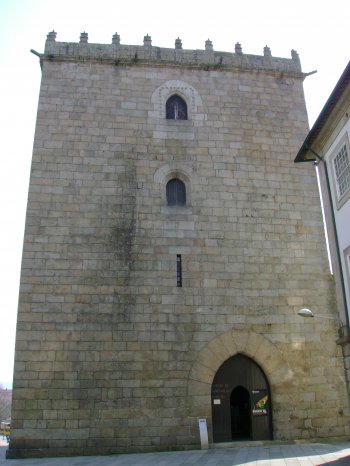
This square tower made with thick granite blocks (reaching two metres) was founded in the XV century by the 8th Count of Barcelos. The finishing is from the Renaissance period with cornice, gutter and merlons.
Ecopista do Dão
- heritage
Viseu/Santa Comba Dão
3440, Tondela
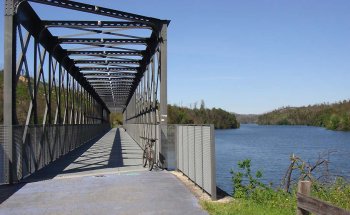
This is the old Linha do Dão, a railway line between Santa Comba Dão and Viseu, deactivated in 1988, which was transformed into this pleasant 49 km Ecopista, the longest Ecopista in Portugal.
Museu Terras de Besteiros
- heritage
Solar de Santa Ana - Rua Dr. Simões de Carvalho
3460-588, Tondela
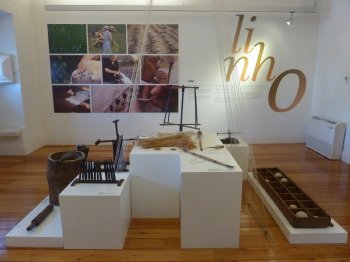
Housed in the Solar de Santa Ana, this museum combines design, creativity, and excellent scientific content. Its permanent exhibition features collections of archaeology, history, ethnography, and sacred art.
Estação de Arte Rupestre de Molelinhos
- heritage
Lugar da Carvalheira
3460-210, Tondela
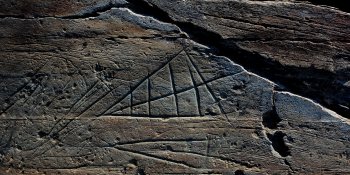
This archaeological site consists of six schist panels, featuring hundreds of insculptural engravings, engraved using three different techniques: incision, pecking, and abrasion. The engravings depict a variety of motifs, including weapons (spears, daggers, and blades), agricultural tools (sickles), geometric designs (zigzags, lattices, circles, triangles), and podomorphic and filiform designs, dimples, and more. Some are more recent, likely executed during the Late Bronze Age and early Iron Age. It is classified as a Property of Public Interest.
Museu do Caramulo
- heritage
Rua Jean Lurçat, 42 - Caramulo
3475-031, Caramulo
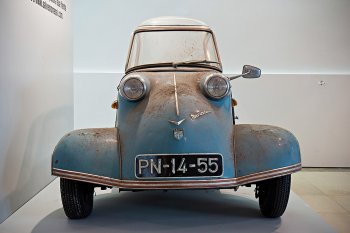
The museum features an art collection begun in 1953 by Abel de Lacerda, with offerings from renowned collectors and contemporary artists such as Vieira da Silva, Jean Lurçat, Salvador Dali, and Pablo Picasso. The famous collection of cars, motorcycles, and bicycles that you can admire here began with João Lacerda in 1955 and includes vehicles that have participated in over 100 events (races, rallies, and competitions) over the past 25 years, mostly abroad. The permanent exhibition features 30 motorcycles and 70 cars, representing 36 brands from seven countries. There is also a varied collection of antique bicycles and tricycles that …
Núcleo de Sepultura de Valdasna
- heritage
Valedasna
3475-073, São João do Monte
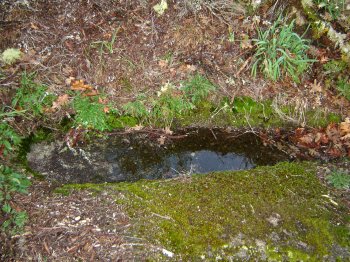
It is a necropolis composed of four anthropomorphic tombs with rounded heads. These tombs are located at the base of a small hill overlooking the Águeda River.
Capela de Nossa Senhora do Campo
- heritage
Rua Nossa Senhora do Carmo
3465-084, Campo de Besteiros
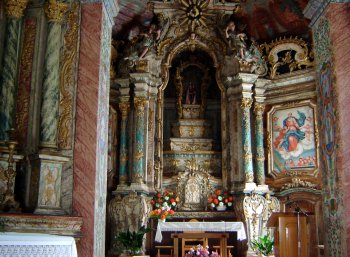
Featuring Rococo religious architecture, the Nossa Senhora do Campo chapel boasts a 17th-century design and structure, although it underwent subsequent alterations. Inside, the main altar, paintings, and painted ceiling are notable.
Estação de Arte Rupestre de Alagoa
- heritage
Lugar de Alagoa
3465-012, Barreiro de Besteiros
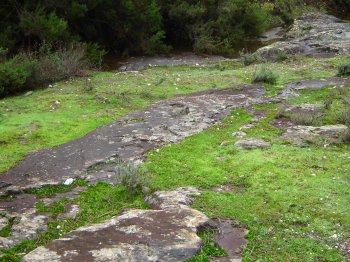
A space consisting of eight shale rocks with hundreds of engravings, some overlapping. Among the various motifs depicted are human footprints (podomorphs), horseshoes, dimples, and circles. The engravings were likely obtained through the pecking technique using lithic tools.
Igreja Velha de Santa Maria
- heritage
Canas de Santa Maria
3460-012, Canas de Santa Maria
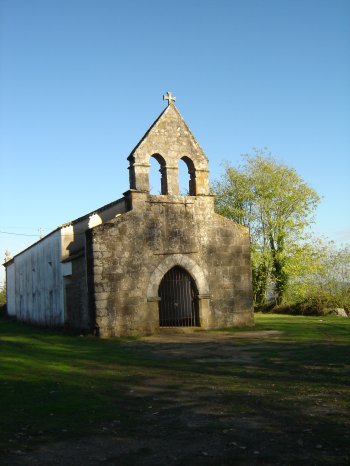
Of the original 14th-century Canas de Santa Maria temple, only the façade remains. The National Monument classification covers only the façade, which features the portal with an ogival arch and a bell tower with two windows.