Explore the best places
Results for enter portal quick PROBLEMGO.COM Need to hire a bail bondsman with cash now Rezekne in Portugal


Igreja Matriz de Nave Redonda / Igreja de São Tiago
- heritage
Nave Redonda
6440-033, Figueira de Castelo Rodrigo
Late-seventeenth-century Church of longitudinal plant, consisting of a nave, a chancel and a vestry located near more closely. Features a main facade in truncated by a simple bell gable and torn by a straight Dick portal. In the interior, especially the angled side altarpieces and the main retable of gilt national style.
Igreja de São Vicente
- heritage
Rua Combatentes da Grande Guerra, 8
5300, Bragança
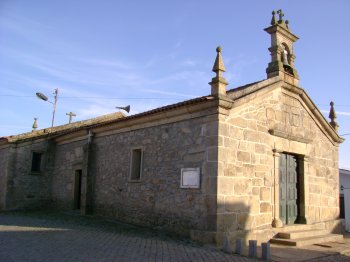
This monument, considered by some authors as romanic and gothic by others, was remmodeled in the 16th, 17th and 18th centuries. In the exterior, a special note to the mannerist portal and to the fountain with th royal arms of 1746, the Passo and the that commemorate the proclamation of Genarl Sepúlveda against the French invasion. Inside, a special not to the Chapel of the Saint Christ.

Igreja de Santa Maria de Barrô
- heritage
Calçada da Igreja
4660-034, Barrô
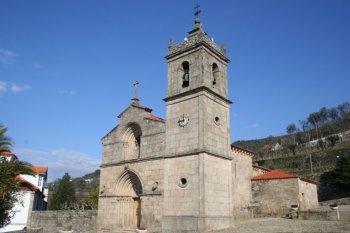
Located on a steep slope overlooking the Douro River, the Church of Barrô is a well-preserved example of medieval architecture, despite the changes of the Modern Period. The main façade and the chancel are worth highlighting. The facade of the Church presents a program with some monumentality, reflected in the careful portal and the arrangement of the false large window.
Igreja de São Cosme e São Damião / Igreja Matriz de Gondomar
- heritage
Rua João Paulo II, 95
4420, Gondomar
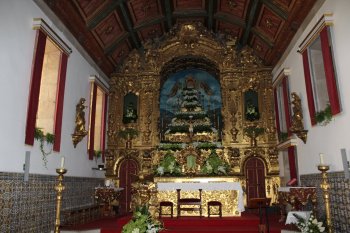
Baroque church consisting of a nave and a chancel, where a bell tower and a sacristy are adjacent. The portal is surmounted by an interrupted curved pediment, surmounted by a choir window and two niches with the images of São Cosimo and São Damião. Highlights include the Baroque carved altars and the tile paneling that runs through the nave.
Igreja da Conceição Velha
- heritage
Rua da Alfândega, 108
1100-585, Lisboa
The primitive church was destroyed in 1755, and its reconstruction was ordered by Dom José, at the ruins of the Misericórdia Church, from which was save the lateral portal, manueline, two windows, also manueline, a low embossed work of Nossa Senhora da Misericórdia and the Santíssimo Sacramento chapel, from the XVII century.
Mosteiro de Celas
- heritage
Avenida Bissaya Barreto, 105
3000-132, Coimbra
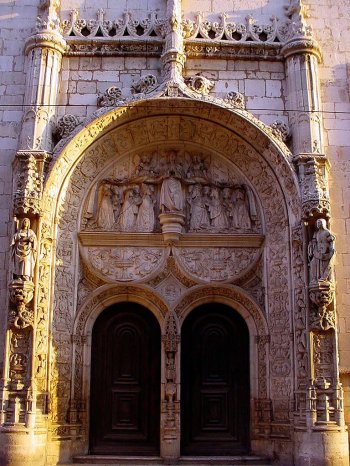
The Celas Monastery is a construction of sober character, showing the influence of several architectonical styles. At the church are worthy of notice the manueline arched roof, a 17th century glazed tiles panelling and several portals and arches with renaissant and manueline characteristics. The cloisters’ galleries present pictures representing memorable events at the chapiters.
Covas do Monte
- country
- heritage
Covas do Monte
3660, Covas do Monte
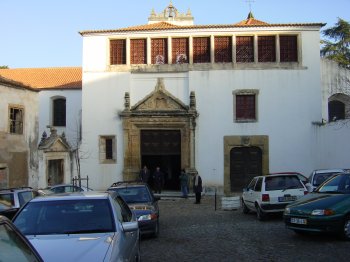
Located near the São Pedro do Sul thermae, in a deep valley surrounded by cliffs, with the so.called Hell Portal to the west. This villag is composed of small schist houses and narrow streets with vines. The inhabitants are farmers and shepherds, mostly corn farmers. It has one of the biggest communal goat herds in the country.
Convento de São Francisco
- heritage
Rua Comendador Guilherme João Carlos Henriques, 6
2580-337, Alenquer
The first Franciscan convent founded in Portugal in 1222 by order of Dona Sancha, daughter of Dom Sancho I. Although deeply damaged by the 1755 earthquake, some elements from earlier periods remain. In the 16th-century cloister, the highly ornate Manueline portal that gives access to the Chapter House remains.
Casa e Capela da Quinta da Bouça
- heritage
EN550
4905-670, Barroselas
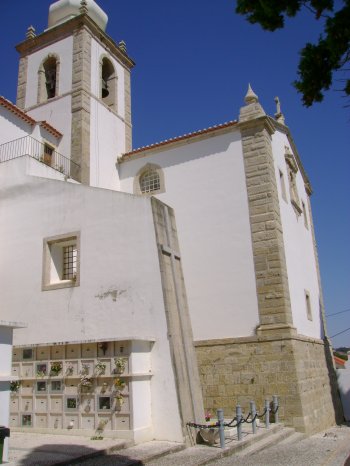
House built in the early 17th century, presenting a facade with sober lines, where stands a stone weapons. Located near to the main body, was built a chapel, where highlights a rectangular frame Mannerist portal, surmounted by a triangular pediment. In the year 2000, the farm was transformed into a unit of Turismo de Habitação.
Capela de São Pedro
- heritage
Passeio das Romeirinhas
7540, Santiago do Cacém
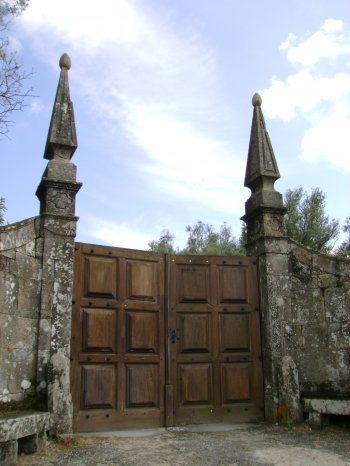
The chapel, which burned in 1895, has very simple lines, with a masonry portal and an opening on the fronton, composed of a high altar and a sacristy. Two different architectural modules can be viewd here. Inside, one can find a John Paul II tile of the 1980s and a Saint Peter of the 18th century.