Explore the best places
Results for castelo in Portugal


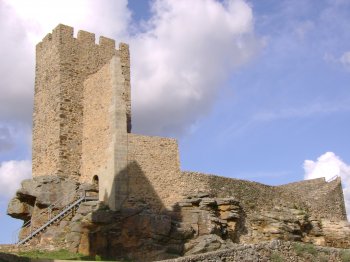
Castelo de Lamego
- heritage
Rua do Castelo
5100-128, Lamego
This castle was built on an ancient Lusitanian hill fort that the Romans fortified. The original castle's highlights include the citadel with its keep, the vaulted cistern, and two gates, the Porta dos Fogos and the Porta do Sol, which define the wall structure of the old town. The cistern is located near a section of the wall. During the 16th and 17th centuries, the tower served as the town hall. Noteworthy, in the Porta do Sol, is an 18th-century window dated 1642.
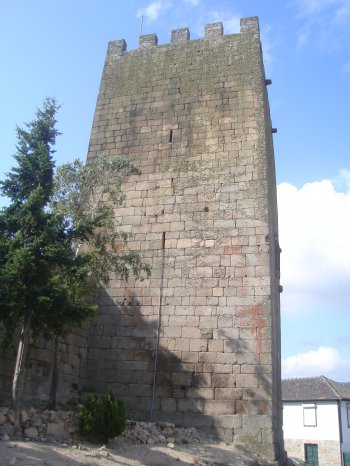
Castelo de Leiria
- heritage
Largo de São Pedro
2400-235, Leiria
What remains of the castle, for the most part, dates back to the reconstruction carried out by Dom João I. At the top of the hill stands the superb keep that seems to be from the Dionysian foundation; of the royal palace there are occasional Gothic twin windows and pieces of arches from the galleries.
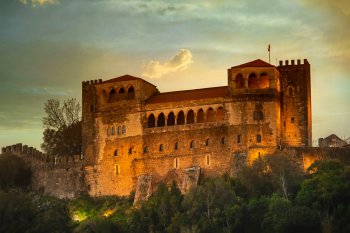
Castelo de Lindoso
- heritage
Lugar de Castelo
4980-451, Lindoso
Built during the reign of King Afonso III, it sits atop a rocky hillock next to the town. The castle, shaped like a quadrangular star, has a keep approximately 15 meters high. Several semi-spherical domes still remain at the corners of the wall, with slits for the use of firearms. It houses a museum inside.
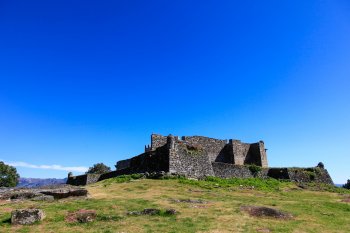
Castelo de Longroiva
- heritage
Rua do Adro
6430-071, Mêda
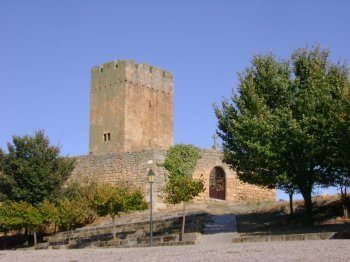
The medieval castle of Longroiva is one of the most important examples of Templar military architecture in Beira Interior and one of the best examples of a Romanesque castle in the region. Built on a supposed pre-Roman hillfort, built between the 4th and 2nd centuries BC, its construction coincided with a significant surge in settlement in the region in the early 12th century, having belonged to the Order of the Temple and the Order of Christ. In the 18th century, with the settlement's progressive decline in importance, the castle's progressive ruin was documented. In the 19th century, the castle began …
Castelo de Loulé
- heritage
Rua Dom Paio Correia, 17
8100-564, Loulé
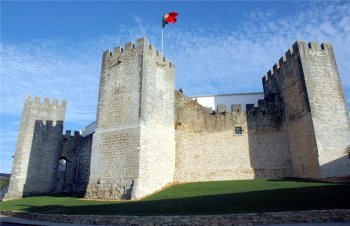
As in several villages in the Algarve, Loulé also accuses the presence of various peoples: Phoenicians, Carthaginians, Romans and Moors, who took over the city in 715. The Christian reconquest took place in 1249 and in 1268 the fortress was rebuilt and expanded, being rebuilt in the 16th century. Currently, there are some remains on Rua da Barbacã, Largo da Matriz and Rua Rainha Dona Leonor.
Castelo de Marialva
- heritage
Marialva
6430-081, Marialva
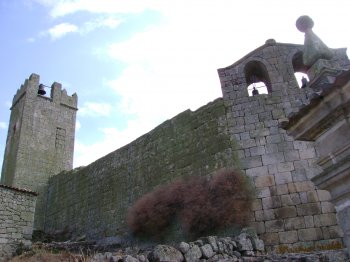
Classified as a National Monument in 1978, the castle that dominates the Historic Village of Marialva from atop a cliff likely dates back to the 12th or early 13th century, when King Sancho I promoted the settlement of the region. In 1286, King Dinis established one of the many fairs held during his reign there, so the oval shape of the walls surrounding the village, characteristic of the Gothic city perimeter of fortified towns in the Late Middle Ages, likely dates from this period. Although quite ruined, they maintain their original layout, and the three original gates can still be …
Castelo de Marvão
- heritage
Rua do Castelo
7330, Marvão
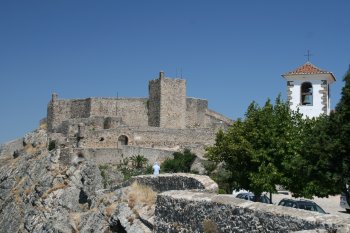
An imposing defensive complex located in a location of great panoramic beauty. Most of the castle's buildings date from 1226 and 1230. It was modified and expanded in the 15th, 16th, and 17th centuries. During the reign of King Dinis, bastions, walls, and forts were built. From the reconstruction, only the keep and some sections of the wall remain.
Castelo de Melgaço
- heritage
Rua do Castelo, 30
4960-537, Melgaço
Melgaço Castle currently consists of an imposing keep - with three floors, a parapet protruding over corbels, crowned by pyramidal merlons and with a hipped tile roof - and the surrounding walled enclosure, in a good state of conservation. It is believed that it may have had 3 towers and two doors, according to Duarte de Armas in his “Livro das Fortalezas” (Book of Fortresses) from 1509. The current tower houses the Melgaço Keep Tower Museum.
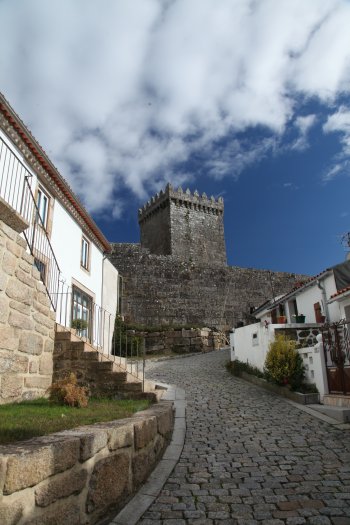
Castelo de Mirandela
- heritage
Rua do Arco
5370-408, Mirandela
Only a few remains of this castle remain. From the original castle, the Santo Antônio Gate is visible, consisting of two thick walls, over which sits an arch with a broken outline on the outside and a perfect arch on the inside. Above the gate are traces of the original battlement, now transformed into a terraced house. Small sections of the wall also remain.
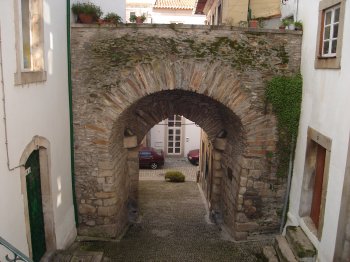
Castelo de Mogadouro
- heritage
Rua João de Freitas, 32
5200-277, Mogadouro
The castle of Mogadouro was donated by D. Afonso Henriques to the Templars and, a few years later, passed to the Order of Christ, its successor. Today, only two sections of walls remain, an isolated tower with rectangular faces and some scarce remains of carved walls.