Explore the best places


Sé de Évora
- heritage
Largo do Marquês de Marialva
7000-809, Évora
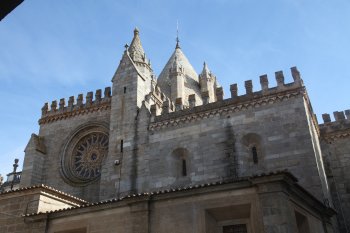
La Catedral de Évora es una construcción románico-gótica de los siglos XII-XIII. Es un imponente templo de tres naves con un claustro de arco apuntado del siglo XIV. La entrada principal está decorada con esculturas que representan a los apóstoles. El interior es de los siglos XVII y XVIII. Aquí se encuentra el Museo de Arte Sacro.
Castelo de Valongo
- heritage
Herdade da Grã
7005, Évora
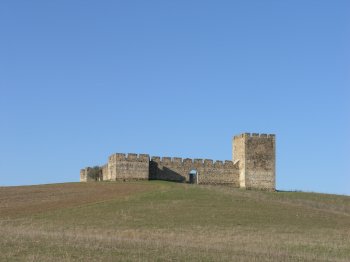
Medieval castle dating from 1283. In the 15th century, the keep underwent some alterations and, in the 19th century, it was acquired by its current owners. The architecture is both civil and military, with Gothic and Manueline influences.
Ermida de São Brás
- heritage
Avenida Doutor Francisco Barahona, 1
7005-150, Évora
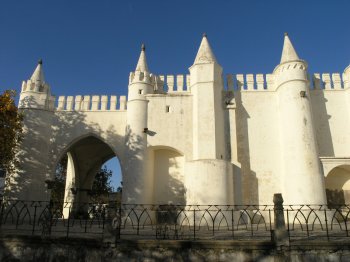
It is a 15th-century temple, built on the initiative of King João II. The narthex is made up of Gothic arches, faithfully representing the original temple. Inside, one can see some painted panels above the main altar, two of them illustrating the life of Saint Blaise.
Museu Nacional Frei Manuel do Cenáculo/ Museu de Évora
- heritage
Largo do Conde de Vila Flor
7000-804, Évora
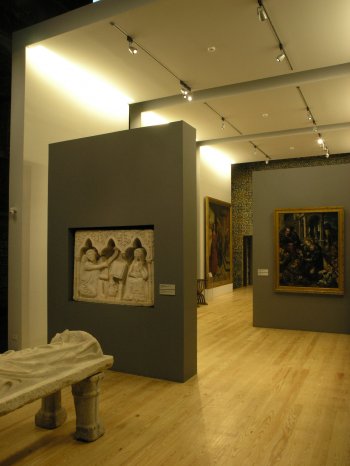
It features permanent and temporary exhibitions, including collections of 15th and 16th-century paintings, sculptures from the Middle Ages and the Renaissance. In addition to these collections, it also displays ceramics, jewelry, and tiles from various periods, totaling approximately 20,000 pieces. One of the new features of the museum is the Flemish altarpiece room, which recreates scenes from the Life of the Virgin Mary, arranged chronologically.
Monte de São Bartolomeu
- heritage
Nazaré
2450, Nazaré
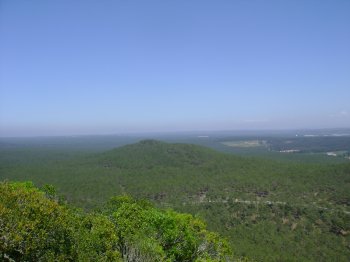
The spontaneous vegetation, manifested in an extensive pine forest, is one of the attractions of this protected site. However, the interest in the place does not end there. At its summit, the chapel of São Bartolomeu, or São Brás, is a place of pilgrimage. Moreover, the legend of the image of Our Lady of Nazaré, intimately linked to the site, is well known in these parts. From an archaeological point of view, the prehistoric hill fort located here is a particularly interesting element to be discovered amidst the landscape.
Ermida de Nossa Senhora dos Anjos
- heritage
Rua Combatentes do Ultramar
2450, Fanhais
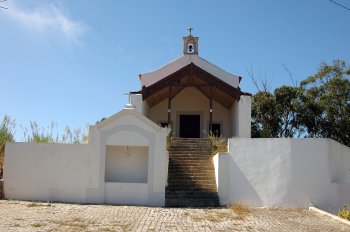
This 16th-century chapel was built on the site where, according to tradition, Friar Rodrigo and Friar Romano arrived in the 12th century, bringing the image of Our Lady of Nazaré from Mérida. Notable features of this rural chapel include the altarpiece of the main altar, two panels with 16th-century paintings, and remnants of 17th-century tiles.
Praia do Norte - Nazaré
- beach
Praia do Norte
2450, Nazaré
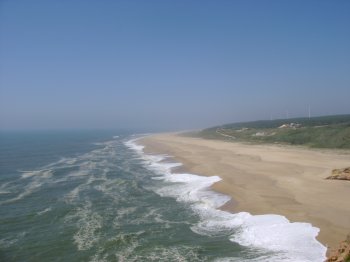
A very long beach, surrounded by pine forests and dunes. Hidden in the cliffs are the caves of the Orca Oven Cave, an ecological and preserved area. When visiting the beach, the presence of the Agueira Dune is surprising, as it is one of the highest dunes in all of Europe. It has a water park.
Marina da Nazaré
- beach
Marina da Nazaré
2450, Nazaré
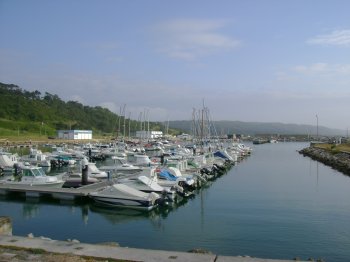
Marina located next to the fishing port, in very poor condition and with little infrastructure. It has space and it's easy to obtain a mooring buoy.
Santuário de Nossa Senhora da Nazaré
- heritage
Largo Nossa Senhora da Nazaré
2450-065, Nazaré
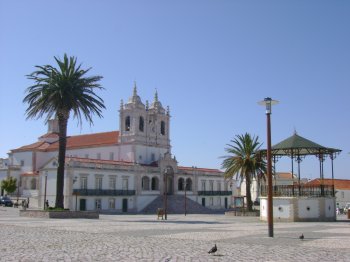
In 1377, King Fernando ordered the construction of the first church to house the sacred image and accommodate the large number of pilgrims visiting Our Lady of Nazaré. It was later expanded and improved during the reigns of King João I, King João II, and King Manuel. The building is dominated by two tall bell towers with spires in the Baroque style, preceded by a wide arcaded gallery, commissioned by King Manuel to house the pilgrims. The entire building bears witness to the major renovation of the late 17th century (1680-1691). The interior has a single nave, covered with 17th-century …
Praia da Nazaré
- beach
Avenida Manuel Remígio, 87
2450-106, Nazaré
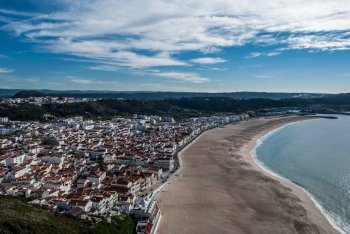
Nazaré beach, located in a beautiful bay, is very popular with tourists and surrounded by lush cliffs, where a panoramic elevator operates. Every Saturday, from May to June, there are demonstrations of the Xávega art, a type of dragnet fishing on the verge of extinction, characterized by casting a net approximately 500 meters from the coast, which is then pulled ashore by oxen. Also typical are the so-called "paneiros" (pans) placed on the sand, where the fish is dried. The main avenue becomes a tourist attraction not only for the beach but also for its commercial and food areas.