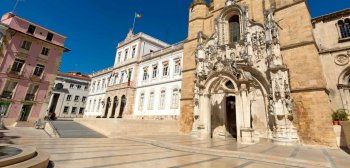
A Romanesque temple founded in 1131, during the reign of King Afonso Henriques, outside the walls of Coimbra. In the first half of the 16th century, the Monastery was completely renovated by order of King Manuel I. Its main portal, executed by Chanterenne between 1522 and 1525, is its most emblematic piece. Inside, highlights include the Manueline vault covering the nave of the church, the tombs of King Afonso Henriques and King Sancho I, the Chapter Room (a Manueline work executed by Diogo de Boutaca), the Chapel of Saint Teotónio (a Mannerist work by the sculptor Tomé Velho), and the …
XVII century temple, built at the place where a former synagogue used to be. At the inside you may admire chromium plated panels and golden wood carving works.
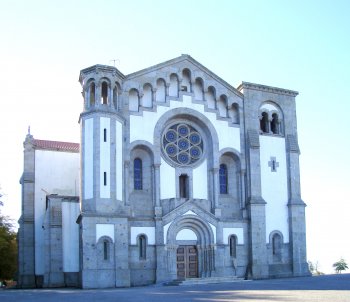
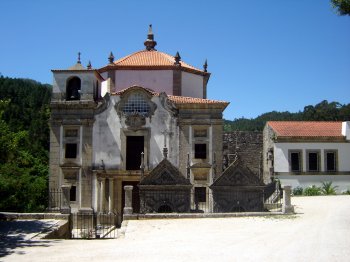
Located in Serra D'Arga, this monastery dedicated to Saint John the Baptist presents itself. Currently, the chapel is only open to hikers on feast days.
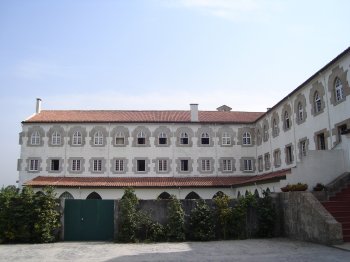
Ancient Benedictine monastery, whose present ensemble dates from the XVIII century. The monastery has four cloisters and the most important is decorated with azulejos and a granite fountain at the centre. The church has beautiful golden woodcarving works.
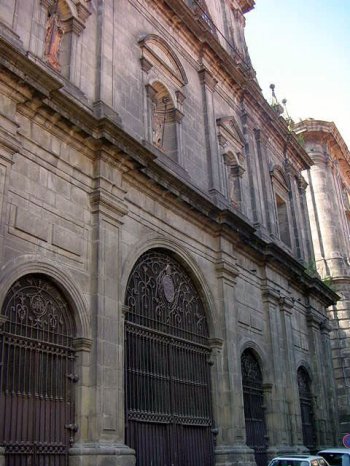
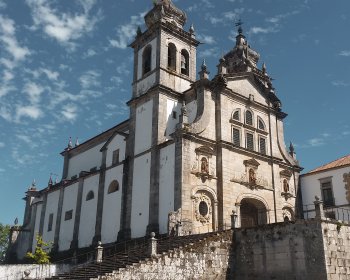
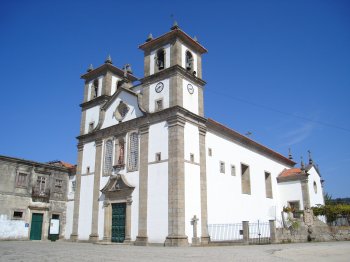
A benedictin convent that dates back to the 12th century, totally remodelled in the 17th and 18th centuries. The façade is sided by two belltowers that end a fronton topped by a cross. The church, in the shape of a cross, has a nave with a cylinder shaped dome. The cloyster has, on the lower floor, six toscane archways and a baroque fountain in the centre.