Explore the best places
Results for PROBLEMGO.com Buying a warrant removal without court Tor browse portal anonymous discreet help in Portugal


Igreja de São Cristovão de Nogueira
- heritage
Avenida Doutor Reinaldo Florido Calheiros
4690-540, São Cristóvão de Nogueira
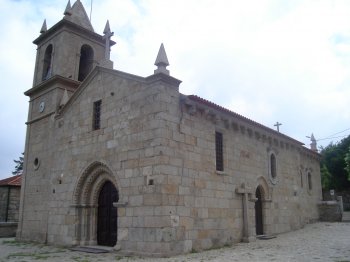
Deeply altered in the Modern Age, the Church of São Cristóvão, in the former municipality of Nogueira, is structurally a medieval, late Romanesque building, from which the axial portal and, on the sides, corbels, cornices, and frieze sections survive. Inside, the work of the main altarpiece and collateral altarpieces is notable, although most of this integrated heritage has been profoundly altered by recent interventions.
Palácio dos Condes de Almada / Palácio da Independência
- heritage
Largo de São Domingos, 11
1150-320, Lisboa
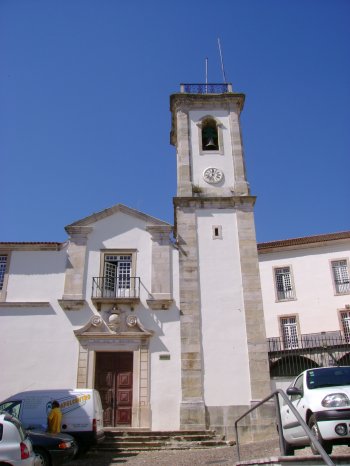
It is also known as independence Palace. Is a valuable copy of the seventeenth-century civil architecture, with 16th century roots, in which stands out the gate, South facade, framed and superimposed a balcony of balusters to guarnecerem the central window, overmatched by the arms of Almada. Inside are two patios, with 16th century portals, taking the bottom two chimneys also 16th century.
Igreja da Misericórdia de Aljezur
- heritage
Largo Rainha Dona Leonor
8670-079, Aljezur
A 16th-century church, rebuilt in the 18th century after the 1755 earthquake. It features a Renaissance portal, and its interior is extremely simple, with a single nave and a triumphal arch. The altarpiece in the main chapel, a polychrome woodwork decorated with gilded Baroque carvings, is noteworthy. One of the church's wings currently houses the Monsenhor Manuel Francisco Pardal Museum of Sacred Art.
Paço de Sobre-Ribas / Instituto de Arqueologia da Universidade de Coimbra
- heritage
Rua de Sobre-Ribas, 35
3000-395, Coimbra
Cinquentist palace sited at the Coimbra wall, between the Almedina Arch and the Anto Tower. It includes the Casa de Baixo (Institute) and the Casa de Cima (private). Adapted from a medieval tower, it has an interior organization close to the Middle Ages buildings. Outside is the magnificent manueline portal, which is now used as an entrance to the University of Coimbra Archaeology Institute.
Santuário de Nossa Senhora de Aires
- heritage
Viana do Alentejo
7090, Viana do Alentejo
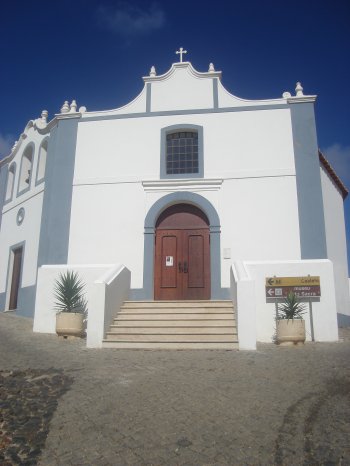
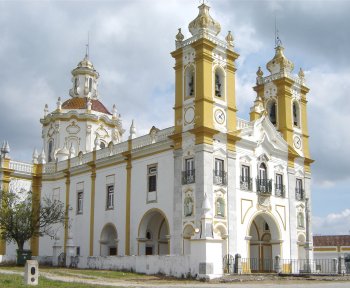
The longitudinal nave is divided into three sections, from which the transept arms and the two towers of the façade stand out. The façade is imposing, marked by two symmetrical lateral bell towers. The nave has a full-round vault roof, and lighting is provided by the nave's large windows. The church's entrance portal, dating from 1755, is a meticulous Rococo piece.
Igreja da Misericórdia da Batalha
- heritage
Largo da Misericórdia
2440, Batalha
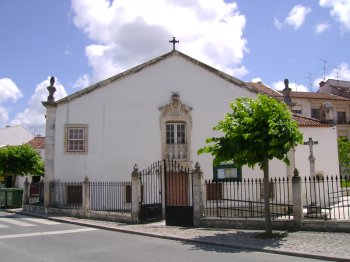
The church consists of a rectangular nave and several dependencies, including the Dispatch Room. The main façade has an angular gable and quoins topped by pinnacles, and is pierced by a portal surmounted by a balustraded window with a broken pediment to accommodate the national coat of arms. Inside, the nave and elevated chancel are covered by the same three-tiered wooden ceiling, with the Joanine coat of arms painted on it.
Alfundão
- country
- heritage
Alfundão
7900, Alfundão
Alfundão is one of the oldest villages in the Alentejo, with 51.90 km2 of area and 998 inhabitants. There are some Roman remains, such as two inscriptions dedicated to the goddess Fortuna that demonstrate the importance of this land in the Roman period. Even without major documentary confirmations by the 13th century Alfundão would be a landlord with its own jurisdiction. In 1372, Ferdinand donated her term to Diogo Afonso de Carvalhal, a period from which happened to have, even in fleeting, the category of village.
Museu da Fundação Maria Isabel Guerra Junqueiro e Luís de Mesquita Carvalho
- heritage
Rua de Dom Hugo, 15
4050-305, Porto
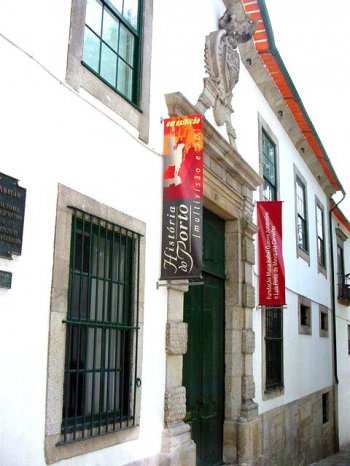
The Fundação Maria Isabel Guerra Junqueiro and Luís Pinto de Mesquita Carvalho, placed in front of the Museum-House with the same name, is a private foundation without lucrative ends, which includes a large bibliographic heap of Guerra Junqueiro, her daughter and son-in-law. The palace, dated from the XVII century, where this foundation is placed, is open to visit the permanent exhibition or any other events happening there, always regarding the life and work of the Portuguese writer.
Igreja de Nossa Senhora da Expectação / Igreja Matriz de Valada
- heritage
Largo da Igreja
2070-514, Valada
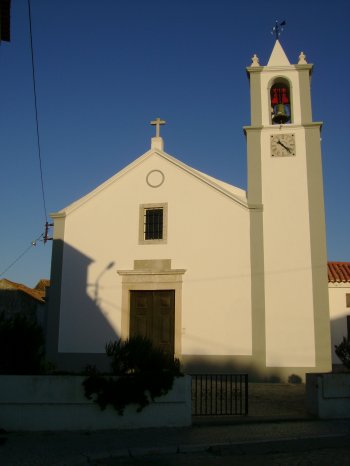
Located practically on one of the banks of the Tagus River, the Parish Church of Valada is very old, probably dating back to 1211. It has undergone several renovations over the years, the last of which took place at the beginning of the 20th century. The façade is of Mannerist religious architecture, with an angular gable and a bell tower. Inside, the 16th-century baptismal font stands out, without a shaft or base, while the nave walls have 19th-century patterned tiles.
Pelourinho de Freixo de Espada à Cinta
- heritage
Avenida Guerra Junqueiro
5180-104, Freixo de Espada à Cinta
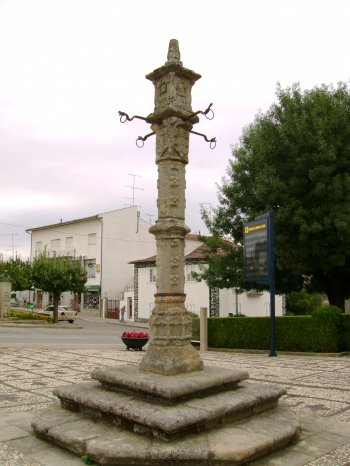
Manueline pillory consisting of three steps symmetrical, an octagonal shaft, rings and a ring of iron. In the capital, presents the coats manueline and the village heads, faces and busts. The Middle out crossed four arms curved iron on the ends and ending in serpent heads whose eyes hang rings. The pyramid is shot without ball. Originally, stood in front of the Church, having been transferred during the first quarter of the 20th century to the front of the current Town Hall.