Explore the best places
Results for MAKEMUR.com how much to bail someone out immediately Daugavpils in Portugal


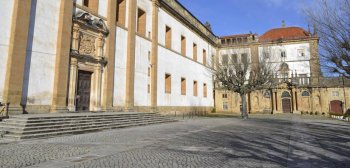
Convento Corpus Christi
- heritage
Largo de Aljubarrota, 13
4400-012, Vila Nova de Gaia
It was founded in 1345 by a noblewoman from Gaia, Maria Mendes Patite, who handed it over to the S. Domingos Order. In the 17th century, with the floods in the Douro River, the Monastery underwent profound changes and ended up being extinguished in 1834, leading to the construction, in the second half of the 17th century, of a new temple. With a unique architecture, the Choir stands out inside, with an imposing ceiling decorated with oil paintings. Its recovery has revealed many pieces of sacred art, such as a sculpture of Christ crucified dating from the 14th century, and …
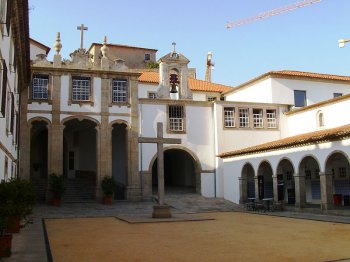
Castelo de Vila Nova de Cerveira
- heritage
Largo de São Sebastião, 1
4920-264, Vila Nova de Cerveira
Located on a hill, this oval castle retains the curtain wall of the bastion of the angel São Miguel. It was built in 1320, by order of King Dinis, to defend the newly created village of Cerveira. Several monuments stand out from the intramural set, namely the pillory, the church and the chapel. The fortifications built in the 17th century were destroyed with urban growth. In the 19th century, the growth of the town sacrificed a large part of the fortification, with the Keep and the north wall disappearing. In the following century, after being classified as a National Monument, …
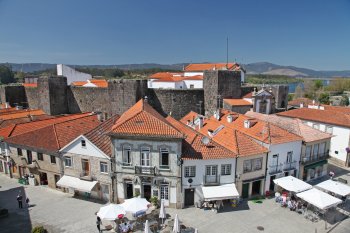
Castro de Alvarelhos
- heritage
Rua Sobre-Sá, 382
4745-114, Alvarelhos
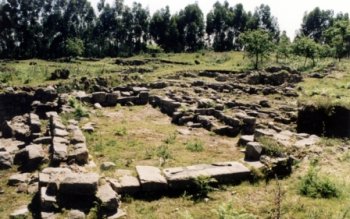
The hillfort reveals a people who lived there during the Late Bronze Age. Of the finds, found in large numbers, the following stand out: a milestone, from Quinta do Paiço, a monetary treasure of around five thousand denarii and nine pesos in silver, a set of bronze materials, including an umbo of shield and elements belonging to a situla, a small statuette representing a nereid and three epigraphic monuments. The Romanized settlement was strategically located on the Aldeia river valley, through which the Roman Itinerary XVI between Braga and Lisbon passed and at the intersection of other secondary roads.
Chiringuito "Praia da Mareta" Resto Bar
- food & drink
Praia da Mareta
8650-361, Sagres
Espaço informal junto à praia, para fazer uma refeição ligeira ou beber um cocktail, enquanto desfruta de uma vista inigualável sobre o Oceano Atlântico, ao som de melodias chill-out, na ponta mais sudoeste da Europa. Há também uma loja de roupa de praia e uma mercearia gourmet. A esplanada está virada a sul, numa zona elevada sobre a Praia da Mareta, onde se pode usufruir de momentos únicos.
Museu Municipal de Ferreira do Alentejo
- heritage
Rua do Conselheiro Júlio de Vilhena, 5
7900-599, Ferreira do Alentejo
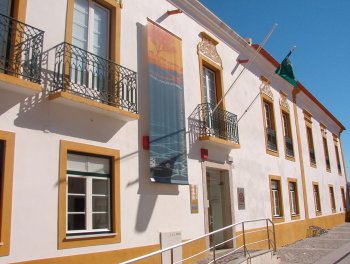
Opened on October 22, 2004, the Municipal Museum of Ferreira do Alentejo is located in the Casa Agrícola Jorge Ribeiro de Sousa, being classified as a Property of Municipal Interest. In pole 1 there is the Municipal Archive and in pole 2 - Misericórdia Church - there is a Sacred Art Collection. From the Archeology Collection, the finds from the Chalcolithic stations of Porto Torrão, the Roman stations of Outeiro da Mina, Monte da Chaminé and Monte da Zambujeira and Tholos de Odivelas stand out. Ethnographic goods include clothing and utensils from ancient professions.
Alvor Baía Resort Hotel
- hotels
Estrada do Alvor, Galo Loiro
8500-001, Portimão
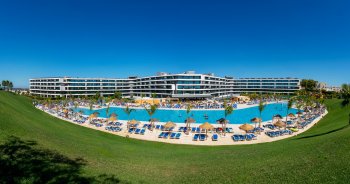
Alvor Bay Hotel apartment is located in the village of Alvor and enjoys an enviable location, 10 minutes walk from the historic centre, the beaches of Alvor and golf courses. Consists of 402 Studios, with bedroom, living room with kitchenette and balcony. It is surrounded by a green space and with various sports and leisure spaces where stands out the magnificent swimming pool, two paddle and children's fun zone. It also has a whole support services such as restaurants, bars, meeting rooms, multipurpose room, SPA with heated pool, Turkish bath, sauna and massage.
Forte ou Castelo de Santiago da Barra
- heritage
Rua de Santiago da Barra
4900-357, Viana do Castelo
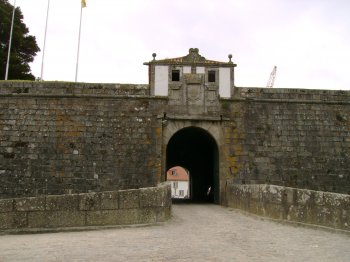
It is believed that this place has been inhabited since prehistoric times, as indicated by numerous findings. The first fortification would date from the reign of Dom Afonso III, although the most likely date is from the 15th century. During the reign of King João II and/or King Manuel I, the medieval castle and the Torre da Roqueta were rebuilt. In 1700 and 1799, during the reign of Philip II, it underwent further repairs and reconstructions. Attesting to these works, a rococo royal coat of arms stands out over one of the main doors.
Igreja Matriz de Mesão Frio / Igreja de São Nicolau
- heritage
Rua de Santo António, 36
5040-310, Mesão Frio
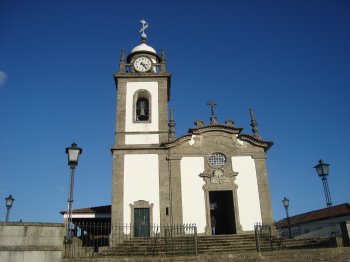
Although the antiquity of the church is evident in the thickness of the walls, clearly visible in the deep cut of the windows, and it is believed to have Romanesque roots, the temple probably only dates from the 14th century. It underwent extensive renovations in the mid-18th century, which gave it the baroque and rococo character it presents today. Inside, with a single nave, the domed and paneled roof, with 66 paintings, and the main chapel ceiling, which is divided into 18 paintings, stand out. The altar features a gilded altarpiece. Tradition says that this church was built by Queen …
Igreja e Claustro de São Domingos
- heritage
Rua Doutor Avelino da Silva Guimarães
4810-426, Guimarães
This is a Gothic temple from the 14th century, which baroque door and the main chapel enlargement were the result of several reforms performed during the 18th century. On the interior it stands out the main altarpiece with neoclassic influence dated from the ends of the 18th century, the rocaille organ and a seventeen hundreds seating. It used to make part of São Domingos Convent, which was destroyed in the end of the 19th century maintaining the Gothic cloister from the 14th century, classified as a National Monument and which is integrated on the Archaeology Museum from the Sociedade Martins …
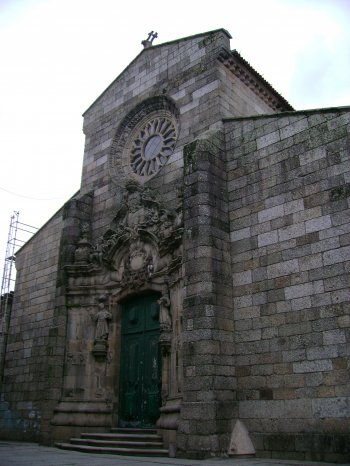
Mosteiro de Santa Clara-a-Nova
- heritage
Calçada de Santa Clara
3040-270, Coimbra
The first stone of this building was laid on July 3, 1649, during the reign of King John IV. The new Monastery was built to house the body of Queen Saint Isabel and the Poor Clare nuns from the original Convent of Santa Clara, which was in an advanced state of disrepair. The church, with a single nave, consists of a choir and a chancel. In the lower choir is the original tomb of Queen Saint Isabel, executed by Master Pero in 1330, a work sculpted from a single block of limestone. On the walls, tiles and altarpieces from the …