Explore the best places
Results for MAKEMUR.COM Paying cash to get my husband out of holding cell Liepaja in Portugal


Museu do Azeite
- heritage
Largo Bombeiros Voluntários, 129
6250-056, Belmonte
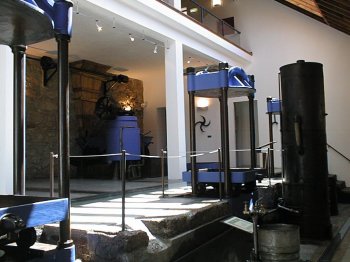
Created in an old mill, this museum structure was created to teach the visitors the traditional production process of olive oil, as well as the importance it assumed in the local economy. It is spread over three floors and there you can find the old millstones and presses, where the village's oil was produced until 1995. On the way out, the visitor is invited to taste different types of olive oil and outside, you can admire an olive grove, as well as the Zêzere, which runs behind the building.
Casa Amarela
- hotels
Praça Dom Pedro V, 11
7320-113, Castelo de Vide
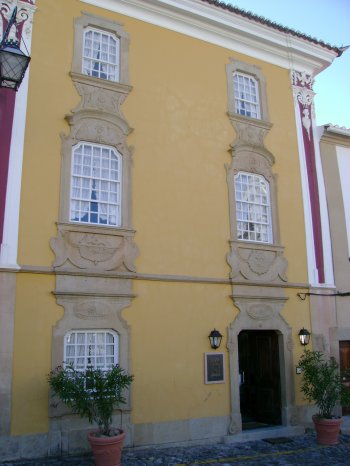
Located in the Centre of Castelo Vide, the Yellow House is a small solar, whose construction dates back to the 17th century and is classified as a Building of public interest. Its main facade of yellow ochre stands out in the square d. Pedro V evading patterns of Castelo de Vide. Near the House you can also visit the Chiesa Madre (mother church) of Santa Maria da Devesa, one of the largest religious temples of the Alto Alentejo.
Forte Nossa Senhora das Neves / Castelo de Matosinhos
- heritage
Largo do Castelo
4450, Leça da Palmeira
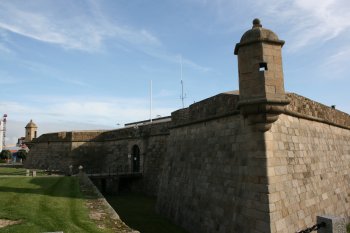
This 17th century building is shaped like a four-pointed star, each protected by guardhouses. The vestiges of this defensive fort can be seen on Avenida Doutor Antunes Guimarães, Rampa do Castelo and Rua de Santa Catarina. It began to be built in 1638, but in 1655 it was still not completed. In 1832, during the civil war, it underwent some modifications and, in the 20th century, it was handed over to the Captaincy of the Port of Leixões, which carried out works to house its staff there.
Cruzeiro de Covas do Barroso
- heritage
Largo do Cruzeiro
5460-382, Covas do Barroso
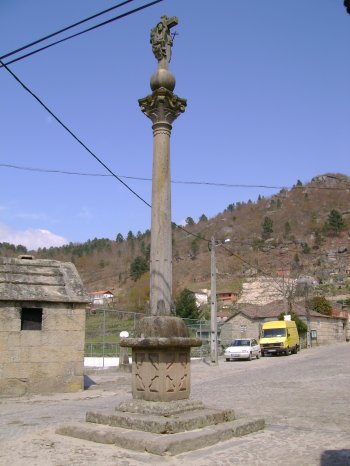
Classified as Property in the public interest is one of the most beautiful cruises. Have a platform in granite, with two steps, plinth, with faces decorated, has at the top inscribed "PASSIO DOMINI NOSTRI JESUS\/\/CERESTI THIS IF F\/MDCCLXXVI". The column ends in composite capital surmounted by a globe crowned by a cross, where stands out the iconography of sculptural representations that there are, on the front face a Pieta and the rear face, facing the chapel of Nossa Senhora da Saúde, the figure of San Antonio with the boy.
Igreja do Espírito Santo
- heritage
Praça Municipal
4970-441, Arcos de Valdevez
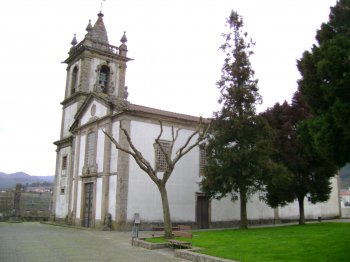
Dated from the 1647 it is an André Soares oeuvre. This is a vast construction with one only nave and main chapel both filled in golden carving. The bell ringer tower was constructed between 1724 and 1727 by Master Domingos Matias and afterwards the main chapel was extended in 1746. It stands out the main altarpiece from the main chapel because it is a fine example from the late Mannerist phase, not only due to its conception, but also due to its decoration.
Igreja do Seminário / Igreja de Nossa Senhora da Conceição do Colégio dos Jesuítas
- heritage
Praça Sá da Bandeira
2000-135, Santarém
Founded in the 17th century, the former Royal College of Our Lady of Conceição” (Conception) was transformed into a seminary in 1780. This is a mannerist building in Jesuitical style; it serves as an example of the seventeen hundreds art which model was exported by the Jesuits for the missions in all overseas territories. On the lateral chapels one points out the chapel of the Lady of Boa Morte (Good Death) with a marble altar. Recently this building was granted by the Holly See to be the headquarters of the Cathedral and Bishop Palace of Santarém dioceses.
Inscrições Romanas - Altar de Penascrita
- heritage
Vilar de perdizes
5470-461, Montalegre
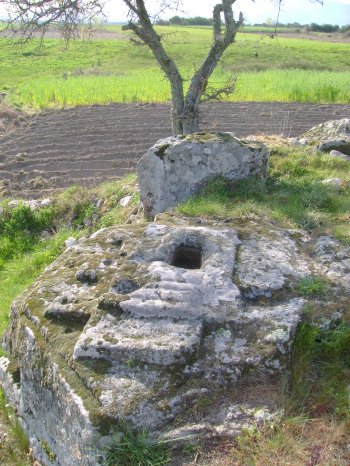
Granitic outcrop worked and transformed into rock altar, consisting of three steps, topped by three more notches in the rock, in the form of "and" lying. On the surface it stands out a rectangular cavity and linear tears. This cavity is interpreted by some authors as being the "foculus". On one side of the altar there is an inscription dedicated to the God Jupiter, mate, Larouco assigned by the soldiers of the Legion VII Gemina. Mention the resemblance to two other nearby shrines, one dedicated to the God Jupiter and another Larouco.
Igreja de Nossa Senhora da Expectação / Igreja Matriz de Valada
- heritage
Largo da Igreja
2070-514, Valada
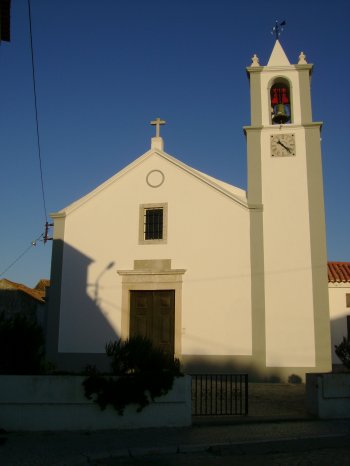
Located practically on one of the banks of the Tagus River, the Parish Church of Valada is very old, probably dating back to 1211. It has undergone several renovations over the years, the last of which took place at the beginning of the 20th century. The façade is of Mannerist religious architecture, with an angular gable and a bell tower. Inside, the 16th-century baptismal font stands out, without a shaft or base, while the nave walls have 19th-century patterned tiles.
Mosteiro de Leça do Balio
- heritage
Rua de Santos Lessa
4450-332, Leça do Balio
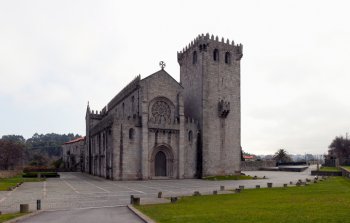
The Monastery of Leça do Balio, already existing in the 10th century, was profoundly altered in the 14th century under the direction of Estêvão Vasques Pimentel. From the 16th century, several interventions by Diogo Pires, the “Moço” stand out. The monastery church, restored in 1930, is one of the most important examples of Gothic architecture in Portugal. In this church took place the marriage of King Dom Fernando and Dona Leonor Teles. It was also the first headquarters of the Military Order of the Hospital.
Pelourinho de Freixo de Espada à Cinta
- heritage
Avenida Guerra Junqueiro
5180-104, Freixo de Espada à Cinta
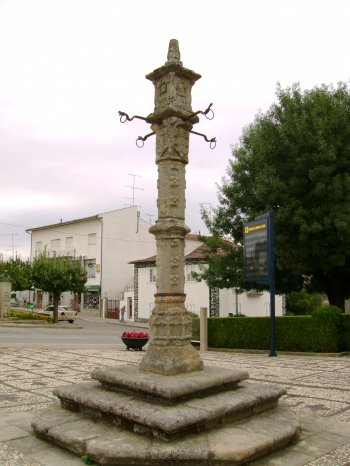
Manueline pillory consisting of three steps symmetrical, an octagonal shaft, rings and a ring of iron. In the capital, presents the coats manueline and the village heads, faces and busts. The Middle out crossed four arms curved iron on the ends and ending in serpent heads whose eyes hang rings. The pyramid is shot without ball. Originally, stood in front of the Church, having been transferred during the first quarter of the 20th century to the front of the current Town Hall.