Explore the best places
Results for enter now fast MAKEMUR.COM pay a judge to shorten my time in prison in Portugal


Castelo de Beja
- heritage
Largo Dr. Lima Faleiro
7800-265, Beja
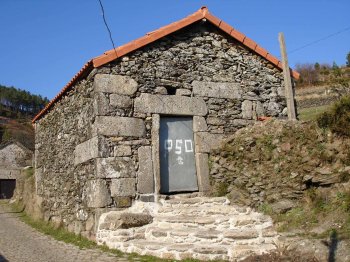
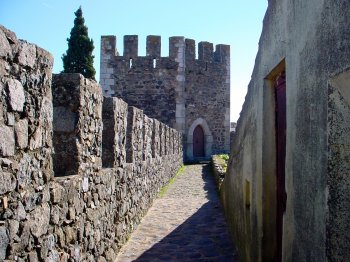
Of the castle complex, the Keep stands out – almost 40 meters high – dating from the time of King Dinis, made of marble, with a twin window and a machicolated balcony surrounding it. A masterpiece of military architecture, the Tower of Beja has great historical and monumental value. Of the defensive constructions of Roman origin, only the arch of the Porta da Vila (Town Gate) and the arch of the Porta de Évora (Évora Gate) remain. The Porta da Moura (Moorish Gate) is the only vestige of the medieval fortification.
Castelo de São Romão (Vestígios)
- heritage
Telhado
5470-527, Montalegre
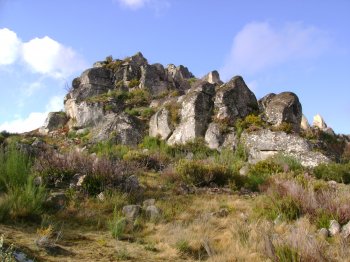
At the foot of the Serra do Larouco, among o Corgo o Corgo and do Fojo of the Goatherd, 1090 ft maximum altitude is a rugged Hill that was once a fortified settlement of pre-Roman times. For the whole lot are visible remnants of alignments of structures, with higher incidence on the upper deck, where you will find the highest concentration of ceramic materials. There are also remains of walls. Of North and Northwest defence was natural. Iron age fortified settlement, taking into account the ceramic booty found.
Castro do Jarmelo
- heritage
São Pedro do Jarmelo
6300-210, Jarmelo (São Pedro)
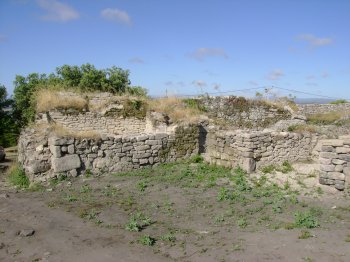
It is a fortified mound, dominating vast horizon, endowed with water supply infrastructure and showing walls with two concentric levels. The Roman road with the vestiges of the Moorish Fountain and a tomb excavated in the rock, near the Church Santa Maria del Jarmelo, the area of St. Peter's Church, cemetery and belfry and casa da câmara, two graves dug into the rock and the land that comprises the Church of San Miguel and two sources of diving. Reveals occupations from the iron age to Medieval times.
Centro Histórico de Braga
- heritage
Braga
4700-435, Braga
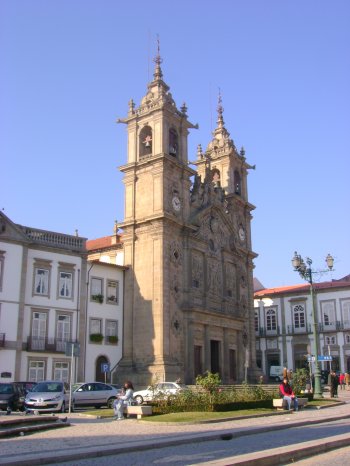
Dubbed the City of the archbishops, many religious monuments of great patrimonial value that can be found and visited. The pedestrian streets of the historic centre, with the traditional trade, has a permanent animation. The historic sites have been preserved and are the scene of conviviality between generations as famous cafes, like the Vianna and A Brasileira. They called it the Roman Bracara Augusta and those times were brands such as the fountain of the idol, the Roman baths of the Alto da Cividade and the Arco da Porta Nova, among others.
Ara
- heritage
Penedones
5470-069, Chã
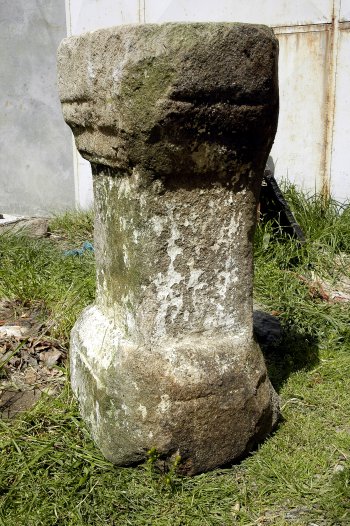
Ara anepígrafa in medium-to fine-grain granite, gathered near a dwelling, in the village of Penedones, during restoration. It shows traces of inscription, or because it was never recorded or why it was deleted in later reuses. A part of the forend is excavated, and it is possible that at that time has been lost to eventual epigraph. Are visible remnants of white lime around the monument and note the absence of logs and fóculo at the top, which seems to confirm their re-use. Highlight your magnificence, with a topping and a capital base well chunky.
Fábrica de Chá de Porto Formoso
- leisure
ER1-1
9625-421, Porto Formoso
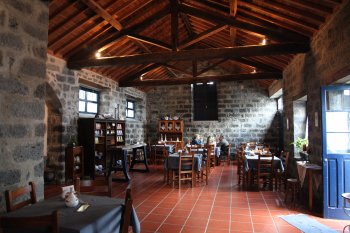
For a long time, São Miguel Island was the only place in Europe where tea was manufactured. Fábrica de Chá Porto Formoso was founded by Amâncio Machado Faria e Maia and operated between the 1920s and the 1980s. Recently, it has been undergoing a recovery process. Visitors can enjoy the estate's vast panoramic gardens, visit the museum space and the tea factory itself. Afterwards, they can relax and taste one of the factory's specialties in the tea room. It has a private park.
Museu Histórico Militar de Almeida
- heritage
Rua da Muralha
6350-234, Almeida
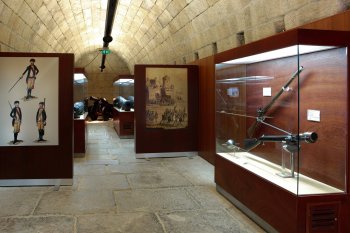
It is in the old town's casemates that the Military Historical Museum was created, an interactive space in which the History of Portugal is reconstituted, from medieval times to the most recent centuries, with a focus on the Peninsular Wars and, of course, on the invasion and siege of Almeida. Located in the basement of the Baluarte de S. João de Deus, within the walled area, the Casemates are 20 underground houses, made up of a perfect round vault, with the purpose of military defense. They were also known as Quartéis Velhos, given the lack of barracks to house infantry.
Museu do Cinema de Melgaço - Jean Loup Passek
- heritage
Rua do Carvalho
4960-542, Melgaço
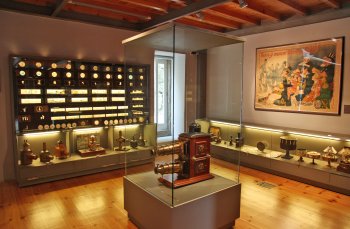
Museum located in the historic area of Melgaço, in the former police building. Here you can admire thousands of posters and photographs, silent film time machines, more modern equipment and many films. A vast collection donated to the municipality of Melgaço by Jean-Loup Passek, passionate about the village. Passek directed the cinematographic department at the Center Georges Pompidou in Paris and was director of the La Rochelle Film Festival. The museum contains a permanent exhibition area, with a small auditorium, and an area dedicated to temporary exhibitions.
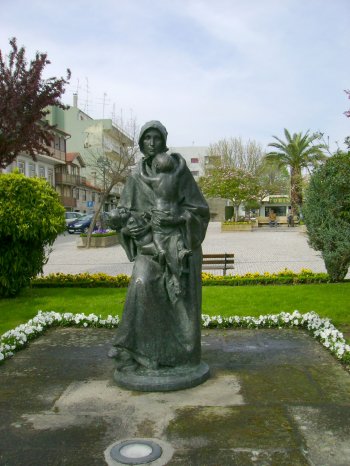
Estátua da Santa Maria Mantela
- heritage
Terreiro da Cavalaria
5400-342, Chaves
Legend of Mary keeping it that after this have had seven sons, and as at that time considered themselves infidels women who had more than one son, this sent fire on six of its seven river newborns. However, the husband found out and sent the boys to be created in six villages of the municipality of Chaves. Ten years later, her husband presented the six boys Maria keeping it. There is also the legend, that the seven have become priests in seven villages of the municipality.
Forno do Povo de Cerdedo
- heritage
Rua Central do Barreiro
5460-350, Cerdedo
The people of oven Cerdedo is a vernacular rural construction in granite, two waters, coverage in tile. Inside the building, to the right of the front door you will find the tendal, massive granite structure and, at the fundeira, you will find the oven where the local population continues to bake traditional bread. This equipment was, in ancient times, an important role in village sociality, the so-called "coffee of the people", was where they gathered during the evenings, was also the hostel of the poor, beggars and pilgrims, passing through the village, which then stayed overnight.