Explore the best places
Results for PROBLEMGO.com how to get out of jail without bail money in Portugal


Ecork Hotel Évora
- hotels
Quinta da Deserta e Malina
7000-804, Évora
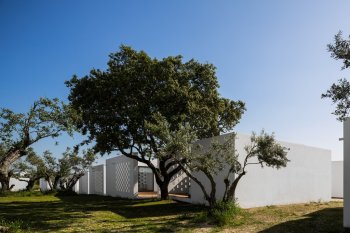
The Ecorkhotel, Evora Suites & SPA, in Évora, uses Cork and the ecology as hallmarks. Surrounded by the tranquility of Alentejo, this eco-resort spreads over 8 thousand square meters in a unique and welcoming environment among cork oaks, holm oaks and olive trees. Inside and out, the building establishes a strong relationship with Cork. In partnership with Amorim Cork, the outside of the hotel is covered with this material, something unprecedented in Portugal and little seen in the world. Inside, there are 56 private suites with 70 m 2 equipped with everything you need for maximum comfort.
Cemitério Lusitano-romano / Quinta da Relva
- heritage
EN323 - Quinta da Relva
5060, Provesende
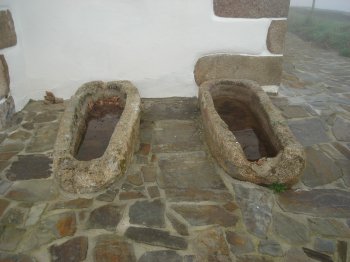
Roman and medieval necropolis, consisting of four graves of different types and chronology. Some graves are structured with vertical slate slabs, others in the shape of a box, and still others as anthropomorphic sarcophagi. The excavations carried out at the site allowed the removal of some remains consisting of ceramic artefacts, in addition to an anthropomorphic stele, currently on display in the Abade de Baçal Museum garden, in Bragança. However, of all the tombs discovered, only two anthropomorphic sarcophagi remain, leaning against the elevation on the Epistle side of the Sanctuary of Santa Marinha.
Cividade de Terroso
- heritage
Rua da Cividade, 20
4495-520, Terroso
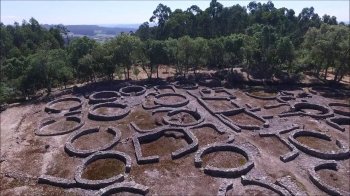
Fortified village with defensive organization consisting of three lines of walls. On the central platform, the urban planning shows an axial paved street, through the center of the village, appearing to intersect with another, forming four large units. Each one of them is divided into family nuclei made up of several buildings around a patio that is almost always paved. The excavations carried out from the beginning of the 20th century confirm the occupation of this region in a period that extends from the 7th century BC. until the 1st century AD.
Casa das Brolhas
- heritage
Rua Macário de Castro
5100-149, Lamego
Also known as Solar dos Castros, this house was built in 1777 using reused earlier structures, such as kitchen vaults and grain bins. It features a vast façade divided by pilasters into five sections highlighted by decorative motifs. The central section features a granite gate topped with a coat of arms. The garden, with an eighteenth-century design, consists of geometric flowerbeds bordered by boxwood hedges, a pond, and a small fountain. The vegetation is topiary-like, with a curious maze of tall hedges and houses carved from shrubbery standing out.
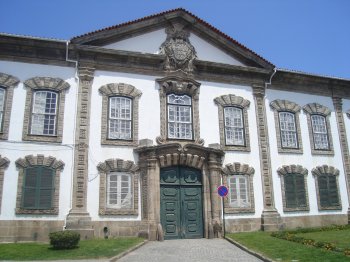
Parque da Mina
- leisure
Sítio do Vale do Boi
8550-391, Monchique
The theme park includes a house from the beginning of the 18th century, an old farm, populated with more than a hundred birds, ponies and dwarf goats, the recreation of an arbutus distillery and a charcoal factory. It is also possible to visit a deactivated ore extraction mine. In the house you can visit the office, the clock room, with dozens of clocks on the walls, the double bedroom with period furniture, the sewing room, among other rooms. In the bathroom, the bathtub stands out, imported from England in the 18th century. Rural style is evident all around.
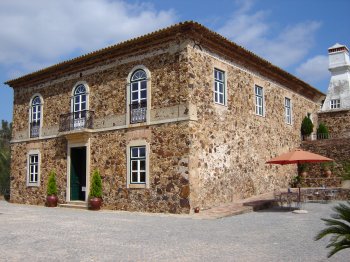
Museu Municipal Leonel Trindade
- heritage
Praça 25 de Abril - Convento de Nossa Senhora da Graça
2560-286, Torres Vedras
Founded in 1929 by Rafael Salinas Calado, it started out as an annex to the Church of São Pedro. After being transferred to the building of the former headquarters of the Irmandade da Santa Casa da Misericórdia, he would still move again. It is currently installed in the building of the former Convent of Graça, of the Order of Augustine Shoes. The main exhibition is an archaeological and ethnographic show with various pieces extracted from the surroundings. Of note is the Medieval Room with paintings and tombstones and the Linhas de Torres Room where you can admire documents, uniforms and …
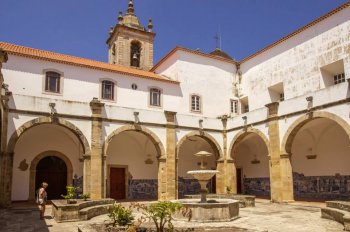
Igreja de São Pedro de Roriz
- heritage
Rua do Mosteiro de Roriz
4780, Roriz
The Monastery of São Pedro de Roriz was founded by Lady Unisco Godiniz, in the year 978. Its affiliation with the Benedictine Order dates back to 1902. In the 17th century, notable works were carried out, directed by Frei João Turriano, which results in the current appearance of the monastery. Its interior is rich in gilded carving and reveals traces of one of the most notable carvers of the "Braga school", Frei José de Santo António Ferreira Vilaça. Its style shows influences from French and German Baroque and Rococo.
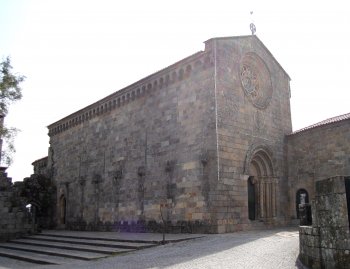
Igreja do Convento de Santo António
- heritage
Largo de Santo António
3810-169, Aveiro
Temple integrated in a convent, founded in 1524. In 1564, the church underwent renovation and expansion works and a century later it was rebuilt because it was in ruins. During the 18th century, it underwent numerous renovations, such as: application of gilded carvings in the chancel's altarpiece, placement of side altarpieces in the cross arch, covering the chancel with historian tiles from the workshop of Vital Rifarto, stalls in the choir high, building and covering the gilded carving and screens of the sacristy and construction of the cloister. It stands out for its twin chapels of Santo António and São …
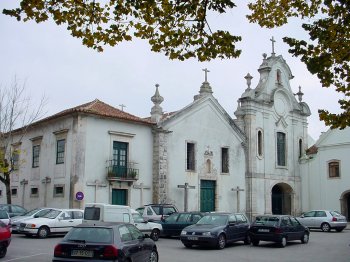
Igreja do Senhor das Barrocas
- heritage
Largo do Senhor das Barrocas
3800-248, Aveiro
Built in 1722, the crucifix was put inside the chapel in 1732. In the XVIII the panels and lateral altars were covered in golden woodcarving and the small bell was placed. In the XIX century it suffered several repairs and, in the XX century, preservation and valorization works were made. The chapel, with characteristics of joanino (King John of Portugal time) baroque, is a polygonal chapel. Although it has an erudite outline, this exemplar shows the participation of regional masters. The covering in woodcarving and the two oil paintings from the master André Gonçalves stand out.
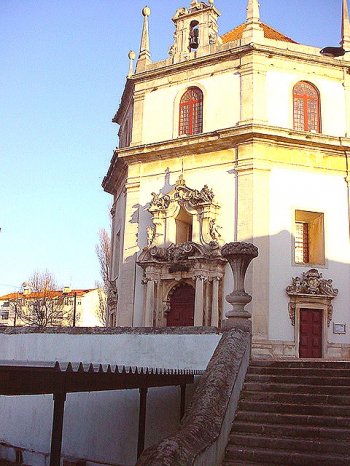
Igreja de Santa Maria / Igreja Matriz de Óbidos
- heritage
Praça de Santa Maria
2510-002, Vila de Óbidos
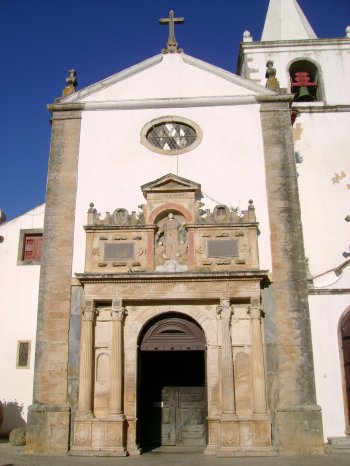
This building with three naves has a prismatic bell ringer tower with ashlars irregular on the corners, covered by a pyramidal dome and with traces from the Manueline. The altarpiece is in golden carving with a sacrarium with a mannerist structure. It presents a mannerist doorway and on its inside it stands out the glazed tiles coverage from the 17th century and the paintings from the 17th century from Baltazer Gomes and from Josefa de Óbidos. Also, worthy to mention is D. João de Noronha tomb considered a masterpiece from the Portuguese Renaissance.