Explore the best places
Results for visit site click MAKEMUR.COM How to bribe a guard to get extra privileges in prison in Portugal


Museu Epigráfico Egitaniense
- heritage
Rua do Lagar
6060-041, Idanha-a-Nova
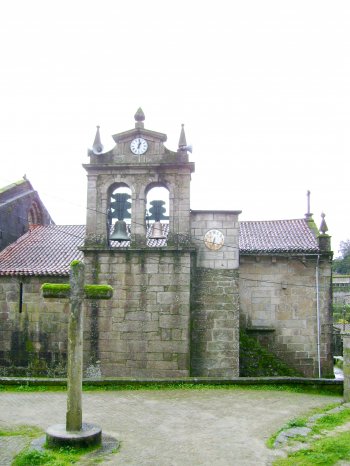
Idanha-a-Velha stands on the site of the glorious city of Egitânia, invaded and sacked countless times. Here we find vestiges of prehistory, the Celts, Roman Classicism, the Suevi, the Visigoths, the Arabs, the Portuguese Middle Ages, and buildings from the Manueline period. The Egitaniense Epigraphic Museum is housed in the town's cathedral, originally built on an early Christian temple and the first Visigothic cathedral built in the Iberian Peninsula. Inside, we can see the largest collection of Roman epigraphy in Europe ever found in a single location. Another part of this collection is part of the collections of the Tavares …
Casa Dom Dinis
- hotels
Rua Doutor Matos Magalhães, 7
7330-121, Marvão
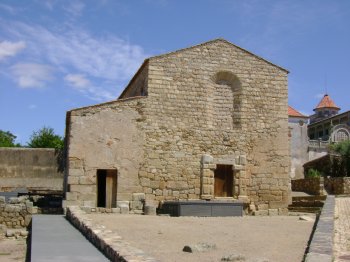
With views of Marvão Castle, Dom Dinis is situated at the top of the high village of Marvão. It features a roof-top terrace with panoramic views of the countryside below, and has air-conditioned guestrooms. The traditional rooms have terracotta floors and are decorated in natural tones. All rooms come equipped with a TV and a private bathroom with a hairdryer. Dom Dinis features medieval-inspired décor and also has a communal living room with a fireplace. The hotel is located 6 km from the ruins of the Roman city Ammaia. Nearby leisure activities include hiking and swimming in the Sever River. …
Núcleo de Arte Rupestre do Vale da Figueira - Teixugo
- heritage
Muxagata
5150, Muxagata
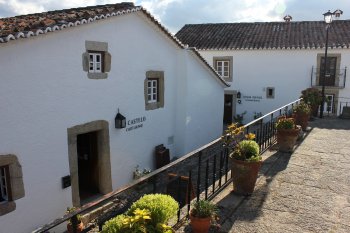
This is one of the rock art sites in the Valley of the Coa, forming a rare set of this type of art, essentially composed of stone engravings dated from the Upper Paleolithic. This core consists of a large natural wall in shale, on the left bank of the River, where we found a set of engravings of reasons perforation, interpreted as being two cattle and a geometric motif also perforation. There are still prints incisas geometrical and remains of a possible motive schematic anthropomorph, located on the right bank of the Ribeira. One can also observe a vertical panel …
Povoado de Fraga do Gato/ Alto de Trás da Fraga
- heritage
Paredes
5470-092, Covelães
It is believed that this location, known as Fraga of the Cat and located north of the village of Walls, about 1100 meters above sea level, is an ancient settlement. It is a small elevation in the middle of the plateau of Mourela, where several ceramic fragments were found consistent with ancient occupation of the site. Structural alignments are visible, apparent and in some branch points in the boulders. Northwest side are still two large walls, about two meters wide, spaced about twenty meters. There are several platforms where they have spotted some ceramic fragments. Is a place quite sheltered …
Povoado de Monte de São João
- heritage
Ferral
5470-122, Ferral
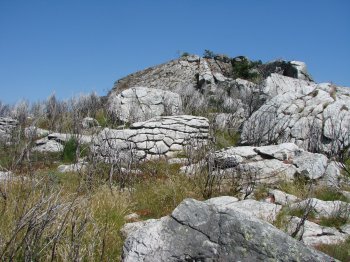
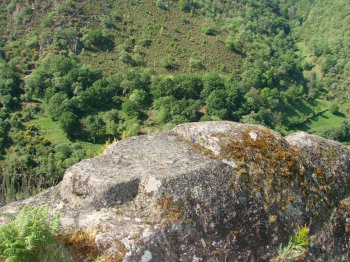
The slope of the Mount of São João, relatively close to the "Table of the Moors", in an elongated platform that ends in the escarpment Rabagão, gathered fragments of "tegullae" and a half tile. Currently, in addition to these indications, are not percetíveis other archaeological remains. On site existed until a few years ago a stone with a hole at the top, where, according to oral tradition, if I prayed the mass, serving the cavity to put holy water. Next to location, in the place called "Mesa dos Mouros" lies a granite outcropping carved in the shape of the table …
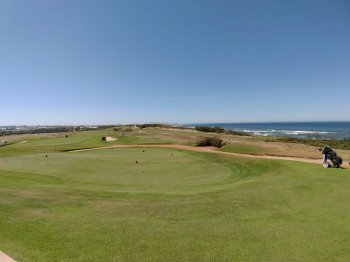
Estela Golf Club
- leisure
Lugar do Rio Alto
4570-242, Póvoa de Varzim
One of the "links" of Portuguese golf, considered among the 10 best courses in Portugal. He gained international notoriety by hosting two European Tour events. Located just 20 minutes from Porto's International Airport and close to Póvoa de Varzim, a lively summer city, built along three kilometers of beautiful coastal dunes, offering stunning views of the Atlantic Ocean. Designed by Portuguese architect Duarte Sottomayor, it is a typical Scottish style "links", with the difference that the grass used is Bermuda. Two large lakes give it more beauty, but it can get very demanding when the wind blows. Erratic exit shots …
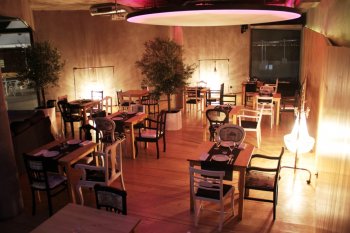
Portas do Sol
- food & drink
Largo das Portas do Sol - Beco de Santa Helena
1100-411, Lisboa
Situated in one of the privileged points of the city and with an extraordinary view of the Alfama and the river Tagus, the Portas do Sol is stated as a new oasis of the Lisbon circuit. The sofas around the terrace suggest an air of "dolce far niente", in addition to accommodate anyone who wants to enjoy the charms of the city without giving up the comfort. With optimum conditions of accessibility and a varied menu, the Portas do Sol offers also a part inside for those looking for a bit of shade and modernity. On the menu of the …
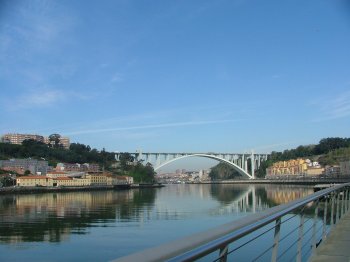
Ponte da Arrábida
- heritage
Sobre o Rio Douro
4150, Porto
Planned by Edgar Cardoso and opened in 1963 (although the Works began in 1957), the Arrábida Bridge was one of the more advanced architectonic works of its time. The 270 metres concrete span was, for some years, a world record on this kind of bridges. The arch spire has 52 meters and the roadway rises to 70 meters height. It is said that, at the opening, many photographers and journalists from abroad came to witness an expected tragedy, because it was common sense that the “large” configuration of the bridge would not stand the weight of the vehicles. Today, it …
Casa da Pereira
- heritage
Rua Fernão de Magalhães
5060-333, Sabrosa
Although the certainties are not absolute, everything suggests that Fernão de Magalhães was born in this house, and there is even a reference to Sabrosa in the navigator's will. Being a rural farm house, it has popular civil architecture, characterized by small openings, without erudite elements. The coat of arms inserted in one of the cornerstones of the house would have been chopped by order of King Manuel I, as the navigator made his great voyage of discovery at the service of the kings of Spain. The house was never sold and passed to the current owners by inheritance. In …
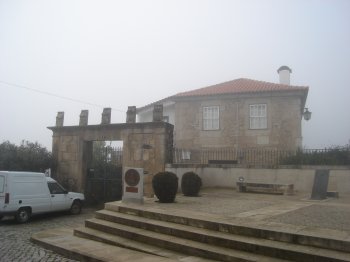
Mosteiro de Ermelo
- heritage
Ermelo
4970-140, Arcos de Valdevez
Despite its integration into the Cistercian Order, the life of this monastery was turbulent and short. During his visit in 1553, the Abbot of Clairvaux found it in a state of complete neglect and poverty, which is why it was secularized in 1560, becoming a parish church. What we see today in Ermelo is a beautiful Romanesque church adapted to the life of a small parish, first in the 16th century and again in the 18th century. Of the nave that stood to the south, only the beautiful triumphal arch remains, now open to the sky outside. The monastery's dependencies …