Explore the best places
Results for browse main MAKEMUR.com pay someone to make domestic violence case disappear Jerusalem in Portugal


Hotel Santa Justa Lisboa
- hotels
Rua dos Correeiros, 204
1100-170, Lisboa
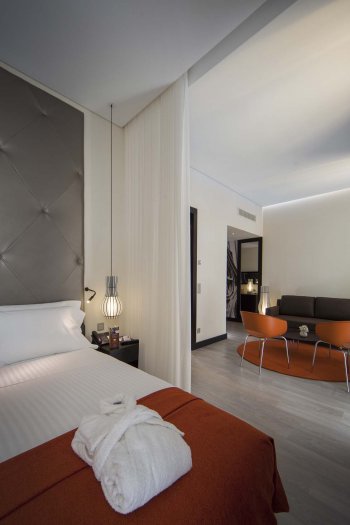
The Santa Justa Hotel is a four star hotel situated in the historic and commercial centre of the city of Lisbon. The site has been one of the most emblematic buildings of downtown Lisbon, the ancient Lanalgo Galleries. Most rooms it is possible to observe an interesting overview of this monumental area of the city. Thus, the main sights include the ruins of Convento do Carmo, Santa Justa elevator or the miradouro de São Pedro de Alcântara. It is also on the premises of the hotel the Coffee-Bar Lift which serves buffet breakfast or where guests can enjoy a cocktail.
Capela de Santo Aleixo
- heritage
Largo de Santo Aleixo
5460-330, Sangunhedo
The chapel of Sangunhedo, dedicated to Santo Aleixo, is a temple in granite of North\/South oriented rectangular plant. The main façade is dominated by a rectangular cover, in whose lintel is inscribed the year 1758 date on which the building was rebuilt, flanked by two glasses and surmounted by another, decorated with a rosette. The stretching of the gable has a belfry crowned with a cross flanked by pinnacles with ball, similar to the spires which conclude the corners. Inside, in granite, stands the high altar in gilt, which houses religious imaginary. Is celebrated in this Chapel, among others, the …

Capela de São Bartolomeu
- heritage
EM312-2
5460-125, Beça
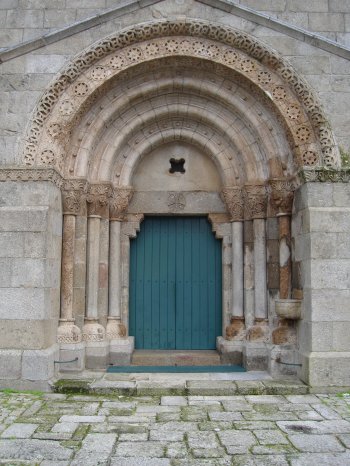
The parish church of Romanesque style, Wicked, is dedicated to the Apostle St Bartholomew. Is a longitudinal-oriented plant building towards ENE\/OSO, consisting of nave and chancel, behind which lies the vestry. The main façade, with a round arch portal, is topped with a gable with cornice, the stretching of the which is a Greek cross surmounted by a belfry. Inside the temple granite predominates, choppy by colourful altars and religious imaginary, the floor is paved with 49 caps graves, numbered and separated by tabs. It is in this church that, annually to 24 August, religious crafts are celebrated the feast …

Casa Mãe da Rota dos Vinhos
- leisure
Largo de São João Baptista, 1
2950-248, Palmela
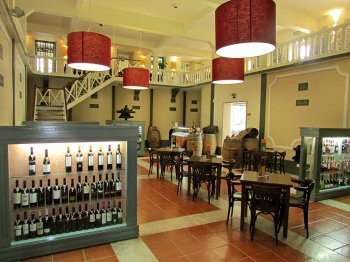
Casa Mãe da Rota dos Vinhos is located in the heart of Vila de Palmela and its main objective is to promote wines from the Setúbal Peninsula/Costa Azul. It is an old cellar restored for this purpose that displays products, sells and offers wine tastings. Here you can taste the best of what this region has to offer: the fruity white wines, the young rosés, the full-bodied Castelão reds and the Moscatéis de Setúbal. In addition to wine, this house also offers regional cakes, honey, jams and cheese from Azeitão.
Casa da Portaria
- hotels
Largo do Terreiro
3610-082, Tarouca
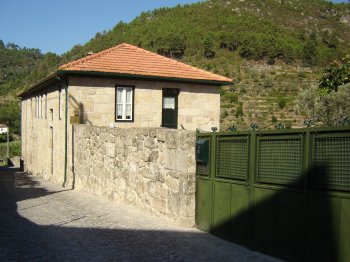
The House Ordinance, at Tarouca, is a granite House, recovered in 2002, from rustic moth, located at 50 meters from the monastery of São João de Tarouca, founded in 1139. Given the proximity to one of the tributaries of the Duero River, the river Varosa, activities favour contact with nature. Offers 6 double rooms, 3 with en-suite bathrooms, a main kitchen and another in support of the Hall and the courtyard, a lounge, a TV lounge, games room and 1 2000 m 2 garden and farming land. The House Ordinance is integrated into the Cistercian Routes.
Forte ou Castelo de Santiago da Barra
- heritage
Rua de Santiago da Barra
4900-357, Viana do Castelo
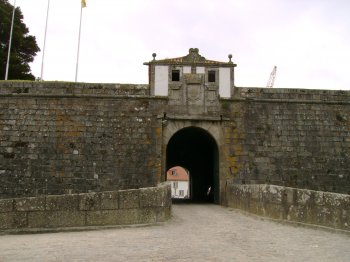
It is believed that this place has been inhabited since prehistoric times, as indicated by numerous findings. The first fortification would date from the reign of Dom Afonso III, although the most likely date is from the 15th century. During the reign of King João II and/or King Manuel I, the medieval castle and the Torre da Roqueta were rebuilt. In 1700 and 1799, during the reign of Philip II, it underwent further repairs and reconstructions. Attesting to these works, a rococo royal coat of arms stands out over one of the main doors.
Igreja Matriz de Freixo de Espada à Cinta
- heritage
Rua de Trás do Adro, 26
5180-125, Freixo de Espada à Cinta
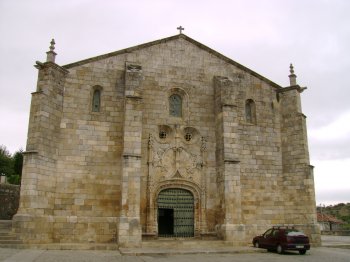
The church has three rectangular naves, a chancel, two apsidioles, and a sacristy. The main elevation, finished with a gable and formed by three sections separated by buttresses, features a door with a large, depressed arch with an ornate frame, topped by a decorative arch. The interior features a flagstone floor and ribbed vault ceiling. Also, noteworthy is the high choir in the first section and the wrought-iron pulpit. One of the apsidioles provides access to the sacristy through an 18th-century door, topped by a polychrome national coat of arms. The other apsidiole houses a funerary monument in an arcosolium.
Igreja Matriz de Mesão Frio / Igreja de São Nicolau
- heritage
Rua de Santo António, 36
5040-310, Mesão Frio
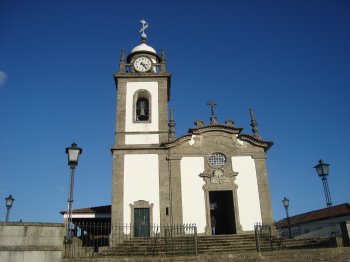
Although the antiquity of the church is evident in the thickness of the walls, clearly visible in the deep cut of the windows, and it is believed to have Romanesque roots, the temple probably only dates from the 14th century. It underwent extensive renovations in the mid-18th century, which gave it the baroque and rococo character it presents today. Inside, with a single nave, the domed and paneled roof, with 66 paintings, and the main chapel ceiling, which is divided into 18 paintings, stand out. The altar features a gilded altarpiece. Tradition says that this church was built by Queen …
Edifício da Sociedade Amor da Pátria
- heritage
Rua Dom Pedro IV
9900-111, Horta
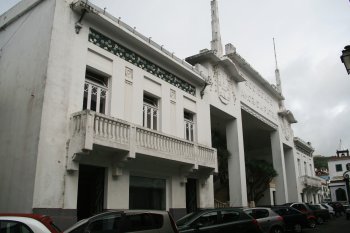
The current building was designed by Joaquim Norte Júnior and inaugurated on June 30, 1934. It replaced the building that burned down in 1930 at the same venue, property of the Masonic society "Love of the fatherland". The building, in presenting an Art Deco style, stands out from the other buildings of the city of Horta. It is a large-scale construction where stands out, in the main façade, a double staircase flanked by two Dragon trees. It was here that, in 1976, took place the inaugural act of the first term of the Regional Government and, for several years, worked …
Igreja de São Vicente de Sousa
- heritage
Lugar da Igreja
4650-529, Sousa
This temple represents a good example of the Romanesque style, with a single nave and a rectangular transept. Inside, it features baroque carvings on the main altar and statuary in the same style. The antiquity of this building is confirmed by two inscriptions on the walls, both from the Romanesque period. The first, from 1214, commemorates the church's dedication and can be found on the outside of the nave's wall, while the second, from 1162 - the construction date of the original transept - is believed to be a funerary inscription or commemorating the construction of an arcosolium (tomb arranged …