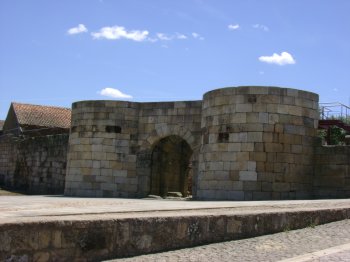
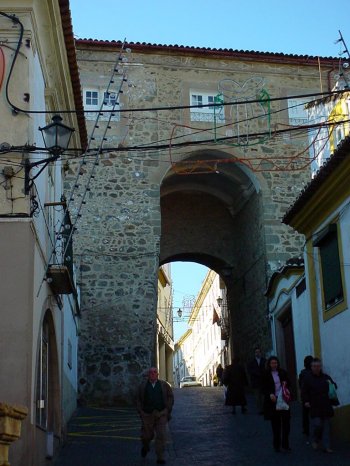
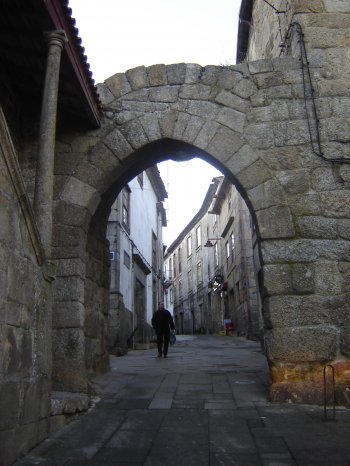
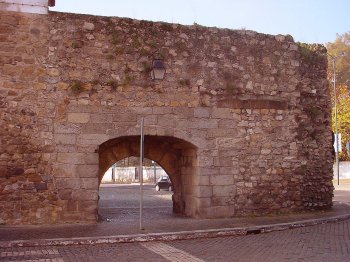
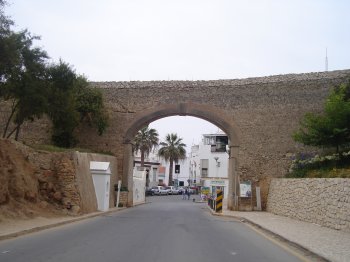
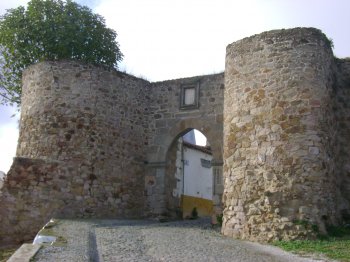
Door integrated into the Roman walls of Idanha-a-Velha, walled fence with a length of about 750 feet. This is one of the two doors that gave access to the interior of the village.
Door integrated into the Roman walls of Idanha-a-Velha, walled fence with a length of about 750 feet. This is one of the two doors that gave access to the interior of the village.
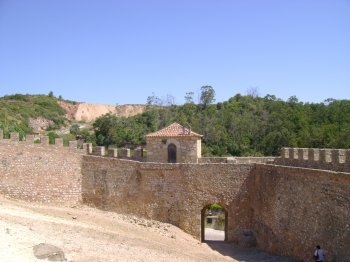
This is one of the few fragments of the Medieval Castle in the middle ages had great importance in the defense line of Lisbon. Beyond this door, there are still a few fragments of the walls and the Tower of the Cuirass.
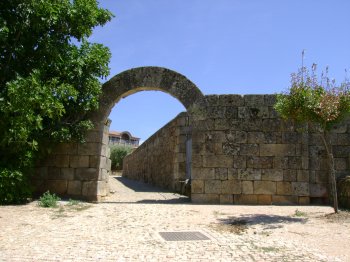
The Porta da Devesa dates back to the 13th and 14th centuries and forms an archway over Rua 5 de Outubro. Its name comes from the fact that it separated the town proper from the fertile countryside that followed it at the time, or even because it was the terminus of that same town.
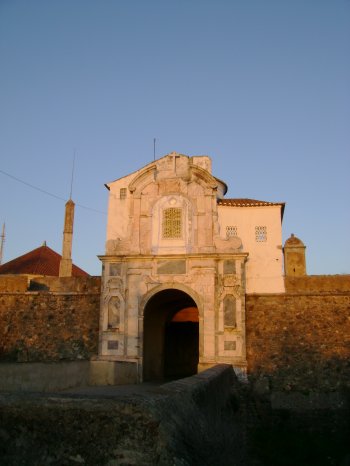
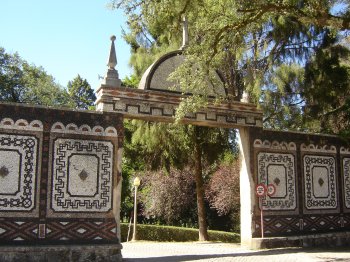
It is one of the city's gates, built together with several walls, in the 16th century, for military and safety purposes. It was remodelled in the 20th century. Classified as a National Monument.
Porta da Ravessa or Porta do Sol is one of the two doors of the castle and holds the mark official mark that cloth manufacturers had to bear in markets and fairs.