Explore the best places
Results for Santa Maria do Bouro in Portugal
Convento de Santa Maria de Semide
- heritage
Rua Mosteiro Santa Maria
3220-423, Semide
Founded in the 12th century by the Benedictine Order, this monastery was significantly altered by a fire in 1664. It features a 16th-century cloister and part of a 17th-century one. The church, dating from the 17th century, features 17th- and 18th-century tiles. Notable features include the sculptures on the main altarpiece, attributed to Friar Cipriano da Cruz, the paintings on the choir stalls, the Rococo organ, and the cloisters.
Torre do Mosteiro de Santa Maria
- heritage
Rua Mosteiro Santa Maria
3220, Semide
Tower belonging to the monastery founded in the 12th century by the Benedictine Order. It underwent profound alterations in the 17th century after a violent fire.
Igreja Matriz da Santa Maria
- heritage
Rua de Serpa Pinto, 23
7630-174, Odemira
It belonged to the ancient franciscan convent when it was built, in the 16th century. It was adapted to become a parish church after 1835. It is an example of the mannerist architecture but with the simple features of the franciscan churches.
Igreja de Santa Maria do Castelo
- heritage
Largo de Santa Maria, 14
6400-410, Pinhel
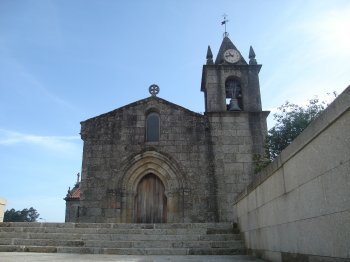
This religious monument consists of a three-bay nave, a chancel, side chapels, a sacristy, and a bell tower. The main façade consists of a rounded portal and a circular oculus, flanked by a bell tower, the upper one having a double bell tower. This façade features a window overlooking the Stations of the Cross. The interior features the baptistery, which houses the baptismal font, the Mannerist niche, the painted panels of the chancel and altarpiece, and the Christ the Redeemer statue on the tabernacle door.
Castelo de Santa Maria da Feira
- heritage
Alameda Doutor Roberto Vaz Oliveira
4520-141, Santa Maria da Feira
A Gothic castle, imposing and austere, where the summit towers with spires and four pinnacles stand out as ornamentation. The walls are protected by crenellated embrasures and loopholes. Outside the walls, it is worth visiting the Chapel of Our Lady of the Incarnation and the Chaplaincy House, in 17th-century Baroque style. The population moved to the vicinity of the castle attracted by the trade of goods that took place there, giving rise to the current city.
Igreja de Santa Maria do Castelo
- heritage
Rua Dom Francisco de Almeida
2200-242, Abrantes
Commissioned by King Afonso II in 1215, this church was destroyed by an earthquake in 1429 and rebuilt from 1433 onwards. In the last quarter of the 15th century, the tombs of Don Diogo and Don Lopo were built here. Of particular note are the Gothic triumphal arch, the 16th-century tombs, the Mudéjar tile panels, and part of the original altarpiece. In 1921, the Abrantes Regional Museum was established here.
Homenagem à Doutora Maria Isabel Pereira
- heritage
Rua Júlio Augusto Montalvão Machado
5400-223, Chaves
Bust erected in 2002 by the Association of volunteer firefighters in Flaviense homage to meritorious Maria Isabel Pereira.
Casa d'avó Maria
- hotels
Rua Padre Luís Cunha, 27
6270-372, Arrifana
Casa rústica toda em pedra. A casa está situada na parte antiga e central da aldeia, virada para o Largo do Rossio e foi recuperada para poder receber famílias que pretendam visitar a Serra da Estrela. A Casa d’avó Maria é um T1 duplex que dispõe de 1 quarto de casal, casa de banho, cozinha completa, sala com lareira, lenha, TV, DVD e sofá-cama para 2 pessoas.
Arquivo Municipal de Terras de Bouro
- heritage
Praça do Município
4840-100, Terras de Bouro