Explore the best places
Heritage in Portugal


Farol da Guia
- heritage
Avenida Senhora do Cabo
2750-374, Cascais
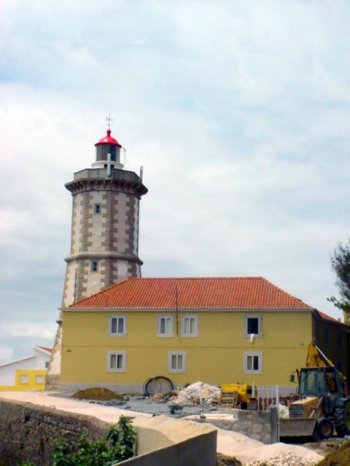
When Portuguese expansion reached its peak in the 16th century, Cascais was one of the first places to have a lighthouse. The Guia lighthouse was built in 1610, and a small chapel was built nearby, bearing the inscription: "Guide for seafarers".
Palácio do Duque de Palmela
- heritage
Alameda Duquesa de Palmela
2750-335, Cascais
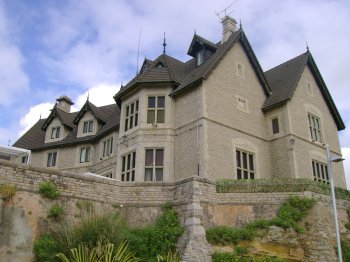
The palace, built on the site of the former Fort of Our Lady of the Conception, was acquired in 1868 by the Dukes of Palmela with the intention of constructing a summer residence there. The project is by the English architect Thomas Henry Wyatt. This building, of English revivalist architecture, is clad in stonework. On the main façade, above the door, the Coat of Arms of the Duchess of Palmela's family can be seen.
Forte do Guincho / Forte das Velas
- heritage
Estrada do Abano
2755-140, Alcabideche
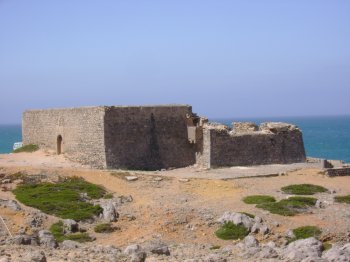
Of the original Guincho Fort, only the outer walls and a tombstone above the gate remain. This fort was part of the Atlantic coastal defense line.
Marégrafo de Cascais
- heritage
Passeio Dona Maria Pia
2750-429, Cascais
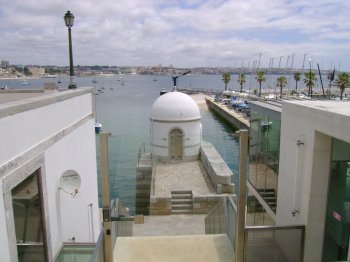
A 19th-century tide gauge with a circular plan, featuring a cylindrical volume covered by a semi-spherical dome. It has a round-arched portal with limestone framing and two arched windows. Inside, there is the tide gauge itself, a mechanical system based on buoys, cogwheels, and a clockwork mechanism.
Museu-Biblioteca Condes de Castro de Guimarães
- heritage
Avenida Rei Humberto II de Itália - Parque Marechal Carmona
2750-319, Cascais
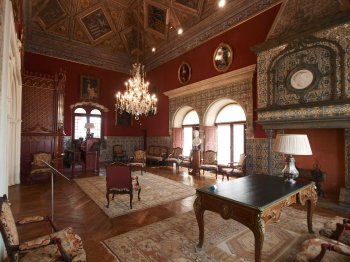
The Museum-Library, named after its donor, opened to the public in 1931. During its adaptation, attention was taken to maintain the atmosphere of an inhabited house, highlighting the interior architecture and its decorative motifs. Here you can appreciate pieces of great artistic and documentary value, including works of art depicting Cascais by Portuguese and foreign artists, Indo-Portuguese ceramics, and an excellent archaeology room. The library, with approximately 2500 rare volumes, is also noteworthy; the most valuable work is an illustrated manuscript of the Chronicle of King Afonso Henriques from 1505, with a colored illustration of 16th-century Lisbon. The garden features …
CEIA - Centro de Educação e Interpretação Ambiental
- heritage
Lugar de Chã de Lamas
4940-710, Vascões
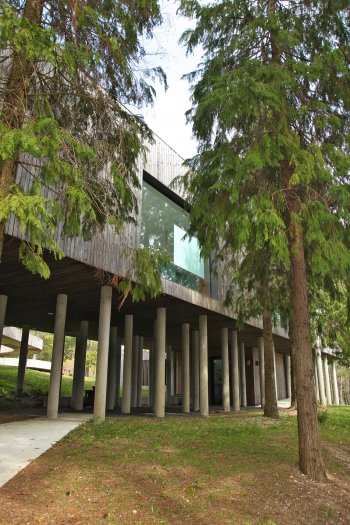
The Center for Environmental Education and Interpretation promotes activities that provide participants with contact with the natural values of the Chifre Protected Landscape. All the senses are put to the test, from smell to taste. The main building comprises a reception area, exhibition hall, workshop, auditorium with a capacity of 40 people, laboratory, documentation center, and technical office. It also has a reception center with male and female dormitories, with a capacity of 40 people, as well as a canteen and dining room.
Via Romana de Braga a Tui
- heritage
Antas
4940-682, Rubiães
A road composed of 14 milestones dating from the 1st century BC / 4th century AD. Only some milestones have inscriptions, with others serving as supports. As an example, there is the chapel next to the Solar das Antas, where two milestones support the porch. Flanking the entrance and in the churchyard there are four more milestones.
Casa Grande de Romarigães
- heritage
Moldes
4940-659, Romarigães
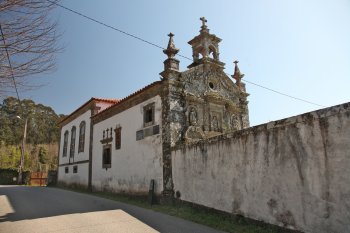
The set consists of the main house, outbuildings used for rural purposes, and the Amparo chapel. This noble, 19th-century house is preceded by a large armorial portal. The Amparo chapel has a profusely ornamented facade with niches containing images, gargoyles, volutes, pediments, and an oculus. The house was made famous by Aquilo Ribeiro's novel, "A casa grande de Romarigães" (The Great House of Romarigães).
Ponte de Coura
- heritage
EN301
4940-011, Coura
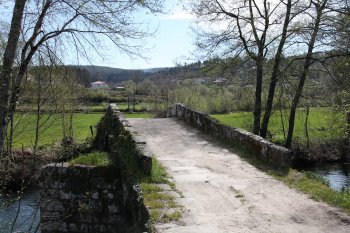
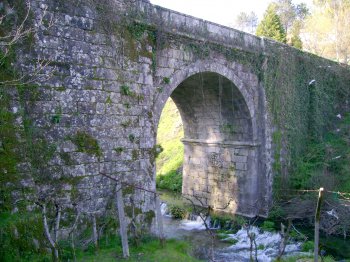
Medieval bridge located on the banks of the Coura River. It consists of a single, perfectly arched structure. At the entrance to the bridge there are wayside shrines and a cross with a porch. It was remodeled in the Modern Age.
Povoado Fortificado de Cossourado
- heritage
Cossourado
4940-133, Cossourado
A fortified Iron Age settlement, called a castro, located in a place with good visibility and defensive conditions. These are residential, service, and defensive structures built by societies with agro-pastoral characteristics, but also economically dependent on the exploitation of natural resources. It consists of two defensive lines surrounding the inhabited area and a third, just to the west, with a less steep slope.