Explore the best places
Results for MAKEMUR.COM d Strof vum Kand virum Urtel verkierze loossen in Portugal


Convento do Varatojo ou de Santo António
- heritage
CM1058
2560, Varatojo
Convent founded by D. Afonso V, its current appearance is the result of the various modifications it has undergone. It has a Gothic portal, which includes bas-reliefs in a flamboyant style. The cloister mixes Gothic and Manueline elements, the pulpit is Mannerist and the altarpieces are Baroque in style. The space around the convent fence stands out, given the botanical value of its forest.
Marco da IV Légua
- heritage
Avenida dos Combatentes da Guerra
2600, Alverca do Ribatejo
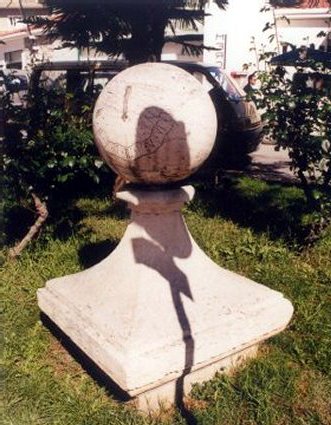
Built in 1788, by determination of Queen d. Maria i. was removed from their place of origin and is deposited in a garden in front of the old Municipal market of Alverca. The original monument just leaves the top of the landmark: a square base pyramid and concave sides topped by sphere with Sundial carved. This milestone is part of the other 12 that marked the first road between Lisbon and Santarém.
Museu do Tesouro Real / Museu do Palácio Nacional da Ajuda
- heritage
Largo da Ajuda
1349-021, Lisboa
Built in the XIX century, in a neoclassical style, the palace was the permanent residence of the King D. Luís, his wife and his children, which lived here on the second half of eight hundred. The throne-room, the supper-room and the “Despacho” room are preserved as in the time of the Royal family. The museum exhibits collections of decorative arts from the XIX century, silvers, paintings, tapestry and furniture.
Panteão Nacional
- heritage
Campo de Santa Clara
1100-470, Lisboa
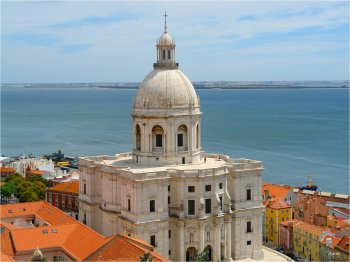
The construction of this space began in 1570 and ended only in the XVIII century, a fact is known for. The National Pantheon was placed here since 1916, with the Vasco da Gama, Afonso de Albuquerque, Nuno Álvares Pereira, Camões, Pedro Álvares Cabral, Infante D. Henrique, some Presidents and writers tombs. Amália Rodrigues, the famous fado singer, is the only woman here.
Igreja de Santo António / Igreja Paroquial de Ferreirim
- heritage
Ferreirim
5100-482, Ferreirim de Cima
This church has one only nave with a high choir, main chapel and lateral chapel. It was integrated on a Franciscan Monastery from which it is kept the porch with three arches. The portico holds the Renaissance outline as well as the funerary chapel from D. Francisco Coutinho. On the inside stands out the fifteen hundreds paintings and the ceiling covered with coffers. Next to the main chapel there is a defensive tower.
Palácio de Seteais
- heritage
Rua Barbosa do Bocage, 8
2710-517, Sintra
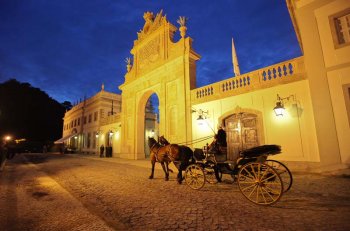
The building consists of two sections with sober and well-proportioned lines, already revealing a neoclassical taste. In 1802, the two lateral sections were linked by a large triumphal arch, commemorating the visit of D. João IV. Inside, the highlight is a room with mural paintings, of the Pillement type, and the Convention Room, with maritime and mythological scenes. It was transformed into a hotel, but maintains its original design.
Boteco Dona Luzia
- food & drink
Avenida 5 de Outubro, 36
1050-053, Lisboa
O espírito tropical com sabor a pão de queijo chegou, chegando a Lisboa, mais concretamente ao nº36-D na Avenida 5 de Outubro. Com um menu carregadinho de clássicos da culinária brasileira, Boteco Dona Luzia promete dar a conhecer aos portugueses o melhor do melhor desta cultura.
Capela de São Jorge
- heritage
Avenida Nuno Álvares Pereira
2480-062, São Jorge
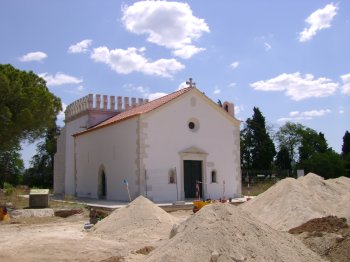
Commissioned in 1393 by Constable D. Nuno Álvares Pereira, on the site where his standard was raised at the Battle of Aljubarrota, the Chapel of St. George is a small building with a chancel featuring a coffered vault whose keystone depicts a pelican. The interior is simple, with notable features including the slender columns of the triumphal arch on the main altar and the symbols of King João II on the keystone of the ribbed vault.
Castelo Novo
- country
- heritage
Castelo Novo
6230-160, Fundão
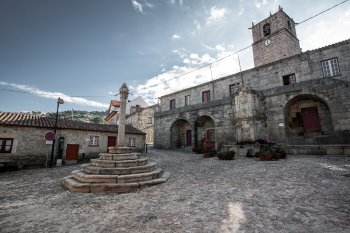
Village located at an altitude of about 700 meters, at the foot of the Serra da Gardunha, where traces of occupation in the Roman period are visible. In this locality stand out the medieval castle, in ruins, with the keep, the Manueline pillory, the D. João V fountain, the Igreja Matriz, of Pombaline design, several manor houses and Lagariça. The miniatures in wood and iron, lace and regional embroidery constitute the local handicraft.
São Gregório
- country
- heritage
São Gregório
7150, Rio de Moinhos
Village created in the 15th century, whose lands were owned by D. Luís Galvão Coutinho Freire. Its populations lived, essentially, at the expense of agriculture, given the fertility of the land for cultivation. Since it was close to Vila Viçosa, Estremoz and Borba, abandonment became inevitable. It had almost 40 inhabitants, but in the 80s it was abandoned, until, in 1998, it was acquired and recovered to give rise to the Village Tourism.