Explore the best places
Results for check main MAKEMUR.com how to get out of jail fast for money in Portugal


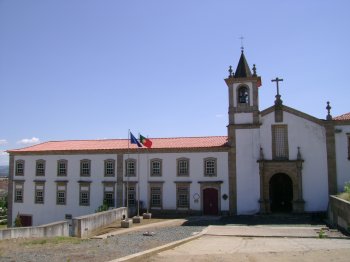
Convento e Igreja de São Francisco
- heritage
Rua de São Francisco, 59
5300-037, Bragança
Built in the 13th century to house the mendicant order of San Francisco, it underwent several renovations in the following centuries, with the Mannerist façade dating back to 1635. In the second half of the 19th century, in the convent area, it was built the Military Hospital and, later, the Duke of Bragança Asylum. Among the various 18th century altarpieces it has, the one in the Chapel of Nossa Senhora da Conceição stands out, in which some rocaille applications are notorious.
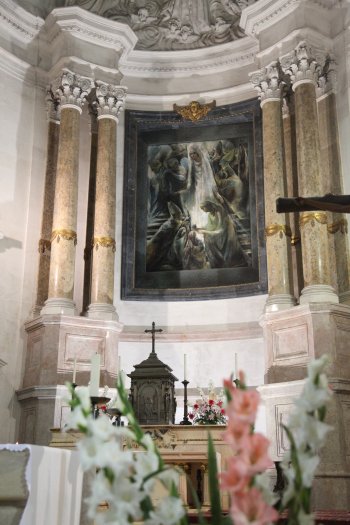
Basílica de Nossa Senhora do Rosário de Fátima
- heritage
Cova de Iria
2495, Fátima
Temple of neo-baroque structure, built in the early 20th century, on the site of the apparitions of our Lady. Dominated by a central tower of several floors, the colonnade is decorated by ceramic panels representing the Via Crucis. Designed by the Dutch architect Gerard van Kriechen and continued by the architect João Antunes, stands out for its dimensions, the statue of the Immaculate Heart of Mary in the niche of the tower and the mosaic that represents the Holy Trinity crowning of our Lady.
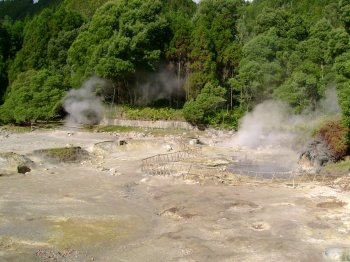
Cozido nas Caldeiras das Furnas
- leisure
Lagoa das Furnas
9675-090, Furnas
This is the best-known dish in the local gastronomic culture. Vegetables, pork and beef sausages are placed in a pan and placed in the heat of the boilers for around six hours. Then just dig out the pot and enjoy. At Lagoa das Furnas, as long as you show up early, you can cook your own stew, with the help of a person responsible for the Furnas Parish Council. Otherwise, the various restaurants in the surrounding area offer this delicacy.
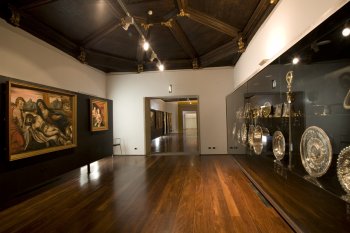
Museu Abade de Baçal
- heritage
Rua Abílio Beça, 27
5300-011, Bragança
Installed in the building of the former Bishop's Palace of Bragança, this museum includes collections of Sacred Art, Epigraphy, Archaeology, Jewellery, Ethnography, Furniture and Painting, in which paintings by José Malhoa, Abel Salazar and 70 drawings by Almada Negreiros stand out. It was created in 1915, initially as the Regional Museum of Works of Art, Archaeological Pieces and Numismatics, adopting its current name in 1935 as a tribute to the researcher, scholar and former director of the Museum.
Galeria dos Benfeitores da Santa Casa da Misericórdia do Porto
- art
Rua das Flores, 5 - 15
4050-262, Porto
The Church dates from the XVI century but suffered profound changes during the baroque period, from which we point out the Nicolau Nasoni’s front. Neighbouring the church and the sacristy, you’ll find the Galeria dos Benfeitores, a fine exemplar of the iron architecture where valuable paintings are in exhibition, namely the famous Flemish painting “Fons Vitae”. In exhibition are also religious and civil jewellery Works from the XVI and XX centuries.
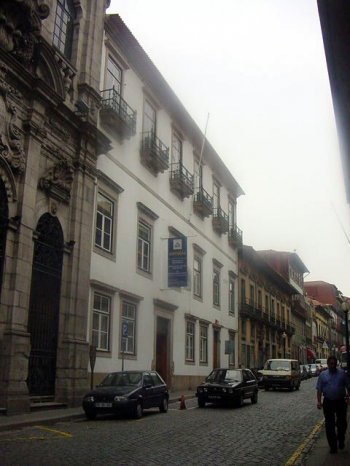
Igreja Matriz de Almeida / Igreja do Convento de Nossa Senhora do Loreto
- heritage
Rua Joaquim Carvalho dos Santos, 31
6350-234, Almeida
Built in the 16th century, the building initially housed the Convento das Freiras Terceiras Regulares de S. Francisco, dedicated to Nossa Senhora do Loreto. Later, in the 18th and 19th centuries, it was a military headquarters and hospital. After the explosion of 1810, it was remodeled and became the village's Mother Church. Inside, the Capela do Menino Jesus stands out, with a portal from 1699. Currently, the temple is dedicated to Nossa Senhora das Candeias.
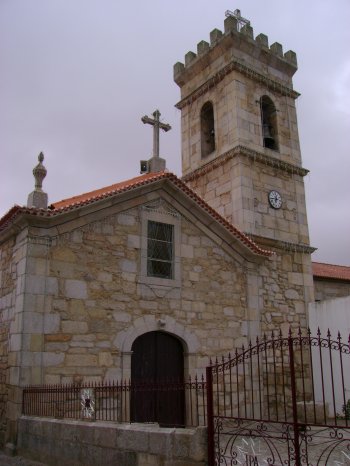
Edifício do Teatro Garcia de Resende
- heritage
Rua do Teatro, 10
7000-510, Évora
Building designed by engineer Adriano da Silva Monteiro (1846-1925), with neoclassical traits, of remarkable Italian theatrical architecture, having been opened in 1892. In the living room of spectacle stands out the ceiling, by António Ramalho, with an allegory alluding to the themes of tragedy and comedy, where, among other things, is part of the name of Garcia de Resende. In addition to work as show room, it also has a school of theatrical training.
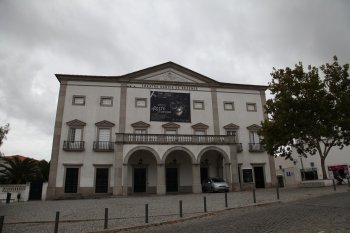
Mercado Municipal de Santarém
- heritage
Rua Doutor Jaime Figueiredo, 22
2005, Santarém
Located near the city's courthouse, this 1930s building stands out for its interesting and extensive collection of tile panels. In total, there are 55 figurative panels, along with eight decorative ones made in the old Sacavém Factory, featuring tourist and regional promotional motifs. The building, which has a distinct architectural style, was built on the site where the old open-air market was held for centuries, in what was known as Praça Velha.
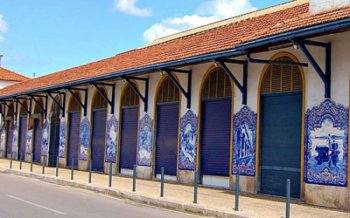
Igreja de Santo Ildefonso
- heritage
Rua de Santo Ildefonso, 11 - Praça da Batalha
4000-542, Porto
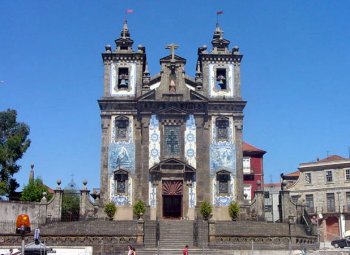
The Santo Ildefonso Church is placed at the beginning of the street with the same name. This church stands out immediately for its azulejos (tiles), which cover almost all of it. Its reconstruction started in 1730, because the first church was in ruins, and ended in 1737. The walls have Jorge Colaço’s azulejos (1932), with scenes from Saint Ildefonso’s life and Eucharist allegories. The lateral altars are neoclassical works and the co-lateral altars are rococo.
Igreja de Mondrões / Igreja de São Tiago
- heritage
Lugar da Igreja
5000-325, Vila Real
In the 18th century the church was reconstructed over an older one. It has a curious façade ofe the final baroque. Above the portico, sided by the images of Saint Peter and Saint Paul, the sculpture of Daint Jack "mata-mouros" (killer of Moors) stands out. It has a bell tower and the interior has one nave covered by an ogival dome of jagged ends. A special not to the carvings in the pulpit, the baptismal washbasin and its supporting column.