Explore the best places
Results for enter here today MAKEMUR.com buy a way out of jail without paying full bail in Portugal


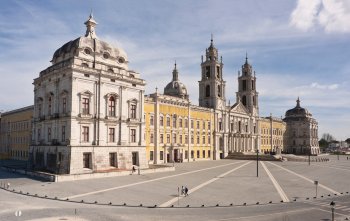
Convento de Mafra / Palácio Nacional de Mafra
- heritage
Terreiro Dom João V
2640-492, Mafra
Convent built by Dom João, in 1711, having as main architect Frederico Ludovice. It is the most luxurious national convent, proof of the richest reign in the country's history. It is of Johannine Baroque style and is inspired by the Spanish model of S. Lourenço of Escorial. It has three distinct elements, the Royal Palace, the convent and the Basilica. The facade is flanked by two large turrets, finding themselves at the Centre the Basilica, flanked by two bell towers. The interior of the Church, where is obvious the classical influence, has a nave, ornamented with marble of several colors, …
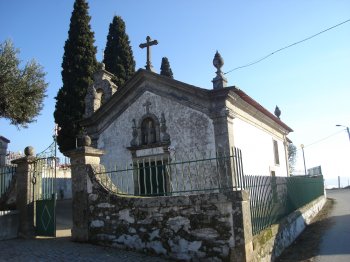
Capela de São Pedro de Medrões
- heritage
EM603 - Contador
5030-306, Medrões
Painted white, this chapel boasts well-preserved and prominent stonework. On the main facade, the small niche above the main door stands out, where there is a stone sculpture of Saint Peter. This round arched niche is crowned by a cushioned cross and flanked by stonework rosettes. The interior is spacious and stunning due to its good ambiance, richness, art and profusion of Baroque carvings, including the magnificent main altar with twisted columns, volutes, angels and vegetal ornaments. The paneled (wooden) ceiling of the chancel is decorated with thirty-five coffers each representing figures of saints and popes. The ceiling of the …
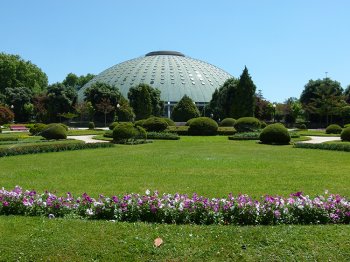
Jardins do Palácio de Cristal
- country
Rua Dom Manuel II
4150-346, Porto
In the center of Porto, the gardens of Palácio de Cristal are the ideal place to take a stroll away from the hustle and bustle of the city. The original Palácio de Cristal was demolished in 1951 to make way for the Sports Pavilion, later christened Pavilhão Rosa Mota. From the original work, which dates back to 1860 and was designed by F.W.Shields to host agricultural and industrial exhibitions, its vast garden remains. The leafy trees, the garden beds, a lake, fountains, animals that roam freely and the little corners to discover, create the perfect environment for a long walk …
Penha Garcia
- country
- heritage
Penha Garcia
6060, Idanha-a-Nova
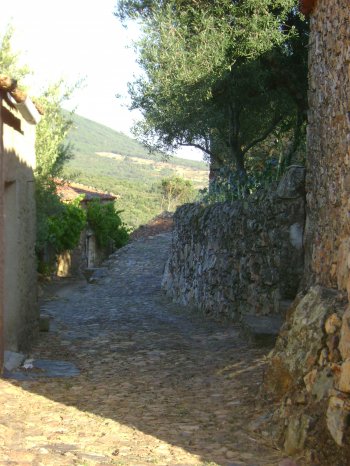
On the right bank of the Ponsul river, on the south side of the Penha Garcia Mountain foothill, this village, with the same name as the mountain, is known for the many fossils found there (trilobites). Penha Garcia must have once been a lusitan castro (a celtic village). Of th four churchs that once existed here only the church of the Espírito Santo (16th century) is still used as such. Two other churches were ruined but were recovered (Saint Lourenço and Saint Sebastião). The 16th century mother church has a gothic image of Our Lady of Leite (milk). A special …
Serra da Freita
- country
Serra da Freita
3730, Arões
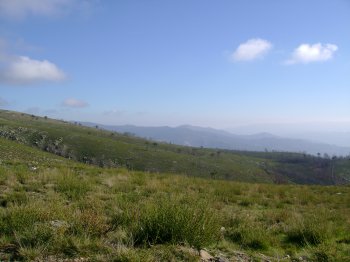
Serra da Freita is part of the Gralheira Massif, together with Serra da Arada and Serra do Arestal, reaching its maximum altitude at 1085 meters at Pico de São Pedro Velho, and extending through the municipalities of Arouca, São Pedro do South and Vale de Cambra. There you will find natural riches such as the Frecha da Mizarela waterfall, 75 m high, and the Pedras Parideiras, a geological phenomenon that can only be observed in Russia. These are a type of stones that are “born” from a mother rock of granite origin, and which symbolize fertility in the region’s popular …
La Brasserie de L'Entrecôte
- food & drink
Rua do Alecrim, 117-121
1200-016, Lisboa
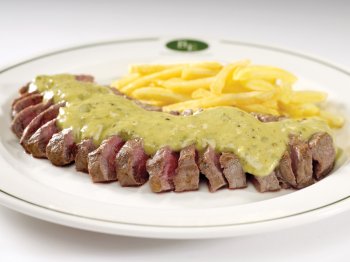
The concept of the restaurant La Brasserie de L ' Entrecôte was imported from Switzerland and inspired by the Parisian glamour. The bistro-style decor with dark woods doing contrast with the brass, gives brilliance and nobility to the room. Despite not having the menu, have a question to ask: If you like good or evil past. Only if serves a dish and who here comes back because the entrecôte of empty Brasserie sauce consisting of a butter with a fine selection of aromatic herbs, accompanied with French fries is enough.In 2006, the menu has been increased with the seitan dish, …
Museu da Fundação da Casa de Mateus
- heritage
Casa de Mateus, Vila Real
5000, Vila Real
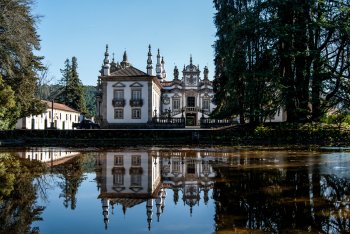
Built in the 18th century, with designs by Nicolau Nasoni, the Casa de Mateus is a landmark of Portuguese Baroque. The chapel, on the other hand, was designed by the master José Álvaro Rego. Established in 1970 by D. Francisco de Sousa Botelho de Albuquerque, its objectives are the preservation of the house, the study of its archives, and the promotion of cultural, scientific, and educational activities. The activities developed by this foundation are mainly linked to literature and music. The gardens found here are extremely well-preserved and of rare beauty. In the museum itself, you can see 2000 parchments …
Passeio pela Zona Histórica de Lisboa
- heritage
Lisboa
1100, Lisboa
Go down the Avenida da Liberdade and start on a discovery journey of the town historical centre. Here, you’ll find plenty of interesting points. At the Restauradores square the majestic Foz Palace, in its neo-classical style, and the frontispiece of the old cine-theatre Éden, with a modernist aspect stand out. Following through Rossio, you’ll find the National Theatre D. Maria II and the D. Pedro Statue. Now in the middle of downtown, venture trough the geometrical net of the streets that set up the urban unit built after the earthquake of 1755. Next, follow to Encosta da Sé and visit …
Passeio pelo Jardim do Paço
- heritage
Rua Bartolomeu da Costa
6000, Castelo Branco
Garden unequalled in Portugal, the visit to this ex-libris is essential. The Paço Garden, annexed to the former bishop’s palace, was sent to build by the Guarda bishop, Dom João de Mendonça, in 1725. The beautiful baroque garden has various lakes, cascades, water spouts, staircases and statues. The Kings Staircase immortalizes all the Portuguese kings in granite, from Dom Afonso Henriques to the King Dom José I. Among the box appear symbolic statues from which stand out the four Men’s ultimate purposes, the cardial virtues, the theological virtues, the signs of the zodiac, the five parts of the world, the …
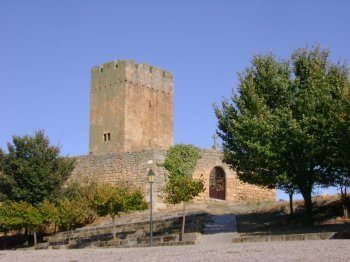
Castelo de Longroiva
- heritage
Rua do Adro
6430-071, Mêda
The medieval castle of Longroiva is one of the most important examples of Templar military architecture in Beira Interior and one of the best examples of a Romanesque castle in the region. Built on a supposed pre-Roman hillfort, built between the 4th and 2nd centuries BC, its construction coincided with a significant surge in settlement in the region in the early 12th century, having belonged to the Order of the Temple and the Order of Christ. In the 18th century, with the settlement's progressive decline in importance, the castle's progressive ruin was documented. In the 19th century, the castle began …