Explore the best places
Results for come on in MAKEMUR.com Looking to pay a clerk to change the court date so I miss it Alabama in Portugal


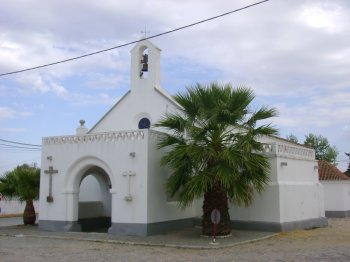
Capela de Santo António / Capela do Calvário
- heritage
Largo Eng. Pinto Bastos, 9
6250-111, Belmonte
Set of two chapels with features of Mannerist and Baroque architecture. It is believed that the Santo Antonio Chapel is the oldest, having been built between the 15th and the 17TH century, and the Calvary Chapel date from the 19th century. The Santo Antonio Chapel are still visible the arms of families Queiroz, George and Cabral.
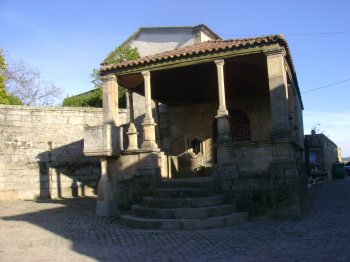
Museu Municipal de Loulé - Pólo Museológico de Salir
- heritage
Largo Pedro Dias
8100-200, Salir
During the excavation which took place along several years by the ruins of the Salir castle, the technicians have found a variety of objects dating back to the moorish period, with much historical interest. It was then decided to build a museum where those objects are exhibited. A project by the architect Mário Varela Gomes.
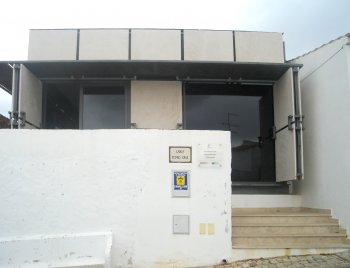
Casa do Barreiro de Cima
- hotels
Parada de Atei
4880-043, Mondim de Basto
Overlooking the Tâmega River, this rustic House dating from the 17TH century preserves all the features of the stone houses in the region of Mondim de Basto. It has five bedrooms, a living room with a fireplace and a dining area and ancient cuisine for breakfast and dinner upon request. Abroad, a nice pool.
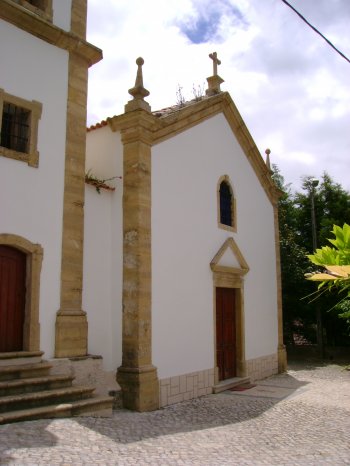
Igreja Paroquial de Assafarge / Igreja de Nossa Senhora da Conceição
- heritage
Largo da Igreja
3040-657, Coimbra
Baroque church of longitudinal plan consists of a nave, a narrower chancel, side chapels date, a sacristy, located near an attachment and a adossados Tower. It was probably built in the 16th century, and later reformed in the second half of the 18th century. Emphasis on the 16th century font and for the 18th century bell tower.
Fornos da Cal de Paço de Arcos
- heritage
Rua dos Fornos, 14
2770-160, Oeiras
A set of five stone ovens, with a circular plan and a robust building. The first reference to this set dates back to 1582, when the man in charge of the São Julião works hired brick-layers to make and bake chalk in the ovens. For several centuries, these ovens were an important economic activity in the area.

Edifício do Diário de Notícias
- heritage
Avenida da Liberdade, 266
1250-149, Lisboa
Date of 1940 and emphasise the decorative elements that uses, in particular the diversity of materials, their colors, blind and gable decoration inside the panels of Almada Negreiros. It is an important work in the panorama of Portuguese architecture, by formal originality of construction as a compromise solution between the monumentalist language of the time and the demand for innovative solutions and Modernists.
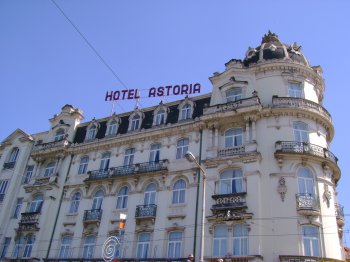
Edifício do Hotel Astória
- heritage
Avenida Emídio Navarro, 21
3000-150, Coimbra
Building built between 1915 and 1919 by an insurance company, who worked until 1925. On this date was leased to businessman Alexandre de Almeida, who completed the construction and adapted to the hospitality industry. In 1926 it was inaugurated the Hotel Astória, which even today is one of the most luxurious hotels in the city.
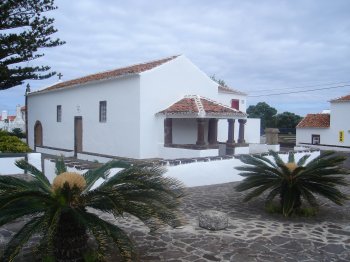
Ermida de Nossa Senhora dos Anjos
- heritage
EN2-2
9580-470, Vila do Porto
The original chapel, dating from the 15th century, was rebuilt between 1674 and 1676. The main façade features a straight-lintel portal, while the side façades feature Manueline arched portals. The interior features the high choir, the pulpit on the Gospel side, and the chancel with a triptych commemorating the patron saint.
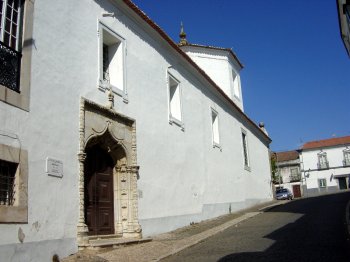
Igreja e Casa da Misericórdia de Montemor-o-Novo
- heritage
Rua Teófilo Braga
7050-273, Montemor-o-Novo
Set composed of Church and adjacent buildings, where the important file of mercy. The set highlights the dispatch room with decoration, on the ceiling, the fresh. Highlights also the main door of the Church and Santa Casa da Misericórdia in Manueline style. The Church dates from 1532 and the remaining 17th-century building.
Igreja de Nossa Senhora da Caridade
- heritage
Largo da Igreja, 7
7200-230, Caridade
Small church situated in the locality of the same name, about 3 kilometers from Reguengos de Monsaraz. The first reference to this 16th century Church dates back to 1326. Was being constructed over the centuries, although the earthquake of 1755 may have caused some damage. Was recovered in 1998.