Explore the best places
Results for PROBLEMGO.COM d Fréiloossung vu mengem Jong kafen in Portugal


Seminário das Missões
- heritage
Rua dos Pinheiros, 39
6100, Cernache do Bonjardim
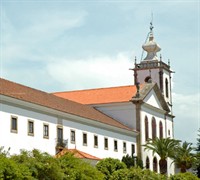
With the original name of Royal College of the Overseas Missions, was built by Dom João VI in 1794. Emphasis on the tiles, depicting scenes of colonial evangelism, as well as for its imposing library with approximately 7,300 works. In the Church of the seminary, deserves special attention the high altar of style hispano-Arabic and the magnificent 18TH century bellows organ, and several paintings of the painter Bento Coelho da Silveira. The seminar also explores the agricultural strand through a large production of wine, marketed under the brand name "lands of d. Nuno".
Mãe d’Água
- food & drink
Rua 13 de Maio, 26
2540-467, Bombarral
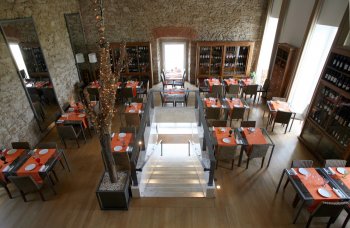
The Mãe d ' Água restaurant works in a 19th century building restored and adapted the restaurant, where the modern blends the rustic, creating an environment "sui generis" and welcoming. The recipes are family members and gave rise to good international dishes with a touch of innovation. The room itself is very showy. After can be more than 100 wine references the national attention. Start with carpaccio of cod and be enthralled by the black scabbardfish fillets with orange sauce, which arrive at the table with the unexpected touch of grated Apple and strawberry.
Cripta Arqueológica do Castelo de Alcácer do Sal
- heritage
Rua do Convento de Aracoelli, 12
7580-131, Alcácer do Sal
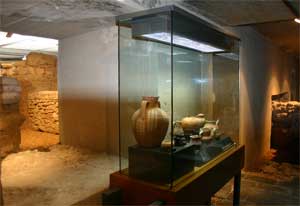
Considered the largest archaeological crypt in the country, it is located beneath the Castle of Alcácer do Sal, now transformed into the Pousada D. Afonso II. It presents traces of the Iron Age dating from the 6th century BC, as well as structures from the Roman period and the Islamic occupation, covering a considerable area. Medieval walls from the post-Reconquista Christian era were also found, based partially on Roman walls which, in turn, overlap older pre-existing structures dating from the Iron Age.
Monsaraz
- country
- heritage
Monsaraz
7200, Reguengos de Monsaraz
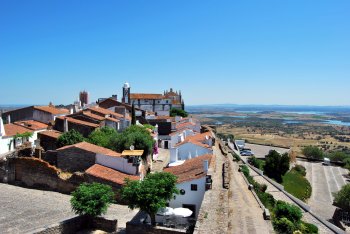
Located atop a hill, the village of Monsaraz began as a prehistoric hill fort. The antiquity of human presence in the region is attested by the numerous megalithic monuments nearby, such as the Outeiro menhir, the Belhoa menhir, and the Xerez cromlech. Highlights include the Orada Convent (18th century), the Chapel of Santa Catarina, Largo de São Bartolomeu, the Church of São João Baptista, and, above all, the Castle, with its four gates, two streets, and a large square. In the latter, named Largo D. Nuno Álvares Pereira, be sure to admire the Parish Church, the old hospital, and the …
Castelo de Almeida
- heritage
Rua do Arco, 13
6350-106, Almeida
The Castelo de Almeida ruins can be found in the village's walled enclosure and are classified as a National Monument. Its origin is either Muslim or Leonese, while the second castle resulted from the rebuilding of the previous one during the reign of D. Dinis, at the end of the 12th century. In Gothic style, it occupied an area of around 100 meters, being one of the smallest castles built in the border area. A new renovation that took place in the 18th century turned it into a warehouse for ammunition and gunpowder. In 1810, during the Third French Invasion …
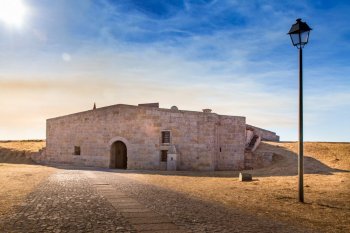
Ermida da Memória
- heritage
Rua 25 de Abril, 17
2450, Nazaré
Small rectangular chapel lined with tiles, consisting of two floors. A with the Chapel itself and the bottom with an ancient cave. In one of the walls of the facade is a small blue and white tiled panel depicting the miracle of our Lady of Nazareth. A staircase leads to the basement, tile-lined, with a figurative Panel, with the representation of the miracle, in the vault. The tunnel ripped under the Chapel, is the image of Nossa Senhora da Nazaré, behind iron railing. To emphasize the interior lining of tiles from the 17th and 18th centuries. The Chapel is also …
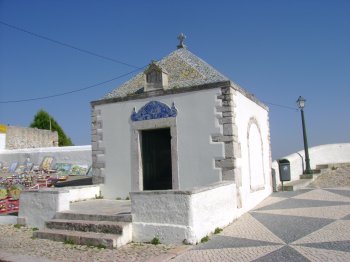
Igreja de São Pedro de Abragão
- heritage
Rua do Paçal
4560-015, Abragão
Of existence already referenced from 1105, this church was completely remodeled in the 13th century, on the initiative of d. Mafalda, daughter of Sancho I, acquiring Romanesque moth. In 1668 proceeded to the original ship's demolition to make way for another broader and therefore the only Romanesque elements remaining today are the headboard and the respective transept. Abroad, the frieze of geometric motifs recalls the decoration of the Visigothic, Mozarabic and times while in interior decoration shows the Baroque style. Beside the Bell Tower added in 1820, is a sarcophagus. It was declared a national monument in September 29, 1977.
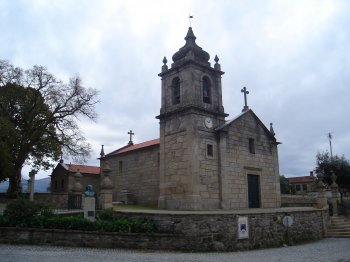
Estátua da Lenda de Inês Negra
- heritage
Alameda da Inês Negra
4960-534, Melgaço
Statue related to the legend of Agnes black. In 1388, the beginning of the reign of King João I, waged a war against Castile for independence from Portugal. One of the consequences of this conflict was the division between the aristocracy and the Portuguese people, and taking many lands on the part of Castile. At this point, Inez, a woman of Black people loyal to the Portuguese cause, abandoned when this town set Melgaço beside the King of Castile. Later, King John I decided to re-conquer Melgaço, and Agnes Black joined his army. However the two armies did not come …

Passeio pela Zona Histórica de Lisboa
- heritage
Lisboa
1100, Lisboa
Go down the Avenida da Liberdade and start on a discovery journey of the town historical centre. Here, you’ll find plenty of interesting points. At the Restauradores square the majestic Foz Palace, in its neo-classical style, and the frontispiece of the old cine-theatre Éden, with a modernist aspect stand out. Following through Rossio, you’ll find the National Theatre D. Maria II and the D. Pedro Statue. Now in the middle of downtown, venture trough the geometrical net of the streets that set up the urban unit built after the earthquake of 1755. Next, follow to Encosta da Sé and visit …
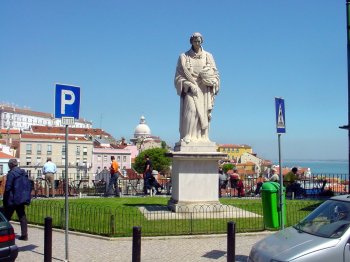
Passeio pela Cerca Fernandina
- heritage
Lisboa
1100, Lisboa
About Fernandina was built in 1336 by d. Afonso IV, to replace the old about high-medieval. This work would only be concluded in 1376, in the reign of King Ferdinand, and this fact the adopted name. The fence, with nearly 5 miles, it defined the Medieval Lisbon but, currently, only certain parts of the wall are visible. It is believed that started on the Western side of the Castle of São Jorge, descended the Valley of Mouraria, rising after the slope of Monte de Sant'Ana and down through the Valley of the Boulevard, returning up to Largo de s. Roque, …