Explore the best places
Results for come on in MAKEMUR.com Looking to pay a clerk to change the court date so I miss it Alabama in Portugal


Quinta dos Figos
- hotels
Rua das Pedras, 34
9760-118, Cabo da Praia
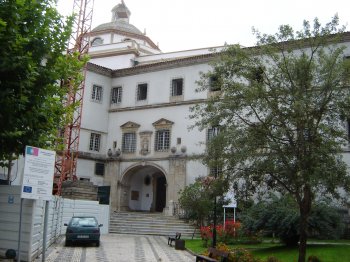
Farm dating from the late 19th century, consisting of three Azorean typical buildings. Here you can choose between rooms or apartments, all of them rustic and very comfortable. The farm has an area of 5000 m2, full of fruit trees, vegetables, shade trees, a gazebo and much more to discover. The praia da Vitória is 2.5 kilometres from this site.
Convento das Trinas de Mocambo
- heritage
Avenida de Santo António
7300-074, Portalegre
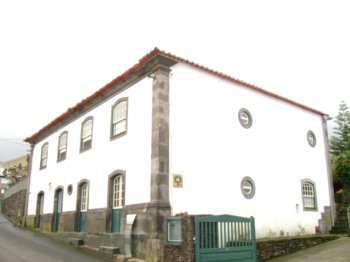
The first cloister consists of a vast landscaped quadrangle. At its center is a granite fountain dating from the 17th century. The two-story cloister has four double arches on each side, separated externally by dressed stone buttresses. The second cloister has an identical configuration, though smaller. The cloister vaults have molded ribs resting on carved cylindrical corbels.
Convento de Santa Maria de Semide
- heritage
Rua Mosteiro Santa Maria
3220-423, Semide
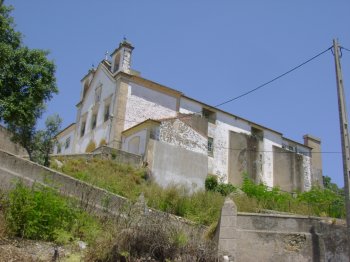
Founded in the 12th century by the Benedictine Order, this monastery was significantly altered by a fire in 1664. It features a 16th-century cloister and part of a 17th-century one. The church, dating from the 17th century, features 17th- and 18th-century tiles. Notable features include the sculptures on the main altarpiece, attributed to Friar Cipriano da Cruz, the paintings on the choir stalls, the Rococo organ, and the cloisters.
Capela da Ordem Terceira de São Francisco
- heritage
Largo de Santo António
3810-169, Aveiro
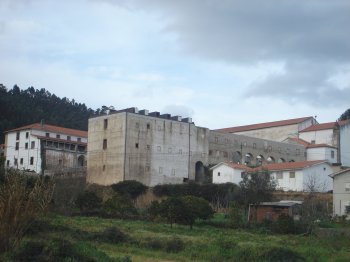
Franciscan chapel founded in 1677, integrating the architectural ensemble of the Santo António Convent. In the 18th century, the walls were covered with tiles from the workshop of Vital Rifarto. The Casa do Despacho dates from 1682, with the sacred way being added to the outer walls in the 18th century. This architectural ensemble is well preserved, showing sobriety on the outside but a great wealth on the inside.
Casa do Cimo
- hotels
Rua do Cimo, 14
6230-050, Aldeia Nova do Cabo
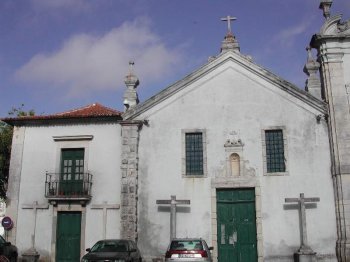
House dating from the 16TH century, located about two kilometres of Fundão, in Cova da Beira, between the Serra da Gardunha and Estrela. It offers nine rooms and a suite, well equipped and comfortable rooms, a lounge\/bar with an open fireplace, a living room with a library and a games room. Constitutes, by its location, a great choice of stay for lovers of winter sports.
Igreja de Santo Amaro / Museu Visigótico
- heritage
Largo de Santo Amaro
7800-263, Beja
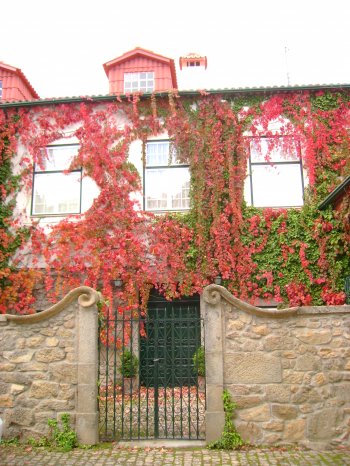
This monument was built outside the city walls on the place where it used to be an ancient – Christian basilica; the exact date of its foundation is unknown. Its present configuration is the result from the alterations and transformations operated, mostly during the 15th and 16th century. This church shelters the Visigoth Museum Queen Dona Leonor. Here it is possible to admire the biggest ensemble of Visigoth capitals existing in Portugal.
Núcleo de Arte Rupestre da Fonte Frieira
- heritage
Fonte Frieira
5150, Orgal
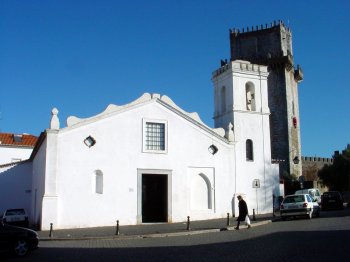
This is one of the rock art sites in the Valley of the Coa, forming a rare set of this type of art, essentially composed of stone engravings dated from the Upper Paleolithic. This core consists of two shale rocks with engraved panels: one of them, today submerged, the recording of a slender neck deer, schematic, obtained by incision; on the other are engraved several filiform, Zoomorphic motifs and weapons.
Núcleo de Arte Rupestre da Quinta da Barca
- heritage
Chãs
5150, Chãs
This is one of the rock art sites in the Valley of the Coa, forming a rare set of this type of art, essentially composed of stone engravings dated from the Upper Paleolithic. This nucleus, consisting of approximately 24 rocks, was executed between the Upper Paleolithic and CHALCOLITHIC. In its vertical panels, mostly turned over the course of the Coa, there are recordings of Zoomorphic motifs perforation and abradidos and rare incised motifs.
Núcleo de Arte Rupestre do Vale das Namoradas
- heritage
Vale das Namoradas
5150, Orgal
This is one of the rock art sites in the Valley of the Coa, forming a rare set of this type of art, essentially composed of stone engravings dated from the Upper Paleolithic. This core consists of a shale rock, spring-driven, where if there are reasons for perforation representing schematic anthropomorphic figures with helmets of horns, recorded on the vertical panel and some traces still items without that form motifs.
Mosteiro de Santa Maria do Lorvão
- heritage
Rua Evaristo Lopes Guimarães
3360-106, Penacova
Although the first buildings date back to the 9th century, the remains that are visible today belong to buildings from the 17th and 18th centuries. The majestic Johannine-style church of Mafra and the Mannerist cloister are a special highlight of the monastery. Also, noteworthy are the tombs of Santa Teresa and Santa Sancha, the imposing baroque chair, the neoclassical organs and their grille, the paintings by Pasquale Parente and the stone and gilded altarpieces.