Explore the best places
Results for MAKEMUR.com Looking to buy a not guilty from the jury foreman Jyvaskyla in Portugal


Núcleo Museológico da Igreja de Santa Maria Madalena
- heritage
Largo da Madalena
7450-109, Monforte
In this Museum are exposed various materials from the municipality of Monforte, mostly Roman, collected during the excavations in the Roman villa of Torre de Palma. All objects found are grouped by categories like "Roman Necropolis", "Roman coins", "Agriculture and construction Material," "costume" and "weaving and kitchen and table". Highlight is some stucco paintings (on the site of the altar mor), and some carved granite columns. Are classified as Property in the public interest.
Tesouro da Igreja Matriz de São Vicente de Cuba
- heritage
Rua Serpa Pinto, 81
7940-171, Cuba
The artistic patronage of the Monastery, which owned the parish of Cuba, resulted in the donation of liturgical artefacts that enriched the building's ambiance, whose interior is covered in 17th-century tiles. The brotherhoods and sisterhoods based in the building also competed in commissioning works, demonstrating the land's richness. The collection thus assembled became the treasure of the main church of São Vicente, which later incorporated pieces from other churches in the town.
Casa das Arribas
- hotels
Cardal do Douro
5200-079, Bemposta
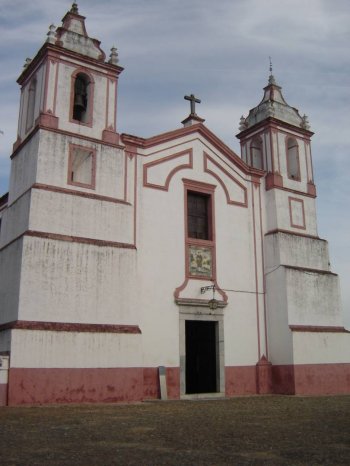
Located in the North-east of Portugal within the International Douro Natural Park, Casa das Arribas is a complex made by two similar country houses. Rebuilded from an ancient elementary school all in ground-floor and wood walls, Casa das Arribas is situated in the river slope, surrounded by juniper-tree, in nature communion, with all conveniences and a wonderful sight over Bemposta lagoon, in the International Douro river.
Casa das Azenhas
- hotels
Rua Cimo do Povo, 5
5360-470, Vila Flor
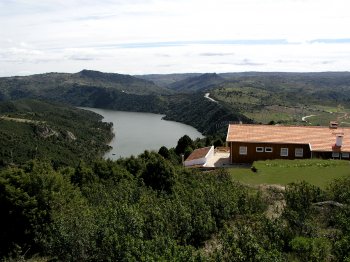
House with exterior transmontana typically in schist and granite and Brown wood interior. It was built in the early 20th century and is located in the village of Vilarinho das Azenhas. It offers seven rustic and cosy rooms, a wine cellar transformed into tasquinha, a dining room and a kitchen where traditional Italian dessert made from dark rye bread and delicious baked goods. Abroad, there is also a nice garden with swimming pool.
Edifício da Geradora
- heritage
Rua de João Carlos Everard
2300-561, Tomar
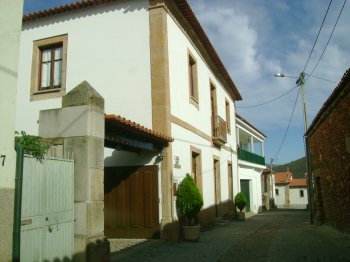
One of the pioneers of the country's electrification examples from hydropower. On the outside of the building, above the River, there is still a high brick chimney, which was once connected to a steam engine. In that place there was the mill of Pedro de Évora, a Mills belonging to the order of Christ. The city of Tomar was originally lit by 150 16 lamps, candles lit since midnight at dusk, except on moonlit nights, in which the intensity of the lamps was halved.
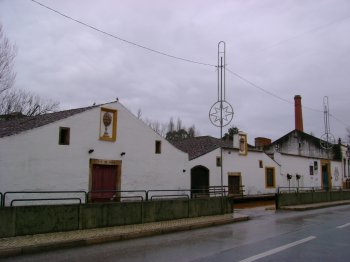
Lagar de Azeite de Cabril
- heritage
CM1021
5470-012, Montalegre
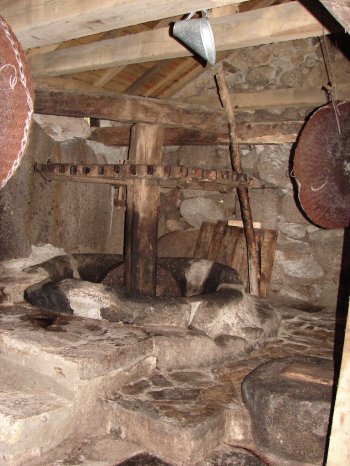
Olive oil mill, hydraulic engine Cabril which is situated next to the entrance of the village, which allowed for many years the making of olive oil from this region. Currently no longer works, either for lack of olives, or by any simpler means that do not require such large amounts. Its conservation status is not very good, but has the essential elements to be used with great accuracy and allow the recovery of tradition for filmic record.
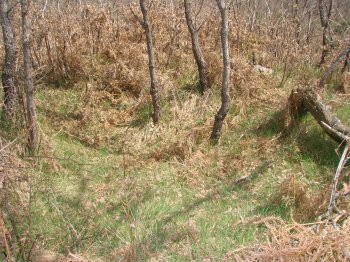
Mamoa 2 do Poço de Grou
- heritage
Sendim
5470-342, Padornelos
This is one of the two megalithic monuments located along the road that connects Montalegre to the border, about 400 meters before the last crossing for a planed Sendim tea. The tumulus 2 Crane well, or field of Motorcycles, located just 50 metres from the second, is a monument with "tumuli", with about 14 feet in diameter and about a meter in maximum height. Features a central depression, being visible only a mainstay.
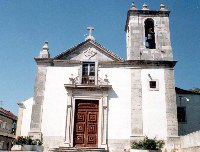
Igreja de Santiago
- heritage
Largo Primeiro de Maio
2800, Almada
Ancient mother church of Almada, it was building in the early Christian reconquest and was severely damaged by the earthquake in 1755. It was later rebuilt in the 18th century by Dom António, a brother of the king Dom João V. The chancel has a stone domed ceiling in the manuelin style. The high altar has a few tombs and valuable 18th century tiles. Archaeological digs have uncovered tombs from as early as the 12th century.
Padrão do Senhor Roubado
- heritage
Rua Pedro Álvares Cabral
1675, Pontinha
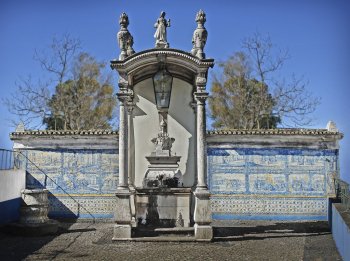
The Monument to the Stolen Lord, dating from 1744, consists of an enclosure in the shape of an isosceles trapezoid, featuring a pulpit that gives it the dimension of a place of divine worship, and a wall entirely covered with monochromatic tiles, serving as a kind of altar. Its construction was due to a robbery carried out in the church of Odivelas in 1671 by a young man who was later condemned in this place, which then became a space where the faithful asked forgiveness for their sins.
Igreja da Misericórdia – Núcleo de Arte Sacra
- heritage
Rua 5 de Outubro - Largo da Misericórdia
7750-333, Mértola
Manueline, Mannerist and Baroque Temple. Stands out the Mannerist portal adorned with filacteras and Windings. In this space is installed the Museum of sacred art. Taking advantage of the body of the Church, the sacristy and two annexes of the late 19th century. XX, boasts an important collection of imaginary and a liturgical set of 15th-18TH CENTURY, from different churches in the municipality of Mértola. Although transformed into museum space remains linked to the cult.