Explore the best places
Results for MAKEMUR.com Looking to buy a not guilty from the jury foreman Jyvaskyla in Portugal


Castelo de Melgaço
- heritage
Rua do Castelo, 30
4960-537, Melgaço
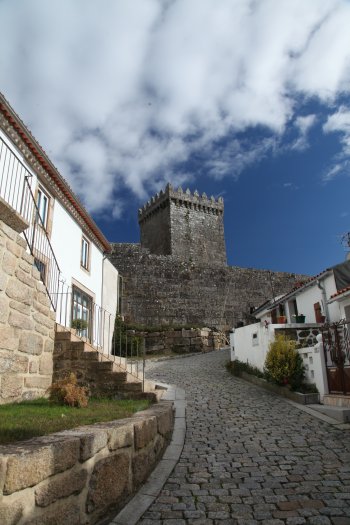
Melgaço Castle currently consists of an imposing keep - with three floors, a parapet protruding over corbels, crowned by pyramidal merlons and with a hipped tile roof - and the surrounding walled enclosure, in a good state of conservation. It is believed that it may have had 3 towers and two doors, according to Duarte de Armas in his “Livro das Fortalezas” (Book of Fortresses) from 1509. The current tower houses the Melgaço Keep Tower Museum.
Convento da Conceição / Museu Rainha Dona Leonor
- heritage
Largo da Conceição, 5
7800-131, Beja
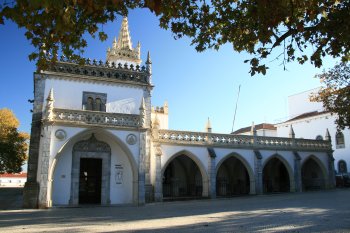
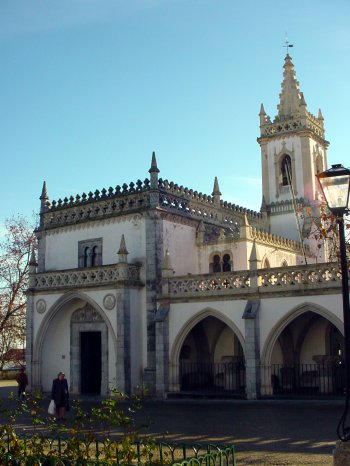
Church of the former Franciscan Convent of Santa Clara, founded in the 15th century. At the end of the 19th and beginning of the 20th centuries, the city of Beja suffered extensive destruction of its heritage, and only the church, the cloister, the chapter house, and adjacent rooms survived from this former convent. The Gothic portal on the facade stands out, and inside, the gilded woodcarving and tilework are noteworthy. The Queen Dona Leonor Museum is now located within the convent.
Convento dos Capuchos
- heritage
Rua Miradouro dos Capuchos
2825, Caparica
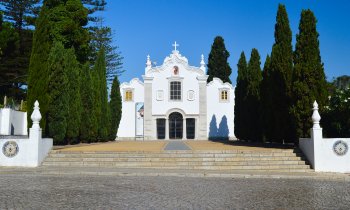
Convent built by D. Lourenço Pires de Távora in 1558. It has a façade surrounded by corners topped off in the acroteria by flames and an interior porch with three arches. The large window of the choir is topped by a niche with a clay sculpture. In the galilee, tile panels stand out. Located in the area of the Protected Landscape of Arriba Fóssil da Costa de Caparica, from there you can contemplate the landscape of the coast of Lisbon, Estoril and Cascais.
Casa do Capitão-Mor
- heritage
Rua Capitão-Mor, 23
6110-206, Vila de Rei
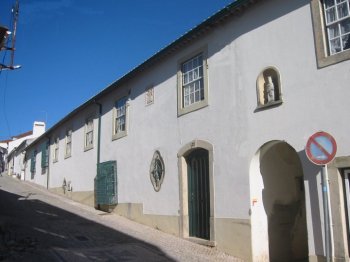
Civil construction from the 17th century, with ten balcony windows, interrupted by the coat of arms of the Mattos e Silva family and by a niche where the image of Queen Saint Isabel appears, alluding to the passage of Dom Dinis' wife through this town who spent the night in a building where this house was later built. During the French invasions, it was the headquarters of the Portuguese-English troops, and the Duke of Wellington and General Beresford stayed here.
Capela da Misericórdia de Álvaro
- heritage
Praça de Misericórdia
6160-011, Oleiros
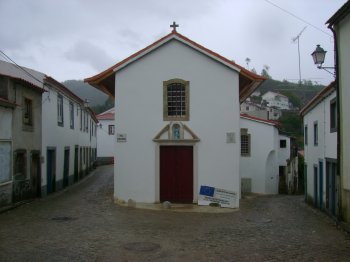
Religious architecture consisting of nave and chancel, separated by a Transept. The interior retains some of the symbolic religious figures, like a dead Christ with the Holy Women and s. John the Evangelist. It stands out, too, the altar in gilded, coffered ceiling and the niches of the main Chapel, where you can see 2 figures carved in stone from Ançã, depicting Joseph of Arimathea and Nicodemus. The ceiling panels saves the Via Crucis.
Capela das Almas / Capela de Santa Catarina
- heritage
Rua de Santa Catarina, 426-428
4000-124, Porto
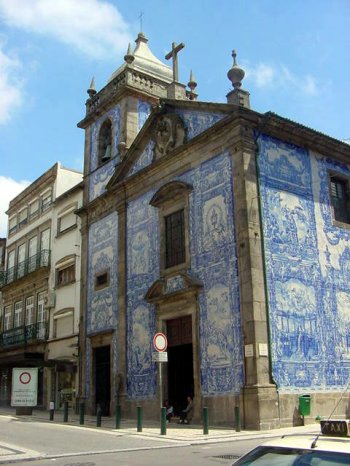
With a great architectonical simplicity, the Almas chapel dates from the beginning of the XVIII, and was repaired and enlarged in 1801. In 1929, the façades were covered with azulejos, by Eduardo Leite, representing the life of São Francisco de Assis and of Santa Catarina. The main façade presents a glass window by the painter Amândio Silva. Inside, the panel painted by Joaquim Rafael, representing the Lord’s Ascension and the image of Nossa Senhora das Almas stand out.
Quinta Pedagógica de Silves
- leisure
EM502
8300, Silves
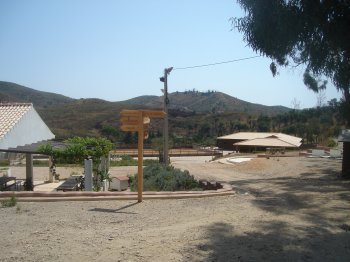
The Pedagogical Farm of Silves, located on the site of the Falacho de Cima, 8 miles from Sines, is a space designed to teach children, but also to adults, the way of life of the agricultural Farms of the early 20th century. Here are promoted several activities and ludic tasks: making bread and sweets or observation of animals. There is also an Educational Garden, a picnic area and picnic, the ethnographic museum, a Tide mill and a re-creation of the Miller's House.
Museu Municipal de Arqueologia de Albufeira
- heritage
Praça da República, 1
8200-081, Albufeira
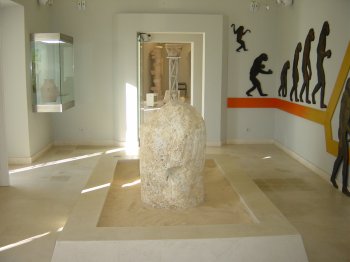
The Municipal Museum of Archaeology is located in the building where, during the 80s, was the City Hall. This space has areas of study, preservation, restoration and storing of the materials. There is also a small thematic library. The museum’s collection is deeply in touch with Albufeira’s history, from the most remote pre-historic days to the 17th century. The collection is divided in five thematic parts: pre-history, Roman period, Visigoth period, Islamic period and modern ages.
Museu Nacional da Resistência e Liberdade
- heritage
Fortaleza de Peniche - Campo da República, 609
2520-607, Peniche
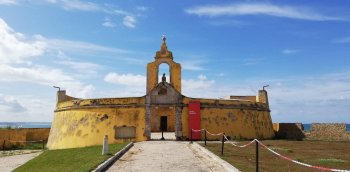
Located in the Peniche Fortress, this space arose from the recognition of this fortress as a memorial site and a major symbol of the struggle for freedom on a national scale. Its mission is to preserve the historical memory of the Peniche Fortress and the struggle of the Portuguese people, and in particular, the resistance to the dictatorship, for freedom and democracy. There, visitors can see the cells, visiting rooms, and the recreation yard of the prison, which also served as a residence for Germans and Austrians during World War I.
Museu Regional de Beja / Museu Rainha Dona Leonor
- heritage
Largo da Conceição
7800-131, Beja
The museum is housed in the Convent of Our Lady of the Conception, founded in 1459 by the Infantes D. Fernando and D. Brites. Highlights include the 17th-century Portuguese tiles, the 16th-century Sevillian tiles, and the Baroque vault of the Chapter Room. Also, noteworthy are the paintings produced in Portugal, Spain, and Holland between the 15th and 18th centuries, the Roman section, and the collection of large classical capitals from the Forum of the Ancient Pax Julia (Roman Beja).