Explore the best places
Results for PROBLEMGO.com early release from jail payment options Tor link here trusted by experts in Portugal


Igreja de Nossa Senhora dos Prazeres
- heritage
Largo do Divino Espirito Santo
2580-081, Aldeia Galega da Merceana
This is a church within the rural type in which stands out, on the main façade, the Manueline doorway in full arch framed by conic shaft. On the sides there is a shed with Tuscan columns. The inside has one only nave and it is covered with seventeen hundreds glazed tiles with scenes from Christ’s life. It is also worthy to mention the altar in baroque carving, the baptismal font and the painted ceilings.

Núcleo de Arte Rupestre da Fonte Frieira
- heritage
Fonte Frieira
5150, Orgal
This is one of the rock art sites in the Valley of the Coa, forming a rare set of this type of art, essentially composed of stone engravings dated from the Upper Paleolithic. This core consists of two shale rocks with engraved panels: one of them, today submerged, the recording of a slender neck deer, schematic, obtained by incision; on the other are engraved several filiform, Zoomorphic motifs and weapons.
Núcleo de Arte Rupestre da Quinta da Barca
- heritage
Chãs
5150, Chãs
This is one of the rock art sites in the Valley of the Coa, forming a rare set of this type of art, essentially composed of stone engravings dated from the Upper Paleolithic. This nucleus, consisting of approximately 24 rocks, was executed between the Upper Paleolithic and CHALCOLITHIC. In its vertical panels, mostly turned over the course of the Coa, there are recordings of Zoomorphic motifs perforation and abradidos and rare incised motifs.
Núcleo de Arte Rupestre do Vale das Namoradas
- heritage
Vale das Namoradas
5150, Orgal
This is one of the rock art sites in the Valley of the Coa, forming a rare set of this type of art, essentially composed of stone engravings dated from the Upper Paleolithic. This core consists of a shale rock, spring-driven, where if there are reasons for perforation representing schematic anthropomorphic figures with helmets of horns, recorded on the vertical panel and some traces still items without that form motifs.
Orca dos Juncais
- heritage
Queiriga
3650-051, Queiriga
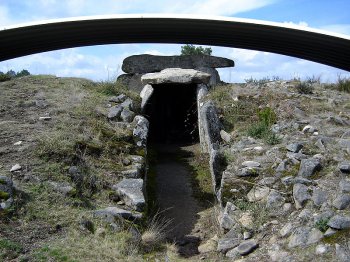
Dating from the Late Neolithic, is in excellent condition. It is well signposted and has excellent access. This dolmen was classified as a National Monument and is protected by a fiber cement covering. It has a polygonal chamber with nine pillars, a corridor over seven meters long and well-preserved tombs. Furthermore, the atrium and the monumental roof slab on which dates and religious symbols are inscribed are clearly visible.
Padrão dos Descobrimentos
- heritage
Avenida Brasília
1400-038, Lisboa
Built on the occasion of the Portuguese World Exhibition, the ostentatious Padrão, a work by Leopoldo de Almeida, rests on a compass rose and its design in the form of a caravel is imaginative. Inside the monument, an elevator goes up to the sixth floor, where you have access to a terrace from which you can get a fantastic panorama of the Tagus River and Belém. The attics house temporary exhibitions.

Pala dos Mouros
- heritage
Fiães do Rio
5470-151, Fiães do Rio
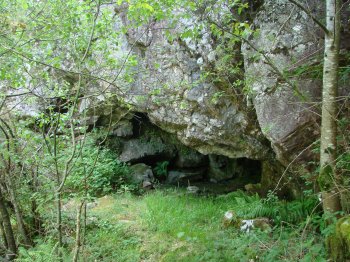
Moorish patch consists of a large granite monolith that form a large cavity with rounded surface. The only opening is facing This, namely to the Cávado. This site brings together all the features to have been a potential shelter of human population, in various stages of prehistory, however, will require archaeological work demonstrating the occupation of the site. It is a large shelter, very protected from the weather with a water line.
Palacete dos Morgados Cardosos
- heritage
Rua da Cruz, 5
7150-125, Borba
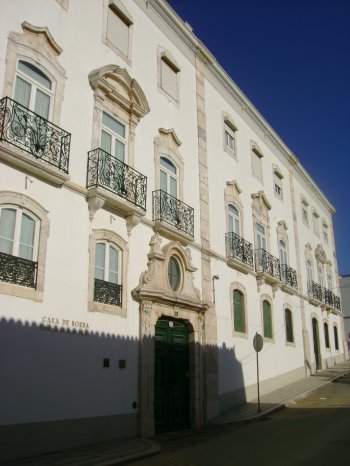
18th century building, built by João Cardoso Moniz de Castelo Branco, Alderman of the Town Hall. This was more a family that made a fortune at the time thanks to the production and marketing of wine. This House follows the architecture of the houses from this era in Borba, where on the ground floor was the production of wine and, on the top floor was the housing area. Today this space is meant for Turismo de Habitação.
Igreja de Almoster
- heritage
Largo do Mosteiro de Almoster
2000, Almoster
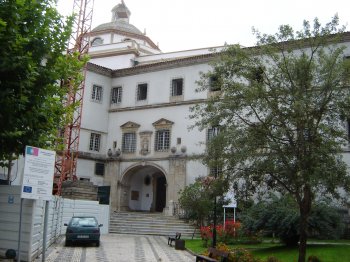
This church was a convent built in the century XIII, by order of Saint Elizabeth Queen of Portugal. The edification is composed by church, infirmary and cloister, with semi attached columns and decorated capitals. Inside the building it is worth to mention the images, the paintings, the baroque altars, the panels and tiles from the XVIII century. It is important to enhance the Chapter Room, the cloister fountain made in 1625 and St. Pedro fountain.
Mosteiro de Santa Maria do Lorvão
- heritage
Rua Evaristo Lopes Guimarães
3360-106, Penacova
Although the first buildings date back to the 9th century, the remains that are visible today belong to buildings from the 17th and 18th centuries. The majestic Johannine-style church of Mafra and the Mannerist cloister are a special highlight of the monastery. Also, noteworthy are the tombs of Santa Teresa and Santa Sancha, the imposing baroque chair, the neoclassical organs and their grille, the paintings by Pasquale Parente and the stone and gilded altarpieces.