Explore the best places
Results for PROBLEMGO.com comprar la salida de la cárcel esta noche in Portugal


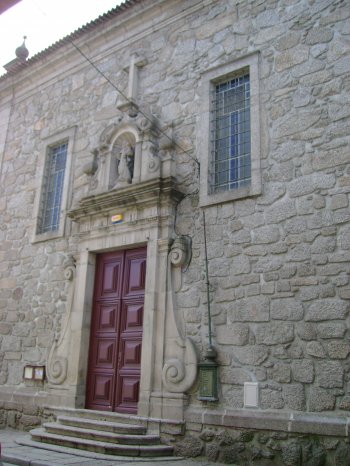
Igreja e Convento das Domínicas
- heritage
Rua Doutor Bento Cardoso, 45
4810-433, Guimarães
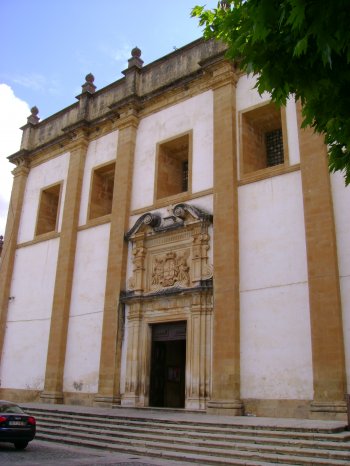
Work founded in early 17th century by Fr. Sebastian, Prior of the convent of São Domingos de Viana do Castelo. In the 18th century, the Prioress Mother Catherine das Chagas sent to the current works of stones. Include the set of altarpieces and pelmets in Baroque gilded rocaille organ and an image of Christ, about the font, dating from the 16TH century.
Igreja de São João Baptista / Igreja Matriz de Vila do Conde
- heritage
Rua 25 de Abril, 147
4480-926, Vila do Conde
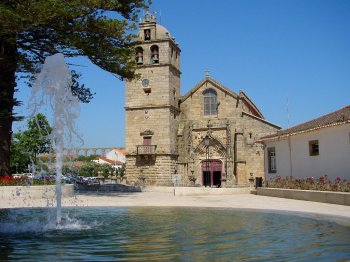
In this church constructed in 1496, it stands out the main façade sided by bell towers from the 17th century, presenting a magnificent Manueline doorway, laced and sculpted work done by João de Ruão. The interior presents three naves with wooden ceilings, separated by four round arches. On the transept chapels it stands out the golden carving and the coffered vaults.
Igreja Paroquial de São Paulo / Igreja Matriz de Salvaterra de Magos
- heritage
Rua Luís de Camões, 39
2120, Salvaterra de Magos
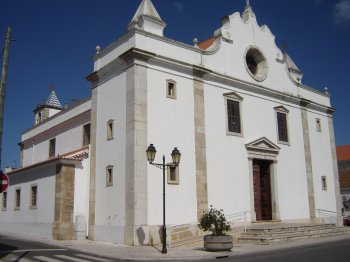
This church is located in the main square of Salvaterra de Magos, with construction beginning in 1296 and undergoing several subsequent renovations. In the former sacristy, one of the tile panels bears a cartouche with the date 1725. Inside, one of the naves has a false wooden vaulted ceiling with a painting depicting its patron saint, Saint Paul, rising to heaven, guarded by a group of angels.
Igreja Rainha Santa Isabel
- heritage
Alto de Santa Clara
3040-270, Coimbra
The Fellowship of Queen Santa Isabel is in charge of the Church of Queen Santa Isabel do Mosteiro de Santa Clara-a-Nova. Their primary concern is to ensure the Church of Queen Santa Isabel and adjacent spaces that belong to and promote the cult of Queen Santa Isabel. In the altarpiece of the chancel of the Church is the silver and Crystal URN, where is venerated the body of Queen Santa Isabel.
Igreja da Sé Velha / Túmulo de Dom Sesnando
- heritage
Largo da Sé Velha
3000-383, Coimbra
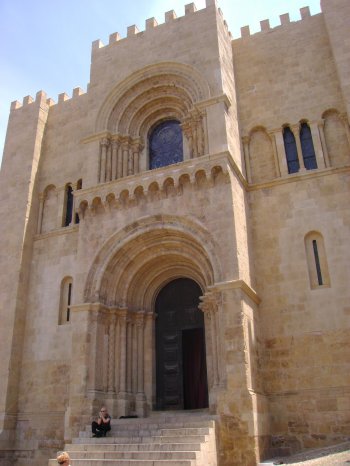
Fortress Church, whose plant was influenced by the churches of the Camino de Santiago pilgrimage. The construction of the current Temple was begun in 1162, after the destruction of the former, in 1117, by Muslim attacks the city. In the 16th century, the Church was coated with Spanish-Moorish tiles. Having undergone several renovations throughout the centuries, Romanesque architecture features Gothic, Mudejar, Renaissance, Mannerist and.
Montes de Santa Oláia e Ferrestêlo
- heritage
EM601
3090, Santana
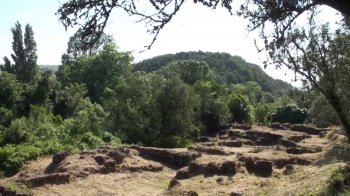
Situated between Figueira da Foz and Coimbra, Outeiro de Santa Cercis Siliquastrum and mount the Ferrestelo feature natural vegetation with a predominance of elements of Mediterranean flora, which contrast with the cultivated fields of almost the whole valley of the Mondego. Archaeological point of view, the Phoenicians, Romans, medieval remains and Neolithic period make the mandatory passage to any amateur archaeologist.
Paço de Lanheses
- heritage
Largo Capitão Gaspar de Castro
4900-185, Viana do Castelo
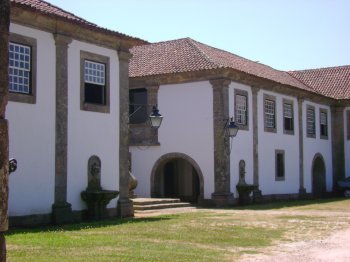
Late-Baroque Manor House, dating from the time pombalina, composed of two dissimilar bodies, of two floors, with chapel located near the larger body. Casa do Paço was founded in the 15th or 16th century, while the chapel was probably built in the first half of the 18th century. In 1997, this Palace opened to the public as the unit of Turismo de Habitação.
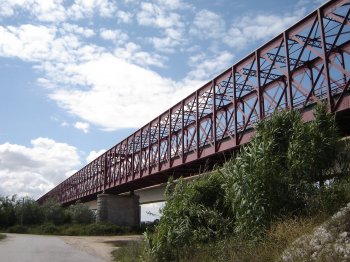
Ponte Ferroviária Rainha Dona Amélia
- heritage
Muge
2125, Muge
King Carlos I entrusted this project to Frenchman Gustave Eiffel, the famous architect of the Eiffel Tower, and it connects the two banks of the Tagus River, connecting the municipalities of Cartaxo and Salvaterra de Magos. The bridge, inaugurated in 1904, is 840 meters long and only five meters wide. It was closed to rail traffic in 2001. It was later remodeled to accommodate light vehicles.
Túmulo de Mateus da Cunha
- heritage
Pombeiro da Beira
3300, Pombeiro da Beira
These two tombs from the fifteen hundreds are located on the wall and on the pavement inside the main chapel from the church of Pombeiro. One on the tombs is from Mateus da Cunha, from the XVI century with a Manueline style and which construction is ascribed to Diogo Pires-o-Moço; the other tomb is from Vão da Cunha, prior of Martinho de S. Guinhêda.
Camping Asseiceira
- hotels
Caixa Postal 2
7330-204, Santo António das Areias
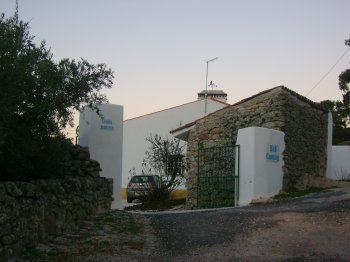
Located on the mighty Serra de São Mamede Natural Park, in the camping Asseiceira can camp in the shadow of the olive trees and enjoy the spectacular panoramic view of the Castle and medieval village of Marvão. This is a familiar and cosy space, a sound informal service. You can relax with tranquillity only a few minutes walk from the village of Santo António das Areias.