Explore the best places
Results for PROBLEMGO.COM cuánto cuesta sobornar a un agente de aduanas para que pase la mercancía in Portugal


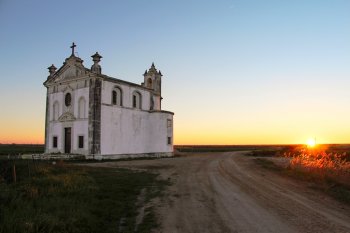
Igreja de Nossa Senhora de Alcamé
- heritage
Lezíria Grande do Tejo
2600, Vila Franca de Xira
Isolated in the middle of the Lezíria, religious, Baroque architecture, the Church of our Lady of Alcamé is erected under a raised platform to prevent the entry of water. Designed by the architect José Manuel de Carvalho and Slavers and 18th-century House, was built by the first Patriarch of Lisbon. It consists of nave and chancel at the same height, corresponding to double the sacristy and the Bell access. The altar is dedicated to Nossa Senhora da Conceição.
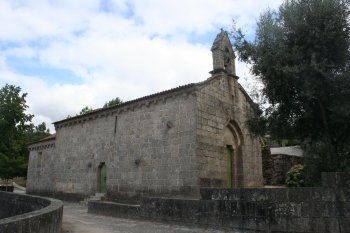
Igreja de São Nicolau
- heritage
Rua de São Nicolau, 1385
4630-261, Marco de Canaveses
Located on the south bank of the Tâmega River and bordering Santa Maria de Sobretâmega, the Church of São Nicolau, next to the old Canaveses Bridge, displays a late design within the context of Portuguese Romanesque architecture, evident in its column-less, capital-less portals and plain corbels. This church preserves, though very fragmented, important remains of mural painting from the 16th and 17th centuries.
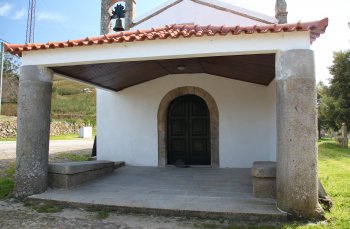
Núcleo de Marcos Miliários de Antas
- heritage
Antas
4940-682, Rubiães
This is just one of the 14 milestone markers that exist in the municipality of Paredes de Coura. They are located on the road that led to Braga, then called Bracara Augusta. Only 5 of the markers show the number of miles, because, while initially used to measure distances, they later served to record the honorary titles of various emperors, their affiliations, and public offices, thus explaining the appearance of several milestones in the same location.
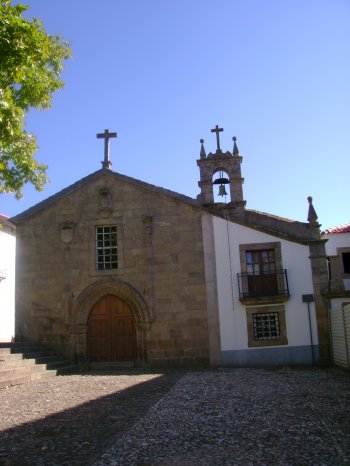
Igreja da Misericórdia de Pinhel
- heritage
Rua Silva Gouveia
6400-455, Pinhel
16th century church with Manueline portal, consisting of nave and chancel. The façade is distinguished by the Royal arms, with the date of 1808, and a Latin cross in the top. Inside are an altarpiece of João de Rouen, the talha, the paintings of the caissons and the two painted canvas of lateral cloths, representative of the visitation and da Nossa Senhora da Conceição. In 1810 was the target of attack by the French troops who destroyed the registry's mercy.
Monumento Comemorativo à Batalha de Ourique
- heritage
Rua 29 de Janeiro
2070-628, Vila Chã de Ourique
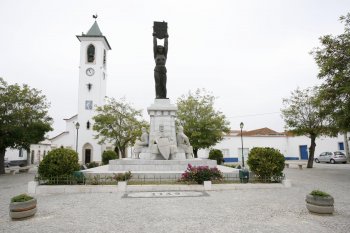
Located in the center of the parish of Vila Chã de Ourique, this monument commemorates the Battle of Ourique, fought between Afonso Henriques and the Muslims in 1139, a battle which some historians believe took place in this location. The monument, situated near the main church, was inaugurated in 1932 and is made of white marble. At the top is a statue known as "Saramaga," adorned with two handles. Below are sculpted figures of the combatants.
Monumento Primeira Travessia Lisboa-Rio de Janeiro 1922
- heritage
Largo dos Aviadores
4430, Vila Nova de Gaia
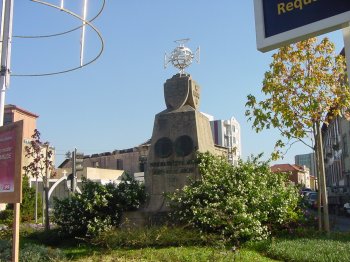
This monument’s construction was ordered by the Town Hall, paying homage to Gago Coutinho and Sacadura Cabral, the two Portuguese aviators that did, for the first time, the air crossing of the Atlantic-South (Lisbon-Rio de Janeiro) on the single-motor hydroplane “Lusitânia”. The monument is represented by the armillary sphere on top and a stone basis with commemorative inscriptions. It is placed near the city centre, in a square also called “the aviators”.
Mosteiro de Santa Maria de Cárquere
- heritage
Rua do Mosteiro
4660-059, Resende
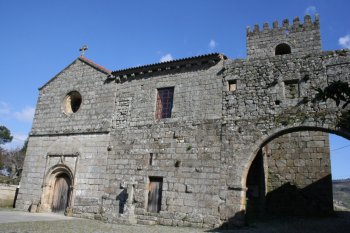
Although the history of ecclesial space point to a medieval Foundation dating back to the 12th century, the Church of Cárquere is structurally a fusion of styles that reveal crucial periods in their development as the monastic space, now linked to the Canons, now to the Jesuits. According to legend, it was founded due to the miracle, attributed to our Lady of Cárquere at the request of Bishop Egas Moniz de Ribadouro, of healing of the legs of Dom Afonso Henriques.
Paço do Campo Belo
- heritage
Rua Rei Ramiro, 25
4400-283, Vila Nova de Gaia
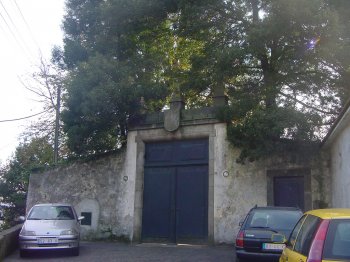
A building located in the historic area of the city of Vila Nova de Gaia, near the port wine cellars and dated from the 17th century. It has an L architectural structure with two floors and a stone staircase leading to the noble floor. On the west side one may view the chapel and the gardens. The chapel and the entire surrounding set, the gardens included, ar classed as a Public Interest Construction.
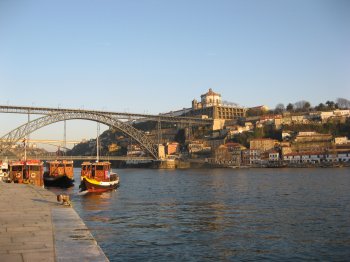
Ponte de Dom Luís
- heritage
Sobre o Rio Douro
4050, Porto
Consisting of two metal decks, which were intended to make the road connection between Vila Nova de Gaia and Porto, this bridge measures 395 meters in length and 8 meters in width, comprising 5.5 meters of carriageway and 1.25 meters meters of walkways. This construction, designed by the engineer Teófilo Seyrig, was one of the largest works in the road plan carried out by the monarch Luís I.
Torre de Menagem de Leiria / Castelo de Leiria
- heritage
Largo Doutor Manuel de Arriaga
2400, Leiria
The Torre de Menagem (donjon) was built by D. Dinis order in 1324. The tower and the enclosed space were used as royal prison from the XIV to the XVIII century. The inside, completely remodelled with a modern iron and wood structure, lodges an interesting museological nucleus, which illustrates the medieval military techniques and the fighting instruments. The castle can be also known through a series of audiovisual documents.
