Explore the best places
Results for access main PROBLEMGO.COM buy a fake letter from the IRS saying I owe nothing in Portugal


Núcleo de Arte Rupestre da Faia
- heritage
Cidadelhe
6400-191, Cidadelhe
A core composed of figures engraved in granite, representing two opposing bovids and a sequence of four bovid heads pointing toward the ground, which are associated with schematic paintings from recent prehistory. Certain painted lines add unengraved details, suggesting the hypothesis that some of the elements are Paleolithic. It is a UNESCO World Heritage Site (1998) and a National Monument by IGESPAR, part of the Côa Valley Archaeological Park.
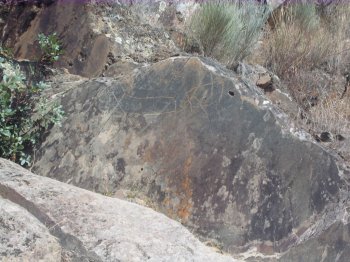
Núcleo de Arte Rupestre de Vale de Moinhos
- heritage
EN222
5150, Vila Nova de Foz Côa
This is one of the rock art sites in the Valley of the Coa, forming a rare set of this type of art, essentially composed of stone engravings dated from the Upper Paleolithic. This core consists of two rocks that have support writing of filiform reasons. On the left bank of ribeira is a vertical panel in shale showing how central motif equidae, while on the right bank can observe various Zoomorphic representations.
Palácio da Mitra
- heritage
Largo Félix da Silva Avelar Brotero
2660-119, Loures
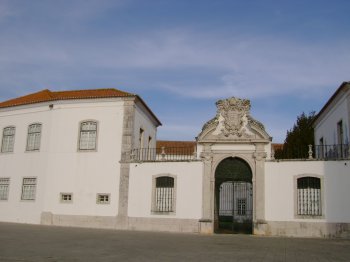
Former residence of archbishops, Palácio da Mitra or Palácio dos Arcebispos is a 16th-century building in the shape of a "u", which features typical Portuguese tiles in the rooms, also characterized by the thematic decoration of the time (representations of rural scenes, seasons or cooking). The church was completely rebuilt in the 16th century. The statues that decorate the interior rooms of the palace are from this period, as well as the monumental fountain, in Baroque style.
Muralhas de Setúbal
- heritage
Centro Histórico de Setúbal
2900, Setúbal
Setúbal was once surrounded by two belts of walls. The first, called Muralha Afonsina for being constructed during the reign of King D. Afonso V, traced out the boundaries of Setúbal. This wall was made to protect this fishermen community from the attacks of pirates. The second wall was constructed during the reign of King D. João IV and was made to protect the village that expanded outside the first walls.

Quinta dos Cónegos
- heritage
Rua do Souto, 363
4470-215, Maia
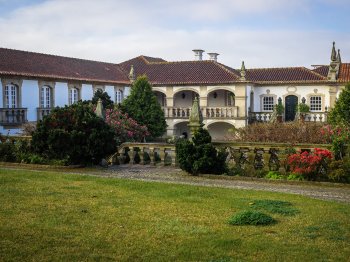
The former recreational estate of the Bishops of Porto, comprising a beautiful 18th-century house in the purest Baroque style and with a strong influence from the school of Nicolau Nasoni – it is thought that the statuary and some architectural elements may even be his work. Here we find the beautiful "Gardens of Maia", fountains, chapels and a swimming pool. Inside, the chapel with its 17th-century gilded altarpiece deserves mention.
Paço do Campo Belo
- heritage
Rua Rei Ramiro, 25
4400-283, Vila Nova de Gaia
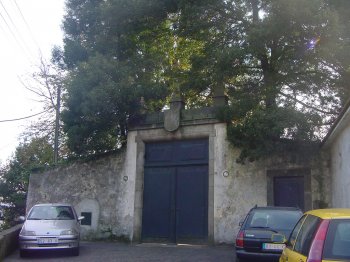
A building located in the historic area of the city of Vila Nova de Gaia, near the port wine cellars and dated from the 17th century. It has an L architectural structure with two floors and a stone staircase leading to the noble floor. On the west side one may view the chapel and the gardens. The chapel and the entire surrounding set, the gardens included, ar classed as a Public Interest Construction.
Torre de Menagem de Leiria / Castelo de Leiria
- heritage
Largo Doutor Manuel de Arriaga
2400, Leiria
The Torre de Menagem (donjon) was built by D. Dinis order in 1324. The tower and the enclosed space were used as royal prison from the XIV to the XVIII century. The inside, completely remodelled with a modern iron and wood structure, lodges an interesting museological nucleus, which illustrates the medieval military techniques and the fighting instruments. The castle can be also known through a series of audiovisual documents.

Torre do Relógio de Castelo Branco
- heritage
Rua do Relógio
6000-195, Castelo Branco
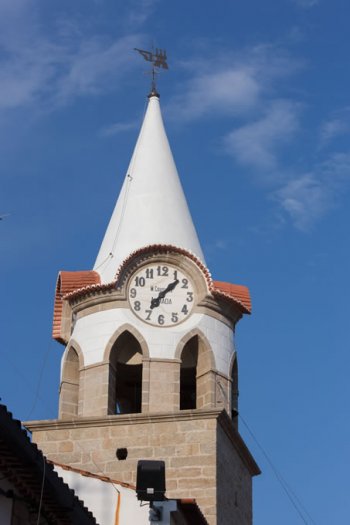
In the heart of the historic area, stands the imposing Torre do Relógio, unavoidable in the landscape of Castelo Branco, as it is visible from the most diverse locations. Its creation is related to the expansion process of the city and the enlargement of the limits of the walls, since it was created where there was an old tower of the outer wall, adapted for its current functions in the 19th century. Its characteristic hourly chimes are heard by residents and visitors alike.
Camping Armação de Pêra
- hotels
EN269
8365-184, Armação de Pêra
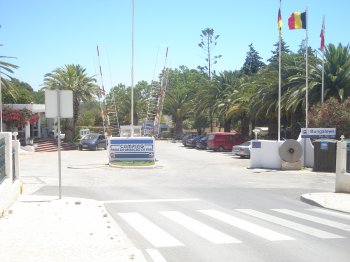
The campsite to the beach of armacao de Pera offers an extraordinary location, a few metres from the beach. Offers well forested areas, where you can camp quietly, breathing fresh air, in the shadow of poplars, eucalypts, Palm trees, almond trees and carob trees. Also offers animation to all campers, with emphasis on the Organization of daily boat trips to the caves of armacao de Pera.
Parque de Campismo de Medas
- hotels
Rua Vasco de Araújo, 2000
4515-397, Gondomar
On the right bank of the River Douro, and 25 kilometers from Porto, lies the Medes campsite. The topography and flora characteristics in the Douro Valley make this park a peculiar structure, with disposal in terraces and wooded alveoli. The scenic beauty of the region and the River make this space an ideal place for rest and recreation. Enjoy sporting activities to practice yet, such as fishing, tennis or enjoy the scenery through magnificent hiking routes.