Explore the best places
Results for browse now PROBLEMGO.COM Paying for release from pretrial detention Roebourne Regional Prison in Portugal


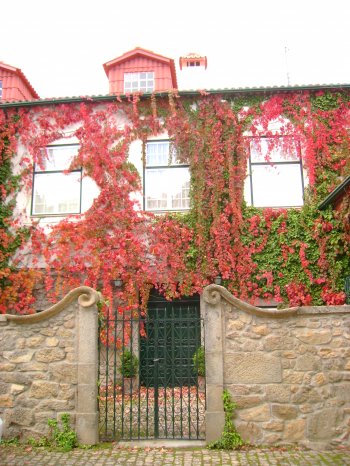
Casa do Cimo
- hotels
Rua do Cimo, 14
6230-050, Aldeia Nova do Cabo
House dating from the 16TH century, located about two kilometres of Fundão, in Cova da Beira, between the Serra da Gardunha and Estrela. It offers nine rooms and a suite, well equipped and comfortable rooms, a lounge\/bar with an open fireplace, a living room with a library and a games room. Constitutes, by its location, a great choice of stay for lovers of winter sports.
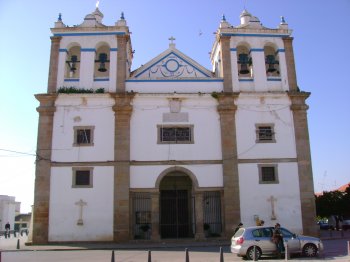
Igreja Matriz de Fronteira / Igreja de Nossa Senhora da Atalaia
- heritage
Avenida da República, 22
7460-100, Fronteira
The church is due to King Sebastião who, by charter of 1571, ordered it to be built. It is a temple with a tripartite facade, with a galilee opening in the central body. The lateral bodies are made up of imposing bell towers. Interior of three naves with round arcades and stone pilasters. The Baroque carved altars, the Estremoz marble altarpiece and Mannerist paintings from the end of the 16th century deserve special attention.
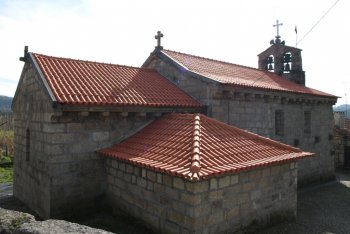
Igreja de São Tiago de Valadares
- heritage
Valadares
4640-580, Valadares
Small dimensions temple that we can include already in the Gothic period, although of possible previous foundation. Simple façade, where a portal with a broken arch opens, with two archivolts, the interior being decorated with spheres. Despite the sobriety of the building, with few spans and heavy verticality, the interior features one of the most important mural painting from the 15th century preserved in Portugal.
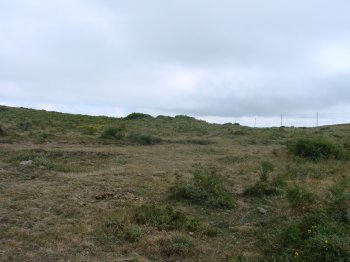
Mamoa 2 de Fraga da Moura
- heritage
Fraga da Moura
5470-490, Tourém
Tumulus quite visible in the landscape, located a few meters from the road which connects Pitons to Tourém, belonging to the Megalithic Necropolis of the Mourela plateau. Features 18 meters in diameter maximum, a very sharp central depression, where you identify a few tumbled stones, but only one seems to be a mainstay. It is the largest tumulus of all the four tumuli of Fraga da Moura.
Igreja de Nossa Senhora das Brotas
- heritage
Rua da Igreja
7490-017, Brotas
This church has a rectangular plan and it is covered by polychrome glazed tiles from 1660, a bell ringer tower and an apse articulating four chapels. IT preserves the Manueline Calvary in marble and several sculptures. The main chapel possesses coverage in lancet vault with corbels decorated by wall paintings. The main altarpiece is with composite columns articulating niches filled with covered foot with the respective images.
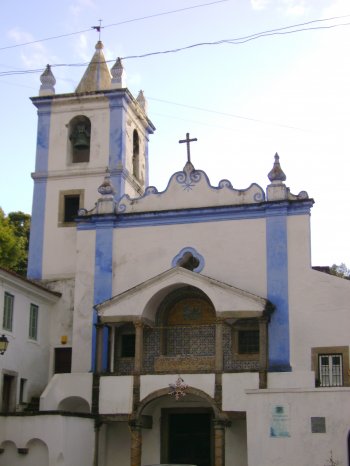
Igreja de Nossa Senhora dos Prazeres
- heritage
Largo do Divino Espirito Santo
2580-081, Aldeia Galega da Merceana
This is a church within the rural type in which stands out, on the main façade, the Manueline doorway in full arch framed by conic shaft. On the sides there is a shed with Tuscan columns. The inside has one only nave and it is covered with seventeen hundreds glazed tiles with scenes from Christ’s life. It is also worthy to mention the altar in baroque carving, the baptismal font and the painted ceilings.

Igreja de Santo Amaro / Museu Visigótico
- heritage
Largo de Santo Amaro
7800-263, Beja
This monument was built outside the city walls on the place where it used to be an ancient – Christian basilica; the exact date of its foundation is unknown. Its present configuration is the result from the alterations and transformations operated, mostly during the 15th and 16th century. This church shelters the Visigoth Museum Queen Dona Leonor. Here it is possible to admire the biggest ensemble of Visigoth capitals existing in Portugal.
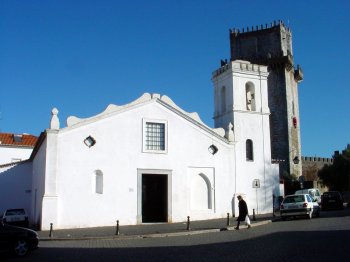
Núcleo de Arte Rupestre da Fonte Frieira
- heritage
Fonte Frieira
5150, Orgal
This is one of the rock art sites in the Valley of the Coa, forming a rare set of this type of art, essentially composed of stone engravings dated from the Upper Paleolithic. This core consists of two shale rocks with engraved panels: one of them, today submerged, the recording of a slender neck deer, schematic, obtained by incision; on the other are engraved several filiform, Zoomorphic motifs and weapons.
Núcleo de Arte Rupestre da Quinta da Barca
- heritage
Chãs
5150, Chãs
This is one of the rock art sites in the Valley of the Coa, forming a rare set of this type of art, essentially composed of stone engravings dated from the Upper Paleolithic. This nucleus, consisting of approximately 24 rocks, was executed between the Upper Paleolithic and CHALCOLITHIC. In its vertical panels, mostly turned over the course of the Coa, there are recordings of Zoomorphic motifs perforation and abradidos and rare incised motifs.
Núcleo de Arte Rupestre do Vale das Namoradas
- heritage
Vale das Namoradas
5150, Orgal
This is one of the rock art sites in the Valley of the Coa, forming a rare set of this type of art, essentially composed of stone engravings dated from the Upper Paleolithic. This core consists of a shale rock, spring-driven, where if there are reasons for perforation representing schematic anthropomorphic figures with helmets of horns, recorded on the vertical panel and some traces still items without that form motifs.