Explore the best places
Results for castelo in Portugal


Ponte Romana do Castelo
- heritage
Rua Romana
3550-035, Cantos
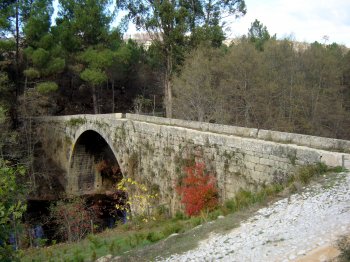
Roman bridge, still passable, in good condition. This bridge has the usual configuration of bridge engineering for these people, despite having a supporting arch.
Fonte de Castelo de Vilharigues
- heritage
Castelo de Vilharigues
3670-152, Castelo de Vilharigues
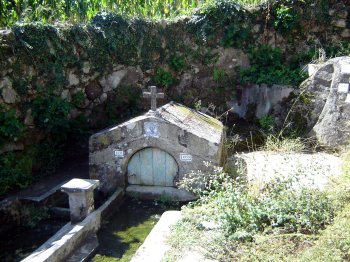
The Château de Vilharigues date of 1831.
Ruínas do Castelo da Nóbrega
- heritage
Sampriz
4980-725, Sampriz
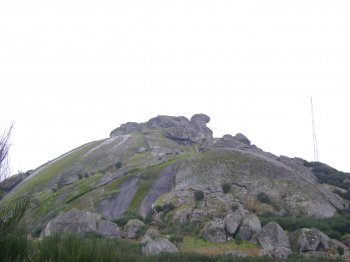
Despite the poor state of conservation and corresponding asset value, little castle of Nóbrega has great historical significance and regional scientific interest enough for understanding the Organization and evolution of medieval settlement in the Minho region.
Ruínas do Castelo de Alfeizerão
- heritage
Rua do Castelo
2460, Alfeizerão
This castle has a rectangular plan and initially it was reinforced by eight semicircular towers with square plan keep. It is placed on a hill at 45 metres high from where it is possible to see São Martinho do Porto Bay.
Ruínas do Castelo de Paderne
- heritage
Paderne
8200, Paderne
Occupied by the Romans in the mid-2nd century, it was transformed into a political and administrative center, conquered by the Moors in 713 and taken over by the Portuguese crown in 1248. The castle was restored by Dom Dinis. The walls are made of rammed earth with battlements and a walkway that communicates with the watchtower. Traces of sections of the wall, the entrance turret and, inside, the ruins of a church with Gothic and Manueline traces remain.
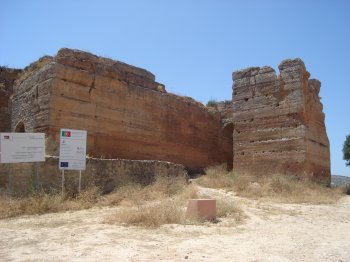
Ruínas do Castelo de Salir
- heritage
Rua dos Muros do Castelo
8100, Salir
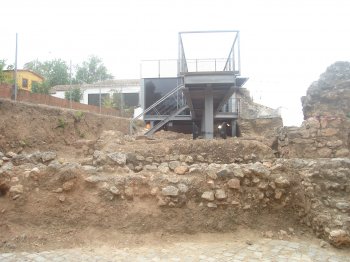
Salir might have been the place where D. Paio Peres Correia awaited the arrival of D. Afonso III, so that together they could undertake the conquest of what remained in the province in the hands of the Moors. During the time of King Afonso III, this location became a stronghold, giving the castle a privileged role in the definitive conquest of the Algarve. It is presumed that the castle was burned down and rebuilt twice, and today only ruins of its walls remain.
Ruínas do Castelo de Vilharigues
- heritage
Castelo de Vilharigues
3670-152, Castelo de Vilharigues
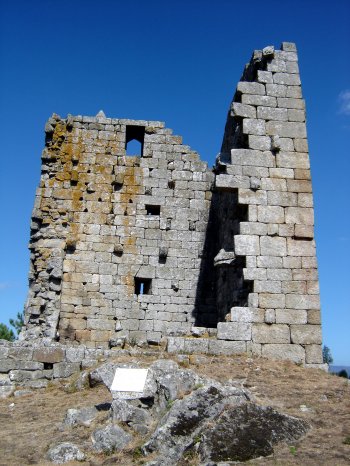
This 15th-century monument is currently in ruins. Highlights include a sign with a poem by Engineer Mário Cruzeiro.
Sinagoga de Castelo de Vide
- heritage
Rua da Judiaria
7320-190, Castelo de Vide
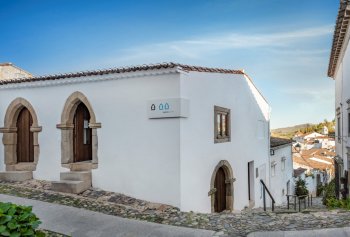
Templo enquadrado na malha urbana, de arquitetura medieval e que apresenta arcos ogivais. Funciona como núcleo museológico, permitindo aos visitantes conhecer as vivências da comunidade judaica que aqui viveu e os contributos dados para o desenvolvimento da vila.
Castelo de Vilar Maior
- heritage
Largo da Misericórdia, 9
6320-601, Sabugal
The earliest occupation of this site possibly dates back to pre-Roman, Roman or Muslim times, and it was later rebuilt in 1139. It has an irregular oval layout, with a square keep, three levels, straight arrow slits and a pointed arch doorway.
Igreja Matriz de Viana do Castelo / Sé de Viana do Castelo
- heritage
Largo Instituto Histórico do Minho, 19
4900-522, Viana do Castelo
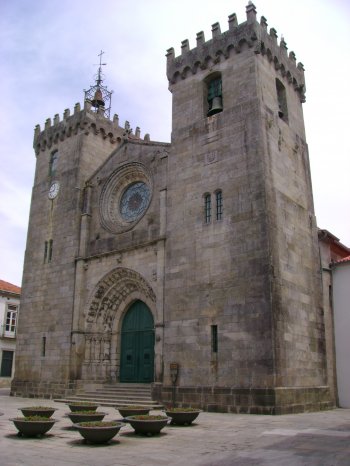
Transition Romanesque church, with a Latin cross plan, consisting of three tiered naves, with side chapels. The portal, with multiple archivolts, features sculptures of the apostles. Flanking the ensemble are two voluminous towers crowned by chamfered battlements.