Explore the best places
Results for Forte in Portugal


Forte do Milreu
- heritage
EN247
2655, Mafra
Small defensive Fort built between 1670 and 1675, today in ruins. Intended to control maritime access to Ericeira and the nearby Bay formed by the beach of Ribeira de Ilhas.
Forte de Burgau
- heritage
Budens
8650-111, Budens
Built during D. João IV’s reign to defend the fishing centre of Burgau, this fort is now in a bad state of ruins. Traces of the original defensive walls can still be seen.
Forte da Boca do Rio / Forte de Almádena
- heritage
Budens
8650, Budens
The fort is in ruins, with the main entrance and one of the bastion walls remaining. The main façade is preceded by a moat, with a portcullis opening in the center. Inside, remains of quadrangular, vaulted buildings topped by terraces are visible.
Forte do Cão
- heritage
Avenida Forte do Cão
4910-012, Gelfa
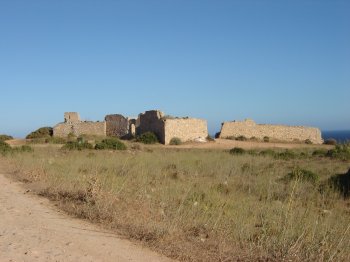
This small fort was built by Dom Pedro II in the 17th century to protect the coast from Spanish attacks during the Restoration War. It features a star-shaped layout and four single-elevation bastions.
Forte do Negrito
- heritage
ER1-1
9700-554, Angra do Heroísmo
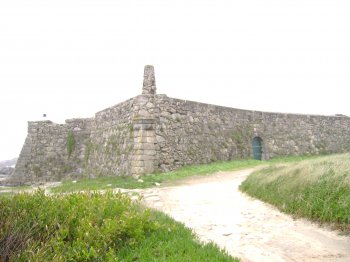
Fort erected in the sixteenth century to defend the city against the Spanish invasion. Later, worked as a warehouse and housing of fishermen from a whaling company. It is currently used for tourist and cultural purposes, getting exhibitions.
Forte da Lagarteira
- heritage
Avenida Campo do Castelo
4910-490, Vila Praia de Âncora
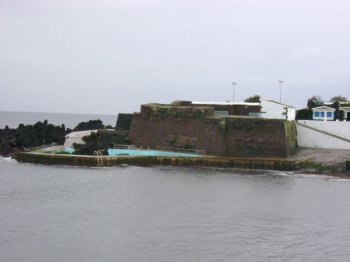
This 17th-century structure was built during the reign of Dom Pedro II to defend the coast from pirate attacks during the Restoration War. The fort's door is topped by a stone bearing the royal coat of arms.
Forte de Sacavém
- heritage
Rua Forte Monte Cintra
2685-141, Sacavém
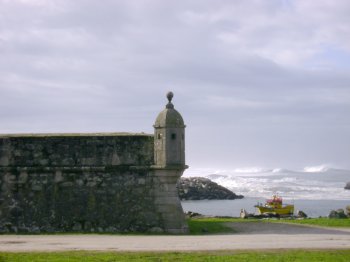
Small fort dating from the 19th century\/XX, built with the aim of strengthening the garrisons of one of Lisbon's defensive lines. Since 1999, which houses the File and inventory services of the General Direction of national monuments and Buildings.
Forte da Ínsua
- heritage
Ínsua de Santo Isidro - Rua Foz do Minho
4910-180, Cristelo
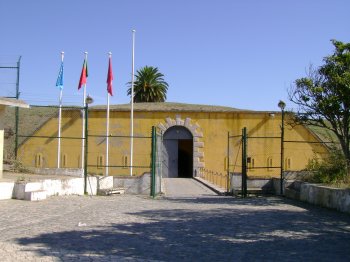
Ínsua Fort is situated on a rocky islet and has an irregular polygonal shape. Inside the wall is a small chapel that displays the design of the original Romanesque temple. On the terraces, you can see some bronze artillery pieces on iron carriages.
Forte de São Bruno
- heritage
Avenida Marginal
2760, Oeiras
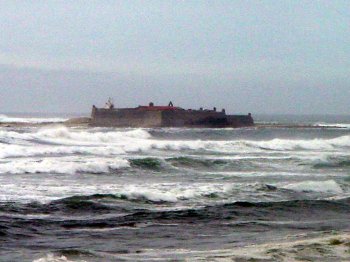
Built by King João IV in 1647, this fort was part of the defensive system of the Tagus River mouth. Over the centuries, it has been used and adapted in various ways, including as a customs post, a youth sailing center, and a youth hostel.
Forte de Nossa Senhora do Amparo
- heritage
Rua General António Teixeira de Aguiar
9200-084, Machico
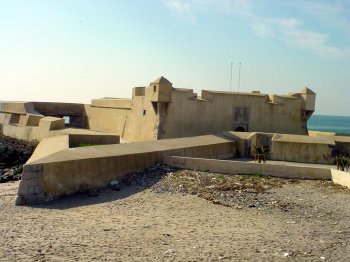
Ancient fortress with a triangular plan, built in the 18th century to defend Machico beach, crossing fire with the fort of São João do Desembarcadouro. It is part of the typology of 17th century Iberian bastioned forts. Currently, a tourist office operates here.