Explore the best places
Results for castelo in Portugal


Castelo da Lousã / Castelo de Arouce
- heritage
EM580
3200, Lousã
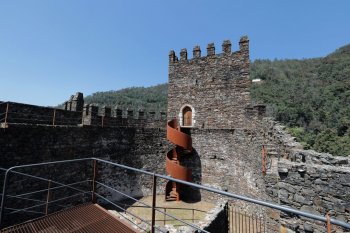
Castle located near the village of Lousã, in a mountainous landscape. It consists of a keep, punctuated by arrow slits, a small irregular fence, and a few turrets. Its entrance is flanked by two turrets, and three more are distributed along the walls. The entire castle is made of Silurian schist, a local rock, except for the garrison at the keep's door, which is made of white sandstone. During the Reconquista, this castle became a strategic point, halting Moorish incursions from the Zêzere valley.
Castelo de Rebordãos / Castelo de Tourões
- heritage
EN15
5300, Rebordãos
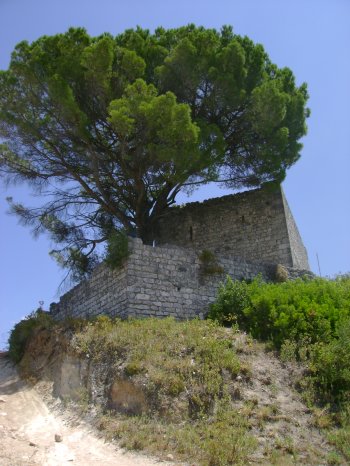
This ancient castle, an elliptical plant, there are only a few ruins on a rocky peak.
Paços Municipais de Viana do Castelo
- heritage
Praça da República
4900-520, Viana do Castelo
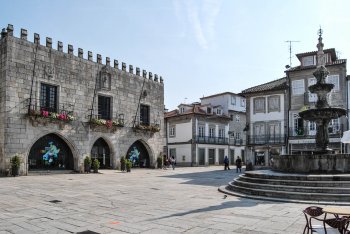
The construction was initiated during the reign of Dom Manuel I and finished in the reign of Dom João III. It has two floors, entirely built in granite. The lower floor is formed by a shed with thre ogival arches. In the upper floor there are three windows with balconies. One can also view, on the top of the windows, a royal shield, an armillary sphere and a sailboat, heraldic symbol of Viana do Castelo.
Torre do Relógio de Castelo Branco
- heritage
Rua do Relógio
6000-195, Castelo Branco
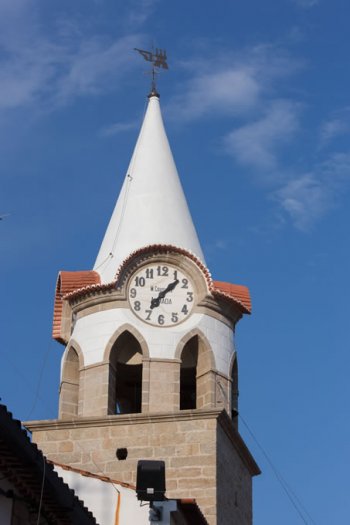
In the heart of the historic area, stands the imposing Torre do Relógio, unavoidable in the landscape of Castelo Branco, as it is visible from the most diverse locations. Its creation is related to the expansion process of the city and the enlargement of the limits of the walls, since it was created where there was an old tower of the outer wall, adapted for its current functions in the 19th century. Its characteristic hourly chimes are heard by residents and visitors alike.
Castelo da Guarda / Torre de Menagem
- heritage
Rua Dona Maria Luísa Godinho
6300-758, Guarda
At the highest point of the city, at 1056 meters of altitude, is the Castelo da Guarda, better known as Torre de Menagem. The town was inhabited by order of Dom Sancho I, who granted it a charter and privileges in 1199, and transferred the seat of the diocese to here. This first charter was confirmed by the same king in 1217, 1229 and, later, in 1254, by Dom Afonso III. In 1510, Dom Manuel granted it a new charter and granted his son, Dom Fernando, the title of Duke of Guarda.
Castelo de Soure
- heritage
Largo do Castelo
3130-259, Soure
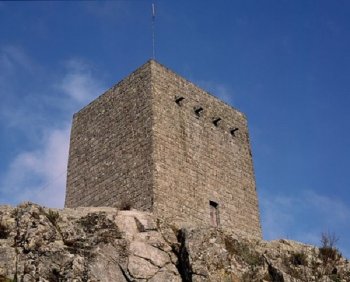
Some remains show the occupation of this site in Luso-Roman times. Remains of the fortress remain today, framed by four corner towers, a Suevo-Visigothic door and a Mozarabic window.
Castelo da Furna
- heritage
Rua do Castelo Faião
4930-070, Boivão
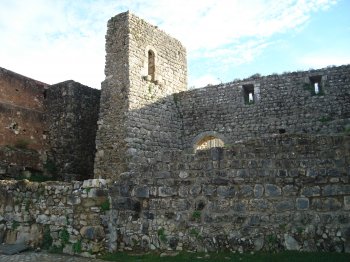
The Château de Fraião constituted a significant example of Romanesque fortress, but not adapted in the Gothic era. Thus, when from the beginning of the 13th century all the regional strategic interest shifted to the line of the river Minho-especially to Valença and Monsoon-was sidelined. Currently, only remains of the Castle a granitic suite, which provides magnificent views of the Minho Valley.
Castelo da Sertã
- heritage
Miradouro do Castelo
6100-631, Sertã
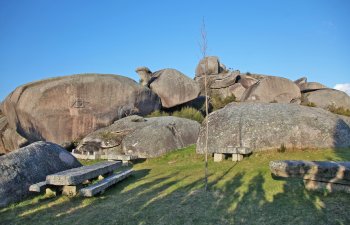
A medieval mountain castle with schist walls. Inside, it has a quadrangular tower and a single-nave church with a narrower chancel and bell tower, the Church of Saint John the Baptist. The castle was abandoned for centuries and was only rebuilt in 1998. The tower and some sections of the schist wall remain from the original monument. The founding of this fortification is attributed to Sertorius. It was rebuilt by Count Henry and, in 1174, was donated by his son to the Hospitallers.
Castelo de Alandroal
- heritage
Rua Diogo Lopes Sequeira
7250-116, Alandroal
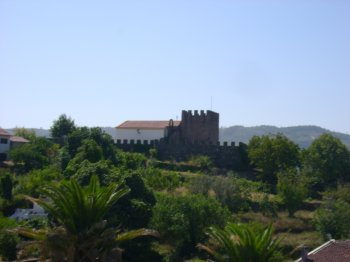
Medieval castle with a significant keep. Noteworthy in this fortification is the gate flanked by towers and a horseshoe arch made of local marble. The Torre da Cadeia and Porta Legal feature remains of Moorish architecture and Gothic tombstones commemorating the work. Located overlooking the village, from here, guests can enjoy beautiful views of the region.
Castelo de Alcanede
- heritage
Rua da Encosta do Castelo
2025, Alcanede
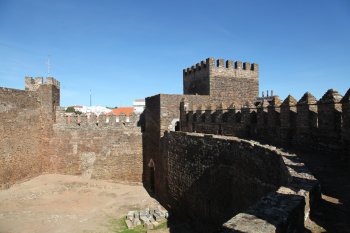
Located 25 kilometers from the town center is this monument of probable Arab origin. Rebuilt after the 1531 earthquake, it features an interesting sculpture above the main gate, where three castles and an eagle are visible. After assuming great defensive importance, it lost its usefulness over the years, and only between 1941 and 1954 did it undergo renovations that gave it its current appearance, with two towers. It served as a prison during the Middle Ages.