Explore the best places
Results for castelo in Portugal


Igreja de Nossa Senhora de Mércoles
- heritage
Caminho de Nossa Senhora de Mércoles
6000, Castelo Branco
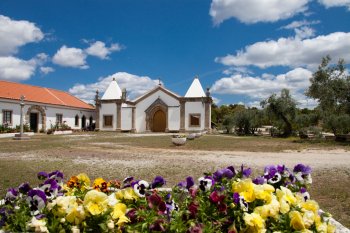
Located in a hermitage near Castelo Branco, this late-Gothic church was built by friars of the Order of the Temple. The entrance portal and the two lateral ones are ogival, while the interior features different tiles, of Hispano-Arabic origin, and records of frescoes. It comprises a single nave and an apsidal chapel, having been the subject of major works between the 17th and 19th centuries.
Palacete dos Morgados Cardosos
- heritage
Rua da Cruz, 5
7150-125, Borba
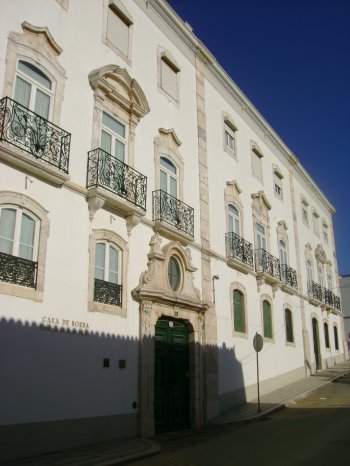
18th century building, built by João Cardoso Moniz de Castelo Branco, Alderman of the Town Hall. This was more a family that made a fortune at the time thanks to the production and marketing of wine. This House follows the architecture of the houses from this era in Borba, where on the ground floor was the production of wine and, on the top floor was the housing area. Today this space is meant for Turismo de Habitação.
Igreja de Santa Maria Maior
- heritage
Rua Senhor da Paciência
6200-138, Covilhã
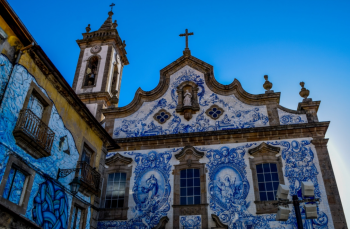
Located in the city's historic area, it is covered in white and blue tiles intended to depict the life of the Virgin Mary. It is a Neo-Baroque revivalist church with a longitudinal plan, comprising a nave, a narrower and lower chancel, a side chapel, a baptistery, and a bell tower. It was built in 1886 on the site of the former Church of Santa Maria do Castelo. Inside, the Neo-Rococo and Neoclassical gilded altarpieces are particularly noteworthy.
Estação Arqueológica do Monte de São Martinho
- heritage
Monte de São Martinho - EN18-8
6000, Castelo Branco
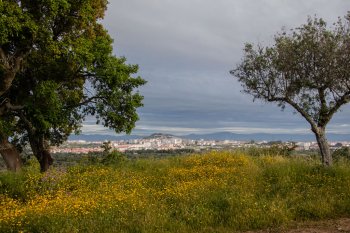
In the vicinity of Castelo Branco, in a high place of great natural beauty, stands a hill of quartzite formation, with strong endogenous vegetation and from where you can contemplate beautiful panoramic views over the Tagus Valley and the city. At the base and on the hill there are traces of the Roman presence in the region, as well as marks of a prehistoric past. Proença Júnior was the first archaeologist to be interested in this place, having found in 1903 three inscribed stelae from the Bronze Age.
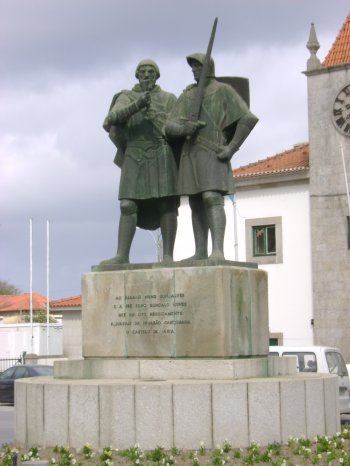
Estátua de Homenagem a Nuno Gonçalves e Gonçalo Nunes
- heritage
Largo do Marchal Gomes da Costa
4750-162, Arcozelo
Nuno Gonçalves was Alcaide-mor of the Castle de Faria, in the reign of Ferdinand I of Portugal. At this point the troops of Castile invaded our country. Taken prisoner by the Castilians, was taken to the walls of Castelo de Faria, in an attempt to convince his son, Gonçalo Nunes, then Chief of the garrison, to surrender. However, Nuno Gonçalves took the opportunity to urge his son to the resistance, and was promptly shot down. This episode became a legend and narrated by Alexandre Herculano.
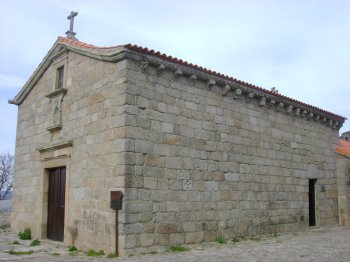
Igreja de Santiago / Panteão dos Cabrais
- heritage
Largo do Castelo
6250-067, Belmonte
Located in Largo do Castelo, this small church with a romantic style also features Mannerist and Gothic elements. It was built in the 13th century and its “ex libris” is the beautiful Pietá, in granite and polychromatic, which impressed the writer and Nobel Prize José Saramago, as reported in his book “Journey to Portugal”. Mural paintings and traces of a triptych with Our Lady, S. Tiago and S. Pedro can still be seen. The Cabrais Pantheon is next to the church.
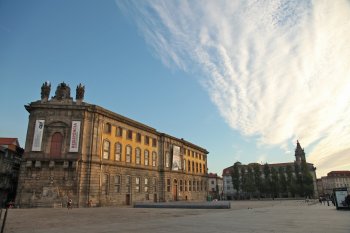
Cadeia e Tribunal da Relação do Porto / Centro Português de Fotografia
- heritage
Largo Amor de Perdição
4050-008, Porto
Contemporaneous of the emblematic and neighbour Clérigos Tower, this building of the XVIII century was, for many years, a prison. On its dungeons were men like the Duque da Terceira (a noble), Zé do Telhado (the portuguese version of Robin wood) e Camilo Castelo Branco (XIX century writer), who wrote there one of the most famous romances, “Amor de Perdição”. The main façade divides in three floors, having a central body slightly salient, on which the entrance portal is.
Memorial da Ermida
- heritage
Lugar da Ermida
4560-173, Irivo
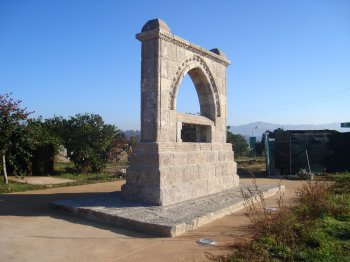
Corresponding to a typology of monument that only six copies in Portugal, the decor features used on this memorial are its construction in the mid-13TH century. Originally located along the road that came from the medieval port and crossed the parish of Paço de Sousa, was moved from its original position due to the transformation of the road network. It is thought that this type of construction is related to the placement of graves, the evocation of memory of someone or with the passage of funeral processions. Legend has it that this memorial, in conjunction with those of Sobrado (Castelo …
Núcleo de Arte Rupestre da Penascosa
- heritage
Castelo Melhor
5150, Castelo Melhor
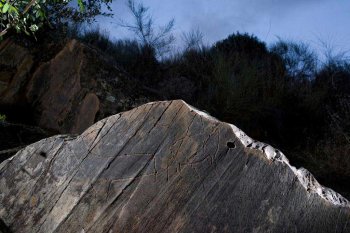
A Penascosa encontra-se numa grande praia fluvial na margem direita do rio Côa, no concelho de Vila Nova de Foz Côa. A visita inicia-se no Centro de Recepção na aldeia de Castelo Melhor. Segue-se numa viatura todo-o-terreno, com um guia, por uma estrada de terra por entre os campos plantados com amendoeiras e oliveiras, ao longo de cerca de 6 kms. O percurso escolhido inclui 5 rochas gravadas. O Museu também organiza visitas noturnas, altura em que é possível, através de uma luz artificial, criar as melhores condições para uma adequada fruição da beleza da arte paleolítica do Côa.
Aldeia Velha do Juriz (Vestígios)
- heritage
Pitões
5470-370, Pitões
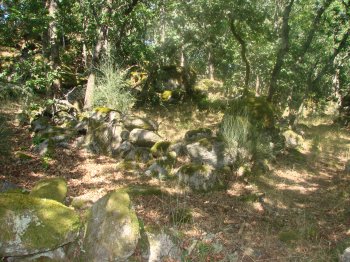
About 1000 meters southwest of the village of Pitões das Júnias and camouflaged by a dense oak is the town abandoned of Gerez. Traces remain of about 40 houses of quadrangular, built with granite blocks, some crudely equipped. The streets between the houses are also well preserved, and still retain the lajeado. The spacing between the houses is about 3\/4 feet, some retain just over a metre of wall, but you can imagine, without great efforts the architecture of this village. The Oaks are invading gradually the interior of each House, giving this place a rare beauty. Is the Medieval …