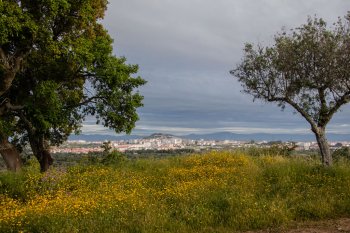
Explore the best places


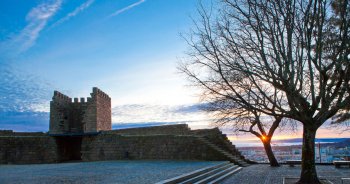
Castelo de Castelo Branco
- heritage
Rua do Mercado
6000-108, Castelo Branco
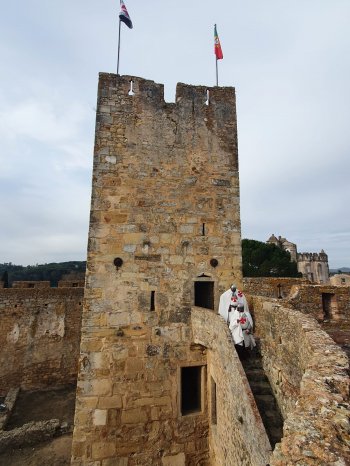
Much sought after by tourists, what remains of the Albicastrense Castle rises in an area overlooking the city. It was built by the Templars in the Middle Ages, this despite the traces of human presence in that area in pre- and proto-history, having been surrounded by a line of walls and towers. In the precinct of the fortress, in the citadel, were the Church of Santa Maria do Castelo and the Palácio dos Alcaides. This fortification was part of a defensive system that bordered the Tagus River.
Jardins do Palácio de Cristal
- country
Rua Dom Manuel II
4150-346, Porto
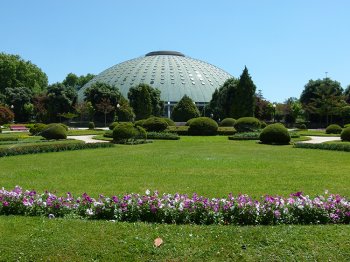
In the center of Porto, the gardens of Palácio de Cristal are the ideal place to take a stroll away from the hustle and bustle of the city. The original Palácio de Cristal was demolished in 1951 to make way for the Sports Pavilion, later christened Pavilhão Rosa Mota. From the original work, which dates back to 1860 and was designed by F.W.Shields to host agricultural and industrial exhibitions, its vast garden remains. The leafy trees, the garden beds, a lake, fountains, animals that roam freely and the little corners to discover, create the perfect environment for a long walk …
Arco da Vila
- heritage
Rua da Misericórdia, 8
8000-269, Faro
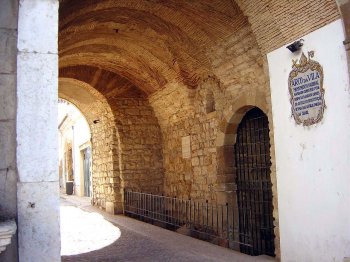
In the heart of the town, in Largo da Sé, this arch is one of the most important architectural complexes in the Algarve. This monumental portal is a 19th century reconstruction. Inside there is an Arab portico, unique in the Algarve region. In the niche above the Arch there is an image, in white marble, of Saint Thomas Aquinas.
Castelo de Tomar
- heritage
Estrada do Convento, 8
2300-497, Tomar
Castle built in the 12th century with the aim of becoming the seat of the Knights Templar. Built in a high location, only the walls that surround the citadel, the castle with its keep and the temple with a circular plan remain from the original building. Inside the temple, you can see an octagonal "charola", a Romanesque-style building. D. Henrique built two cloisters and the Palaces. D. Manuel added the Manueline nave, whose portico and Chapter house, with its famous window, are stunning. This castle was built by Gualdim Paes and is part of the offensive-defensive system of the reconquest. …
Centro de Cultura Contemporânea de Castelo Branco
- art
Campo Mártires da Pátria - Rua Cadetes de Toledo
6000-097, Castelo Branco
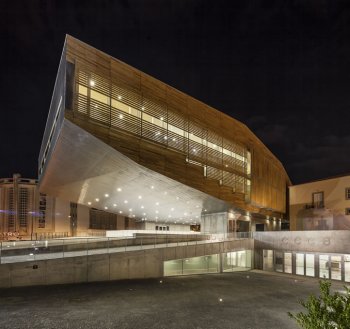
This project by the Catalan architect Josep Lluis Mateo stands out in the city center landscape for its innovative architecture. It is a hollow building, clad in metal and wood, with four floors. In addition to the exhibition spaces, it has a synthetic ice skating rink and an auditorium with 275 seats, equipped with a high-quality acoustic system, without the use of amplification systems.
Torre do Relógio de Castelo Branco
- heritage
Rua do Relógio
6000-195, Castelo Branco
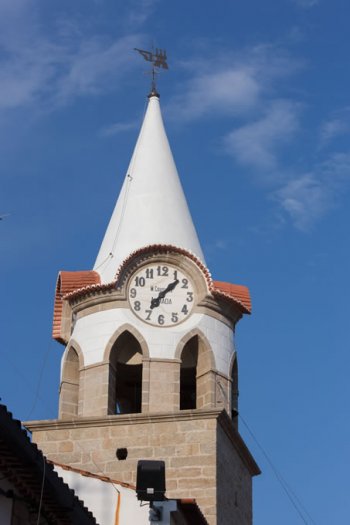
In the heart of the historic area, stands the imposing Torre do Relógio, unavoidable in the landscape of Castelo Branco, as it is visible from the most diverse locations. Its creation is related to the expansion process of the city and the enlargement of the limits of the walls, since it was created where there was an old tower of the outer wall, adapted for its current functions in the 19th century. Its characteristic hourly chimes are heard by residents and visitors alike.
Piscina Praia de Castelo Branco
- leisure
Parque Urbano - Avenida do Empresário
6000, Castelo Branco
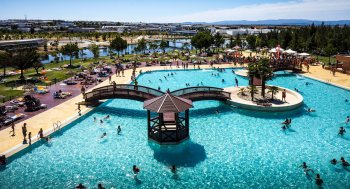
In a city that usually faces very hot and dry summers, the Piscina Praia, and its four thousand square meters of water, quickly became a reference leisure space in the region. In the warmer months, vacationers can enjoy hydrogymnastics, aqua zumba and recreational and educational activities for children, in addition to being able to relax in the large grassy area. It has changing rooms for a thousand people and 750 parking spaces.
Parque da Cidade
- country
- leisure
Rua Bartolomeu da Costa
6000-773, Castelo Branco
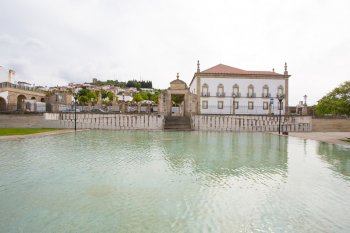
It had profound refurbishment works under the Polis programme, and it is located right in front of Jardim do Paço and is another popular leisure spot. As part of this rworks, the space, which was once a farm with gardens, has given place to a very pleasant park with a large green area and in which water takes on a prominent place. However, some elements have been preserved, such as the pergola, a mass of cedars, the Mata dos Loureiros or the Porta de Roma.
Cruzeiro de São João
- heritage
Largo de São João
6000-103, Castelo Branco
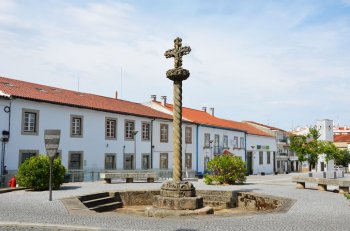
It is classified as a National Monument and occupies a prominent place in the square with the same name. It is a fine example of Manueline religious architecture, rich in details, having been built in the 16th century. Carved in granite, it rests on an octagonal base decorated with plant elements, while the shaft is spiraled with a ring, decorated with a rope and stylized plants. The cross has Jesus Christ crucified.
Estação Arqueológica do Monte de São Martinho
- heritage
Monte de São Martinho - EN18-8
6000, Castelo Branco
In the vicinity of Castelo Branco, in a high place of great natural beauty, stands a hill of quartzite formation, with strong endogenous vegetation and from where you can contemplate beautiful panoramic views over the Tagus Valley and the city. At the base and on the hill there are traces of the Roman presence in the region, as well as marks of a prehistoric past. Proença Júnior was the first archaeologist to be interested in this place, having found in 1903 three inscribed stelae from the Bronze Age.