Explore the best places
Results for enter portal quick PROBLEMGO.COM Need to hire a bail bondsman with cash now Rezekne in Portugal


Castelo do Sabugal e Restos da Muralha
- heritage
Largo de Santa Maria
6320-328, Sabugal
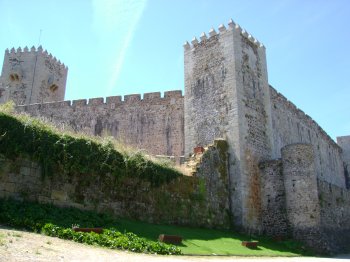
This fortification was built in the 12th and 13th centuries and later expanded by King Dinis. During the Manueline period, some alterations were made, of which the portal that gave access to the drawbridge remains. It also preserves the alcazaba with its pentagonal-based keep, the Torre das Cinco Quinas (Tower of the Five Corners), protected by machicolations and turrets, and the ring of walls that surrounds the town. Of particular note are the thickness and height of the alcazaba's curtain walls and the existence of the barbican.
Casa do Oleiro
- hotels
Lugar do Norte
9580-108, Santa Bárbara
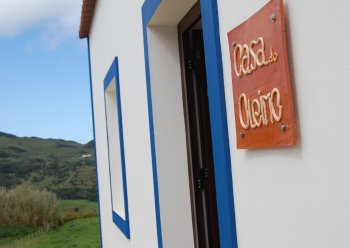
If you're looking for a quiet place with all the comfort to spend your holiday or weekend we have the perfect place to you: The Casa do Oleiro - Potter's House. The "Casa do Oleiro" - Potter's House - is located on the northern side of Santa Maria. In a place called the Norte, a part of the Santa Barbara village, you can admire the landscape of where the mountains touch the sea. Some days, you can see the neighboring island of Saint Michael on the horizon. The pottery table and small handcrafted objects blend with the accommodations needed for …
Capela de Santa Margarida
- heritage
Largo da Igreja
5460-010, Atilhó
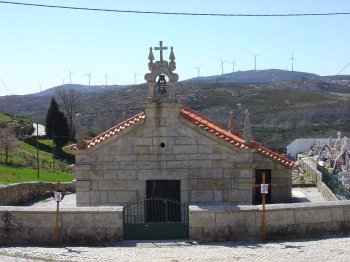
Classified as Municipal interest Property, the chapel of Santa Margarida boasts on a rectangular portal main façade, flanked by two horizontal slots, surmounted by a small oculus surrounded by a rosette. The stretching of the gable, the Campanile, richly decorated with volutes, is crowned by a cross flanked by two pinnacles with ball. Inside stands the high altar in gilt which houses religious imaginary. Space of worship, is in this chapel that the honors to Santa Margarida by the time of the feast of Saint Margaret, patron saint of the village.
Ermida de Nossa Senhora do Pilar
- heritage
Rua Engenheiro Duarte Pacheco, 122-A
8100-523, Loulé
A hermitage composed of a sole nave, main chapel and sacristy. The main façade is a sole bunting, torn by an ashlar portal with an architrave rod, surmounted by a large window in a straight rod, sided by ashlar cracks. Inside, one should notice the high choir with wooden gratings over a crossvault and the nave, topped by a cradle vault. The main chapel has a triumphal arch in painted wood, an altar encased by pattern tiles and a panel in painted wood with the shape of a throne.
Igreja de São Bartolomeu
- heritage
Rua de São Bartolomeu
7150-162, Borba
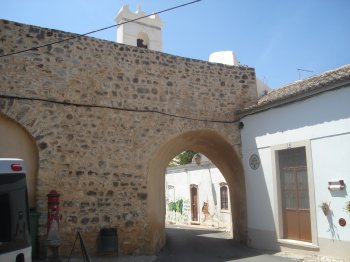
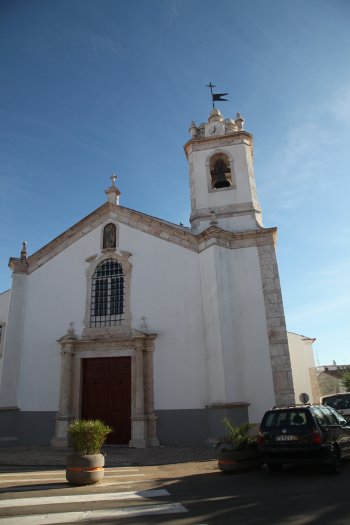
Built by master João Fernandes reveals Renaissance, Mannerist traits, and Gothic forms. The facade is topped by a triangular pediment and has the image of Saint Bartholomew. In the portal are the ionic columns that are based on ornate pedestals with the symbol of the martyrdom of the apostle. Inside the Church is of extreme beauty, especially the scenes from the life of Christ and varied reasons such as angels, birds, flowers, fruit and landscapes. Enhancement for the marbles and the Golden carvings, especially those of the high altar, designed by the master Manuel Nunes.
Mosteiro de São Pedro de Ferreira
- heritage
Rua do Cruzeiro, 124
4590-827, Ferreira
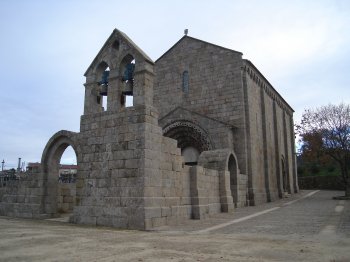
The monastery of Ferreira is a typical example of an ecclesiastical establishment of agrarian roots. It is a remarkable rural Romanesque construction dating from the last quarter of the 12th century. The facade is torn by a portal that is unparalleled in the Cathedral of Zamora. Its architectural ensemble is part the Church of S. Pedro de Ferreira, being your frame a single copy in the country. The interior is just one ship, with more than 15 meters in height. A monument of a unique beauty and a magnificent surrounding landscape.
Mosteiro de Ermelo
- heritage
Ermelo
4970-140, Arcos de Valdevez
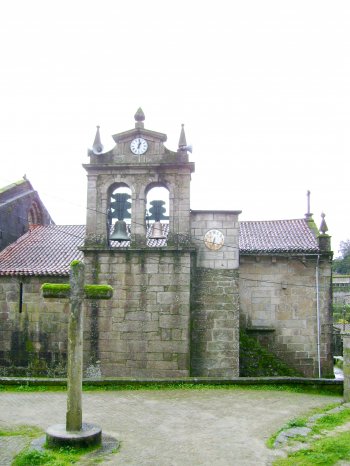
Despite its integration into the Cistercian Order, the life of this monastery was turbulent and short. During his visit in 1553, the Abbot of Clairvaux found it in a state of complete neglect and poverty, which is why it was secularized in 1560, becoming a parish church. What we see today in Ermelo is a beautiful Romanesque church adapted to the life of a small parish, first in the 16th century and again in the 18th century. Of the nave that stood to the south, only the beautiful triumphal arch remains, now open to the sky outside. The monastery's dependencies …
Castelo de Ouguela
- heritage
EM373
7370-200, Ouguela
The castle was rebuilt by King Dinis in 1310 and underwent restoration work in the 18th century. Of the old fortification, situated atop a hill, only some sections of the wall and towers remain, in addition to the 17th-century fortifications, with escarpments, parapets, and ravelins, built during the Restoration War. The Church of Our Lady of Grace stands out, with its gable façade, framed straight lintel portal, and oculus. This castle is a characteristic example of the border fortresses of lowland regions, with a bastioned system determined by pyrotechnic artillery.
Castelo de Palmela
- heritage
Avenida dos Cavaleiros de Santiago e Espada
2950-317, Palmela
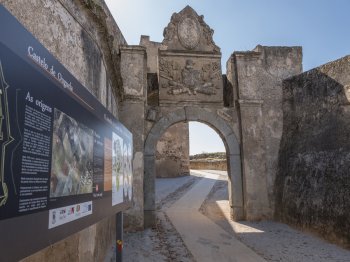
The fortress stands on the eastern spur of Serra da Arrábida, from which you can see an extensive landscape from Sines to Sintra. Its main points of interest are the entrance, the 17th century walls, the convent of the Order of Santiago, the church of Santiago, from the 15th century, the Paços de D. Jorge, the turrets, the 14th century keep, the ruins of the church of Santa Maria, the parade ground and several portals. There is also the Castle Nucleus, one of the museum spaces of the Palmela Municipal Museum.
Biblioteca Joanina
- heritage
Praça da Porta Férrea
3000-447, Coimbra
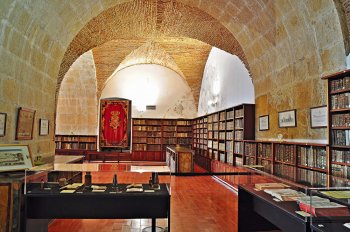
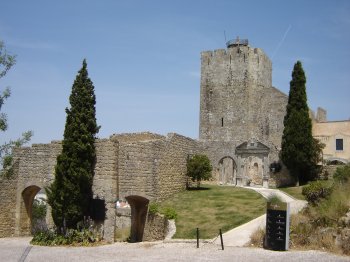
This 18th-century building is notable for its magnificent Baroque portal on the exterior, topped by the national coat of arms of King John V. The simplicity of the facade contrasts with the profuse decoration of the interior, where the ceilings, painted by Lisbon artists António Simões and Vicente Nunes, and a huge canvas depicting King John V, executed around 1730 by Domenico Duprá, stand out. This library holds approximately 300,000 works, dating from the 12th to the 19th centuries, with an emphasis on law, philosophy, and theology.