Explore the best places
Results for MAKEMUR.com how much to bail someone out immediately Daugavpils in Portugal


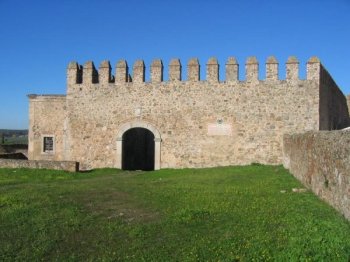
Castelo de Campo Maior
- heritage
Rua dos Quartéis, 8
7370-102, Campo Maior
Castle where some sections of the medieval wall and the north tower are still visible. Of the 17th-century fortified perimeter, the moat and counterscarp are largely preserved, along with bastions, gates and barracks. The castle has two of its six towers, with a rectangular plan. The Manueline molding stands out in the western tower. A large hall, with two naves divided by strong ashlar pillars, has a groin vault. Ordered to be rebuilt by King Dinis in 1310, it is assumed that fortifications existed in this area of Campo Maior since Roman or Visigothic times. During the reign of King …
Cidade Romana de Grou
- heritage
Santo André
5470, Montalegre
On the slopes of the Larouco, between the Regouço River and the ribeira da Rega near the border line lies the village of Grou. Is a fortification that stands out for its morphology, in a small plateau, which taking into account the characteristics of the terrain meant that the defensive system was composed of ditches, South side, West and North, and by a thick wall that surrounds the surrounds. The wall was made of Earth and stone and the blocks of the outer edges of the wall well equipped. Inside there are few traces of buildings. Fortified settlement of Roman …

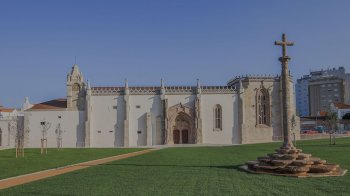
Convento de Jesus / Museu de Setúbal
- heritage
Largo Miguel Bombarda
2900-261, Setúbal
The convent was founded by Justa Rodrigues Pereira, wet nurse of King Manuel I, in 1490, during the reign of King John II. This monarch, who visited the construction the following year, decided to expand the initial project. He entrusted the construction to Diogo Boitaca, the first architect of the Jerónimos Monastery, who carried out his first work in the country here. The convent has a beautiful portal and Manueline windows. Inside, the beautiful twisted columns of the hall church, which belonged to the convent of the Franciscan Poor Clares, deserve special mention. Because they belonged to a cloistered order, …
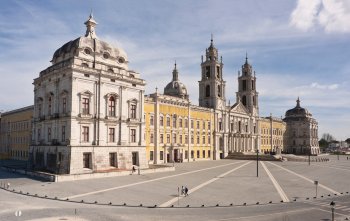
Convento de Mafra / Palácio Nacional de Mafra
- heritage
Terreiro Dom João V
2640-492, Mafra
Convent built by Dom João, in 1711, having as main architect Frederico Ludovice. It is the most luxurious national convent, proof of the richest reign in the country's history. It is of Johannine Baroque style and is inspired by the Spanish model of S. Lourenço of Escorial. It has three distinct elements, the Royal Palace, the convent and the Basilica. The facade is flanked by two large turrets, finding themselves at the Centre the Basilica, flanked by two bell towers. The interior of the Church, where is obvious the classical influence, has a nave, ornamented with marble of several colors, …
Capela de São Pedro de Medrões
- heritage
EM603 - Contador
5030-306, Medrões
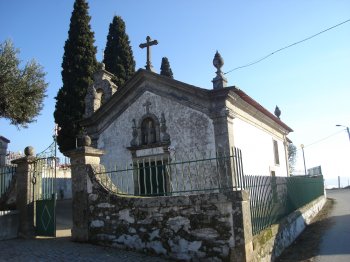
Painted white, this chapel boasts well-preserved and prominent stonework. On the main facade, the small niche above the main door stands out, where there is a stone sculpture of Saint Peter. This round arched niche is crowned by a cushioned cross and flanked by stonework rosettes. The interior is spacious and stunning due to its good ambiance, richness, art and profusion of Baroque carvings, including the magnificent main altar with twisted columns, volutes, angels and vegetal ornaments. The paneled (wooden) ceiling of the chancel is decorated with thirty-five coffers each representing figures of saints and popes. The ceiling of the …
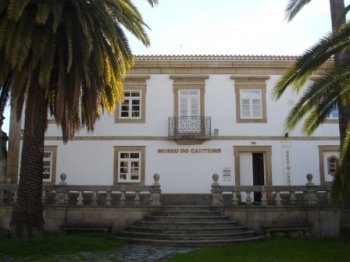
Museu do Canteiro e Centro Cultural de Alcains
- heritage
Rua das Fontainhas, 1
6005-057, Alcains
The permanent exhibition "the Labor of the construction site" develops along a route which follows the stages of intervention on the stone for the production of stonework. Are the older and traditional utensils used by stonemasons in the course of successive operations and also the innovations that have been, leading to its abandonment and replacement by machinery. The images presented in this course documenting practices and techniques that lead to production of stonework and realize the fundamental traits of the evolution of activity in Portugal petraea. The most significant innovations are those that came to emblematizar the industry itself petraea …
Fojo do Lobo de Parada
- heritage
Parada
5470-333, Montalegre
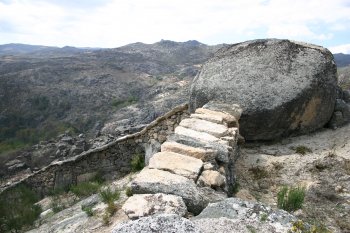
Monument located at an average altitude of 890 metres, inside of the Peneda-Gerês National Park. The vegetation is dense, and the fojo burned recently. It is a granite wall, closed around a large Boulder, which forms an enclosure only accessible by exterior. There's a door, formerly used by popular to put the bait, carry out maintenance and cleaning operations, and to enter the interior of the walled area when a Wolf then was cornered. With about 60 meters in diameter, is the largest fojo of this type in the Iberian Peninsula. One of their structural particularities is the shape of …
Passeio pelo Jardim do Paço
- heritage
Rua Bartolomeu da Costa
6000, Castelo Branco
Garden unequalled in Portugal, the visit to this ex-libris is essential. The Paço Garden, annexed to the former bishop’s palace, was sent to build by the Guarda bishop, Dom João de Mendonça, in 1725. The beautiful baroque garden has various lakes, cascades, water spouts, staircases and statues. The Kings Staircase immortalizes all the Portuguese kings in granite, from Dom Afonso Henriques to the King Dom José I. Among the box appear symbolic statues from which stand out the four Men’s ultimate purposes, the cardial virtues, the theological virtues, the signs of the zodiac, the five parts of the world, the …
Castelo de Longroiva
- heritage
Rua do Adro
6430-071, Mêda
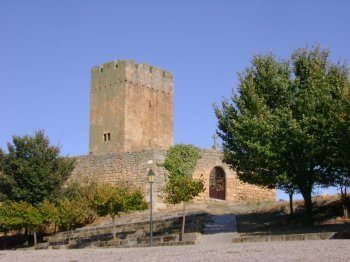
The medieval castle of Longroiva is one of the most important examples of Templar military architecture in Beira Interior and one of the best examples of a Romanesque castle in the region. Built on a supposed pre-Roman hillfort, built between the 4th and 2nd centuries BC, its construction coincided with a significant surge in settlement in the region in the early 12th century, having belonged to the Order of the Temple and the Order of Christ. In the 18th century, with the settlement's progressive decline in importance, the castle's progressive ruin was documented. In the 19th century, the castle began …
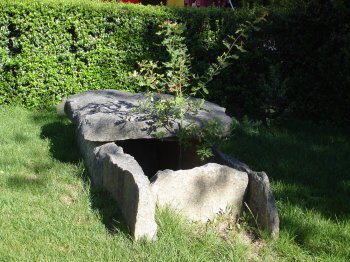
Cistas da Portela do Gorgulão
- heritage
Gorgulão
5470, Vila da Ponte
Set of two monuments that are believed to have been graves for adults, of which there is only the second. The first monument was an individual grave, CIST-type, built with slabs of local granite, with an approximate height of 0.50 meters and 1.5 meters in length. She was found in March 1931 when it carried out farm work on-site, owned three ceramic vases, fragmented at the time of the finding. Currently, no longer exists. The second the Gorgulão CIST was found in 1994, when the construction of the current accommodation "Cista", containing only a ceramic vase. Lateral slabs has approximately …