Explore the best places
Country in Portugal


Parque da Cidade
- country
- leisure
Rua Bartolomeu da Costa
6000-773, Castelo Branco
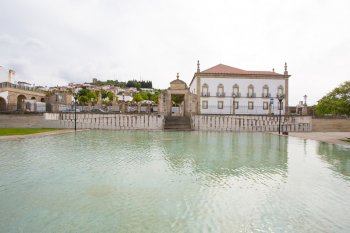
It had profound refurbishment works under the Polis programme, and it is located right in front of Jardim do Paço and is another popular leisure spot. As part of this rworks, the space, which was once a farm with gardens, has given place to a very pleasant park with a large green area and in which water takes on a prominent place. However, some elements have been preserved, such as the pergola, a mass of cedars, the Mata dos Loureiros or the Porta de Roma.
Jardim do Paço
- country
- leisure
Rua Bartolomeu da Costa, 5
6000-773, Castelo Branco
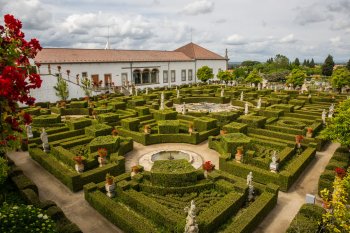
Classified as a national monument, it is one of the ex-libris of the city and one of the most original examples of the Baroque style in Portugal, having been built at the behest of D. João de Mendonça, Bishop of Guarda, around 1720. It features five lakes on the main slope, where the water features stand out, while the intermediate one has the Lago das Coroas and the Stairs of the Apostles and Kings, where all the Portuguese monarchs are represented. On the upper deck is the Staircase of Moses.
Miradouro de São Gens
- country
- leisure
Rua da Piscina
6000, Castelo Branco
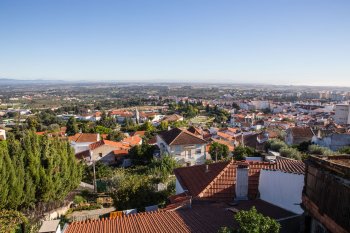
The views it offers over the historic area of Castelo Branco and the region greatly reward the effort required to reach it. It is located close to the Castle and opened in 1941, built to “hide” the water supply tanks and later reclassified during the Polis program. The garden benches and shadows invite you to take a well-deserved rest, while contemplating the panoramic view that goes from Serra da Estrela to the border.
Jardim da Devesa
- country
- leisure
Praça do Município
6000, Castelo Branco
Small garden located in the center of the city, in front of the Town Hall. There is a small café with a pleasant covered terrace and a few benches where you can rest while watching the hustle and bustle of the city. Here you can appreciate the typical Portuguese pavement decorated with the characteristic embroidery designs of Castelo Branco.
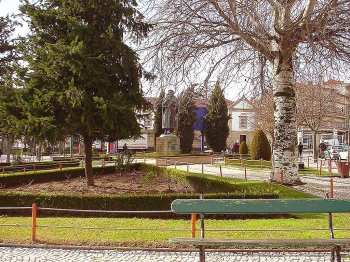
Barragem de Fagilde
- beach
- country
Estrada da Barragem
3530-070, Fagilde
Arch-vault dam located on the Dão River (Mondego Hydrographic Basin). It was completed in 1984 and supplies the municipalities of Mangualde, Nelas, Viseu and Penalva do Castelo.
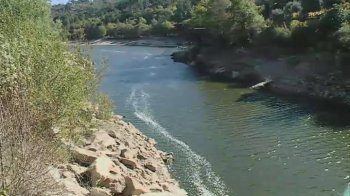
Albufeira de Castelo de Bode
- beach
- country
Alvrangel
2300, Tomar
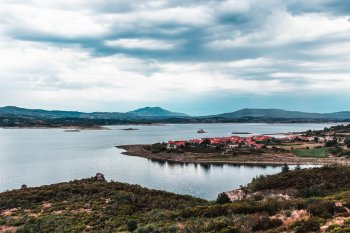
Arch-vault dam on the Zêzere River, near its confluence with the Nabão. It was completed in 1951 as part of the national policy for the use of hydroelectric resources. The reservoir, with an extension of about 60 km, offers enviable conditions for sports and contact with nature. It is an important strategic water reserve, supplying around three million people daily, the overwhelming majority of Greater Lisbon. In the area there are several nautical centers (where you can practice sailing, water skiing, canoeing, jet skiing, etc.), beaches and river pools, restaurants, etc. If you prefer to go out on your own, …
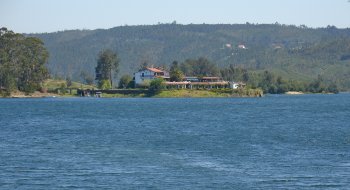
Mata Nacional dos Sete Montes
- country
- leisure
Avenida Dr. Vieira Guimarães, 1
2300, Tomar
The Mata Nacional dos Sete Montes has 39 hectares of forests and gardens that belonged to the Order of Christ for centuries. In 1938 it returned to the State after belonging for a century to the Costa Cabral family, who had acquired it together with the Convent of Christ. The flora is rich, and you can find, for example, pines and wild pines, oaks, oak trees, cypresses and centuries-old olive trees. Also noteworthy is the Charolinha, a small classic temple turned into an island by the surrounding lake.
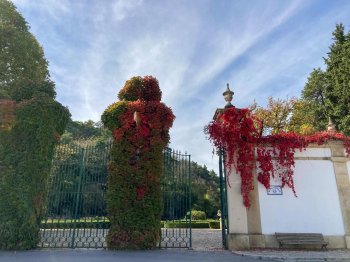
Lamas de Olo
- country
- heritage
Lamas de Olo
5000, Lamas de Olo
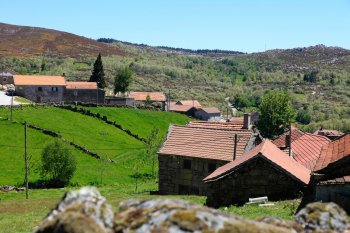
An old and rustic village composed of schist and culm houses. According to the local tradition, the lower floor of the constructions is still used as "loja" (a warehouse) for animals. A special note to the granite water-mills, "canastros" or "espigueiros" (corn warehouses), granite thrashing-floors and typical fountains with the traditional places for the cattle. A region with abundant archaeological vestiges. The inhabitants of Lamas de Olo are mostly farmers and shepherds.
Pitões das Júnias
- country
- heritage
Pitões de Júnias
5470, Pitões de Júnias
In this traditional village of the Lands of Barroso, one can still view typical cul covered houses. A special note to the church and the ruins of the beneditin convent of Saint Maria, a national monument, whose existence may date back to the 9th century and still has the romanesque portico of the old church by the convent. Near Pitões das Júnias there is a natural waterfall of rare beauty.