Explore the best places
Results for enter now fast MAKEMUR.COM pay a judge to shorten my time in prison in Portugal


Casa das Quatro Cabeças
- heritage
Rua de Fran Pacheco, 44
2900-373, Setúbal
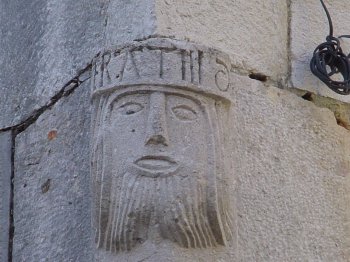
Building located in the heart of the old fishing village, has 3 floors and is an example of the city construction of Setúbal during the modern age. Over time underwent several changes but kept the essential characteristics of different eras of construction, with the ground floor to present testimonies Manueline. According to legend, this building is related to the attempted assassination of King John II, during a procession of God's body held in town sadina. At the top of the door is recorded a Latin inscription, cut by a sculpted head. On the corner of the building are the remaining …
Casa de Santar
- heritage
Rua de Miragaia
3520-125, Santar
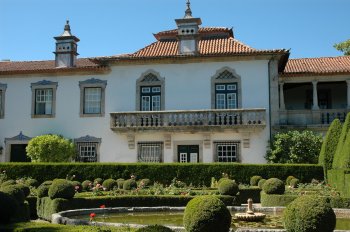
It was known as Quinta do Casal Bom, a residence that Dom Sancho II elevated to a manor and estate, gifted to one of his men who distinguished themselves in war. Today, it is known as Casa de Santar, a property that has been in use for 13 generations. Adorned with beautiful gardens, it sits on a series of boxwoods that culminate in an 18th-century pond. In front of the house, the "Chafariz da Carranca" stands as the House's coat of arms. Visiting this house is like traveling back in time, through the gardens and all the unique features of …
Museu de Etnologia do Porto
- heritage
Largo de São João Novo, 11
4050-554, Porto
When it was created, in 1945, it was called “Museu de Etnografia e História do Douro Litoral”. Since that time it is placed at the Plácio de São João Novo, dated from the XVIII century. This monument has been suffering a huge degradation, being, in 1989, under the guardianship of the IPPC and, in 1991, of the IPM. Closed to the public since 1992, the IPM has being transferring its collections to various museums. Works in the façade and the coverings of the palace have being made and, after the inventory systematization, the intension is to solve the problem definitively.
Casa da Oliveirinha
- hotels
Quinta da Breia - Rua de Trulhe de Cima, 216
4940-041, Agualonga
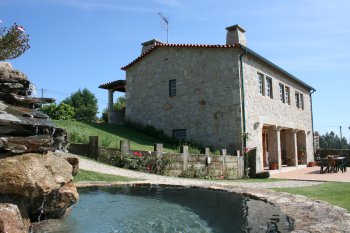
In times House of Quinta da Breia home, Casa da Oliveirinha was fully recovered to satisfy the necessary current comforts without, however, tamper with the moth and the typical elements of local architecture, preserving the open fireplace, granite slab of Ember, the wood-burning oven or "janelos". The interior decoration has preserved many of the original objects, such as the iron beds, bathroom faucets, oil lamps and the kitchen cabinet. Abroad, the garden extends in front of the House where you can relax to the sound of bucolic nature.
Igreja Paroquial da Cumieira / Igreja de Santa Eulália
- heritage
Largo da Igreja
5030-061, Cumieira
Dedicated to Santa Eulália, the Parish Church displays the year 1729 over the main door. Inside, it boasts a rich gilded carving of the time, which depicts the nature of the region, and the ceiling is made up of coffers, those in the main chapel decorated with paintings, those in the body of the church with carved ornaments. All these elements worked together with the mural paintings designed, according to tradition, by Nicolau Nasoni. The church houses two valuable pieces: a 17th century monstrance and a 16th century sculpture of the Virgin of a vernacular character.
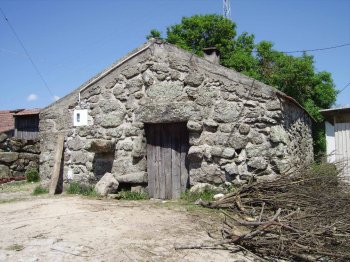
Forno do Povo de Antigo de Curros
- heritage
Largo de São Brás
5460-400, Antigo
The Ancient people of oven is a rural vernacular construction Curros in granite, two waters, coverage in tile. Inside the building, to the left of the front door you will find the tendal, massive granite structure and, at the fundeira, is the oven in granite, with gaskets and coverage in clay, where the local population continues to bake traditional bread. This equipment was, in ancient times, an important role in village sociality, the so-called "coffee of the people", was where they gathered during the evenings, was also the hostel of the poor, beggars and pilgrims, passing through the village, which …
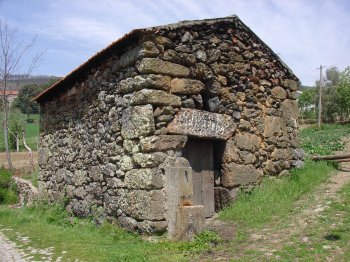
Forno do Povo de Fiães do Tâmega
- heritage
Avenida Principal
5460-431, Fiães do Tâmega
The oven of the people of Fiães Tâmega is a vernacular rural construction in granite, two waters, coverage in tile. Inside the building, to the right of the front door you will find the tendal, massive granite structure and on the fundeira you will find the oven, where the local population continues to bake traditional bread. This equipment was, in ancient times, an important role in village sociality, the so-called "coffee of the people", was where they gathered during the evenings, was also the hostel of the poor, beggars and pilgrims, passing through the village, which then stayed overnight.
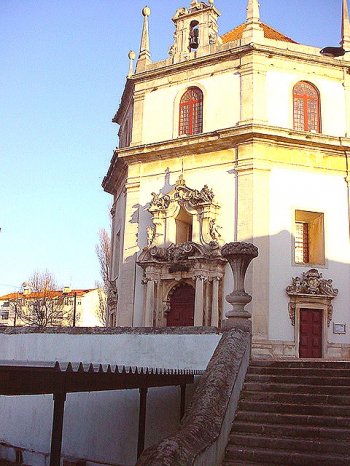
Igreja do Senhor das Barrocas
- heritage
Largo do Senhor das Barrocas
3800-248, Aveiro
Built in 1722, the crucifix was put inside the chapel in 1732. In the XVIII the panels and lateral altars were covered in golden woodcarving and the small bell was placed. In the XIX century it suffered several repairs and, in the XX century, preservation and valorization works were made. The chapel, with characteristics of joanino (King John of Portugal time) baroque, is a polygonal chapel. Although it has an erudite outline, this exemplar shows the participation of regional masters. The covering in woodcarving and the two oil paintings from the master André Gonçalves stand out.
Marco Miliário de Ponte do Arco
- heritage
Venda Nova
5470-504, Venda Nova
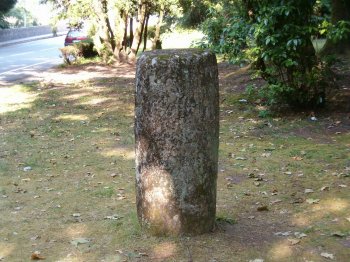
Milestone of the Via XVII of the Antonine itinerary, which connected Bracara Augusta (Braga) to Asturica Augusta (Astorga) through Aquae Flaviae (Keys). It is a medium-grained granite cylinder the rude, well carved, with about 1.20 meters high and one meter in maximum diameter. Presents two crosses recorded evidence of reuse in later times. It was found near the bridge of the Bow, during the works of the dam of Venda Nova, and placed in the garden adjacent to the dam, at Cambedo. A few years ago this site was removed and taken to the garden of Venda Nova.
Sepulturas Antropomórficas de Santo Adrião
- heritage
Montalegre
5470, Montalegre
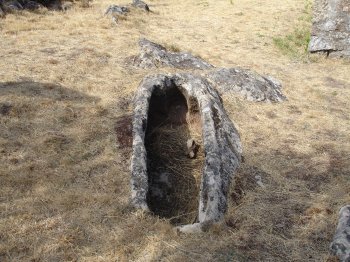
About 2 km north of the beautiful village of Montalegre, near the chapel of Santo Adrião, are these interesting anthropomorphic graves dated between the 10th and 13th centuries. Consist of three graves in granite and a grave excavated in schistose rock anthropomorphic too, in the back of the chapel. It is thought that exist outside a village, to which these tombs may belong, and may be only part of a necropolis affects the village. The surrounding countryside, in almost natural state, is of great beauty and peace of mind, a place where time seems to have stopped.