Explore the best places
Results for enter now fast MAKEMUR.COM pay a judge to shorten my time in prison in Portugal


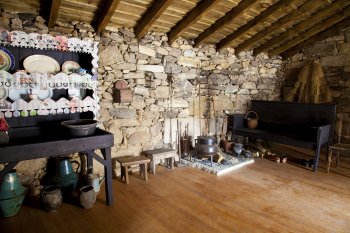
Ecomuseu de Barroso - Pólo de Vilar de Perdizes (Casa do Lavrador)
- heritage
Vilar de Perdizes
5470, Vilar de Perdizes
The Farmer's House, located in the village of Vilar de Perdizes in Montalegre, is a pole of the Ecomuseum de Barroso that faithfully reproduces the traditional transmontanas houses. This room consists of two floors. At the bottom, there are a number of utensils used in the field, as well as the barrels, the alembic, the wineskin for transporting wine and agricultural implements. The upper floor has no division between the living room, the kitchen and the area of the tear. Here, all the furniture is in compliance at the time. The room, for example, has a straw mattress lined with …
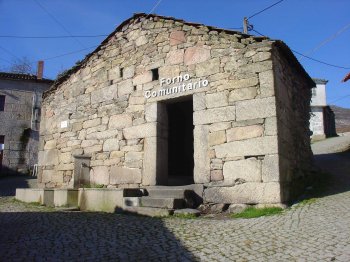
Forno Comunitário de Bobadela
- heritage
Largo Mota
5460-210, Bobadela
The oven of the people of Bobadela is a vernacular rural construction in granite, two waters, coverage in tile. Inside the building, to the left of the front door you will find the tendal, massive granite structure, on top of which was placed a "smock", to protect the dough. On the fundeira you will find the oven where the local population continues to bake traditional Scones. This equipment was, in ancient times, an important role in village sociality, the so-called "coffee of the people", was where they gathered during the evenings, was also the hostel of the poor, beggars and …
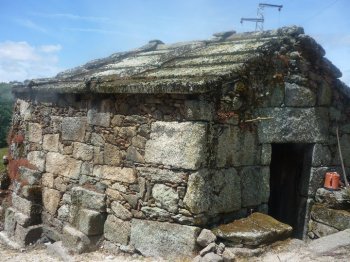
Forno do Povo de Travassos da Chã
- heritage
Travassos da Chã
5470-073, Chã
Many years ago, community ovens Barroso were covered with thatch (rye straw). With use, the coverage frequently, and also the burning homes in villages where they were, because the fire was spreading and burned down the houses next door, running the settlements a high risk of widespread fire, what I think has happened a few times. For this reason, at some point began to cover the ovens with slabs of granite. Even though it was work hard to perform, soon found to be the compensating results. Today, community ovens are important heritage of the region of Barroso.
Forte ou Castelo de Santiago da Barra
- heritage
Rua de Santiago da Barra
4900-357, Viana do Castelo
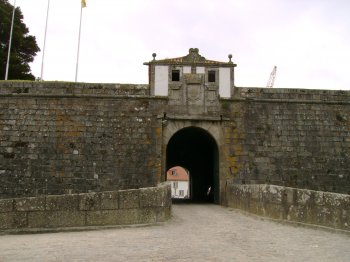
It is believed that this place has been inhabited since prehistoric times, as indicated by numerous findings. The first fortification would date from the reign of Dom Afonso III, although the most likely date is from the 15th century. During the reign of King João II and/or King Manuel I, the medieval castle and the Torre da Roqueta were rebuilt. In 1700 and 1799, during the reign of Philip II, it underwent further repairs and reconstructions. Attesting to these works, a rococo royal coat of arms stands out over one of the main doors.
Igreja de São Pedro de Abragão
- heritage
Rua do Paçal
4560-015, Abragão
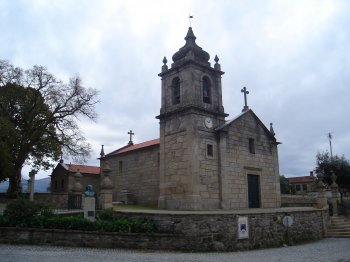
Of existence already referenced from 1105, this church was completely remodeled in the 13th century, on the initiative of d. Mafalda, daughter of Sancho I, acquiring Romanesque moth. In 1668 proceeded to the original ship's demolition to make way for another broader and therefore the only Romanesque elements remaining today are the headboard and the respective transept. Abroad, the frieze of geometric motifs recalls the decoration of the Visigothic, Mozarabic and times while in interior decoration shows the Baroque style. Beside the Bell Tower added in 1820, is a sarcophagus. It was declared a national monument in September 29, 1977.
Pedra d'Água
- heritage
Rua da Pedra d'Água
5470-020, Montalegre
Monolith of granite, with the top flattened and supported by a base in cement, (recently modified, because the previous one was quite eroded by erosion) which gives it the shape of a mushroom. Has a roughly circular format with about 1.45 meters in diameter. At the top were plowed several dimples, which are used as natural clock for sharing the waters of the village. Each of the dimples demarcated a family or group of fields. The different positions of the same causes are affected by solar shadows, marking thus the time of possession of the irrigated water. The different heights …

Universidade do Porto
- heritage
Praça de Gomes Teixeira
4099-002, Porto
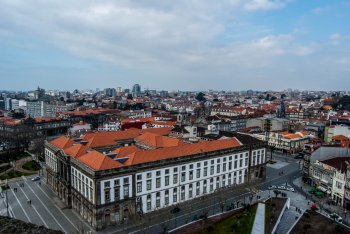
This building was first the Real Academia da Marinha do Comércio, (Navy and Commerce Royal Academy), then the Academia Politécnica (Polytechnic Academy) that later became the Sciences Faculty. Its construction began before the first French invasion and finished in the XIX century, at the same spot where a former XVII century used to be: the Graça Church, annex to the Recolhimento dos Orfãos, founded in 1651 by the father Baltasar Guedes. The temple still existed during the city siege and, at that time, abandoned, it became a blood hospital. In the middle of the last century, it was demolished to …
JNcQUOI Avenida
- food & drink
Avenida da Liberdade, 182-184
1250-146, Lisboa
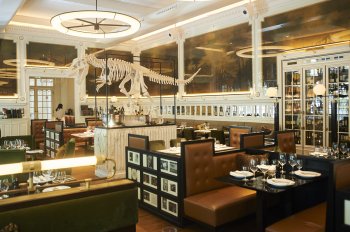
It belongs to the Amorim Luxury group and is spread over two floors: the lower one is bar-style, slightly more informal, the upper one is more formal. If at first glance the environment is frightening due to its exclusivity, over time this feeling dissipates. The comfort of the space is combined with JNcQUOI's good cuisine, run by chef António Boia. Not to be missed, on the menu, the Burrata DOP stands out, with or without Ham, the Sea Bass Ceviche with lime and a handful of the so-called “Classics”, including the Paletilha with oven-baked rice and greens, the Duck Confit …
Hotel Lusitânia Congress & Spa
- hotels
Urbanização Quinta das Covas, lote 34
6300-389, Guarda
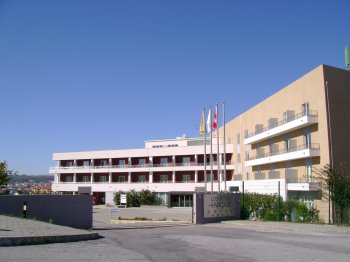
The now named Hotel Lusitania Congress & Spa is a modern and very comfortable unit, one of the outputs from the city of Guarda. With contemporary lines, the Hotel Lusitania Congress & Spa offers 63 rooms, simple but equipped with all modern amenities such as air conditioning and heating, guarantee a comfortable stay, even in the coldest days of winter. In addition to an outdoor pool, the hotel also has a gym and an indoor pool with water jets, to a maximum of well-being and relaxation, as well as sauna and gym. Restaurant and bar complete the offer of this …
Miradouro do Cervo
- country
- leisure
Rua Nova
4920, Vila Nova de Cerveira
This is the best-known viewpoint in Vila Nova de Cerveira, located next to the Cervo sculpture, a popular iron work by sculptor José Rodrigues. Located on a hill called Alto do Crasto, it pays homage to the symbol of the village where, in the past, deer abounded. Despite being located at just 300 meters above sea level, it is amazing with its extremely beautiful and imposing views. From here you can see a large part of the Minho River, from its passage through Valença to its mouth, in Caminha. On the other side, you can see the municipality of Tominho, …