Explore the best places
Results for Mosteiro dos Jerónimos in Portugal


Mosteiro de Santa Maria de Coz
- heritage
Rua de Santa Rita
2460-396, Cós
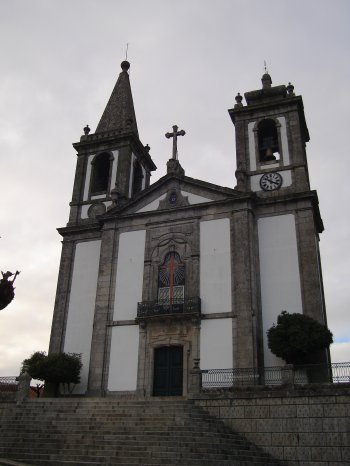
Founded in the 13th century by the abbot of Alcobaça, the Monastery of Santa Maria de Coz was one of the most important monastic complexes in the region and the most important monastery of the female branch of the Cistercian Order. The current building, of impressive simplicity, derives from works carried out mainly in the 17th century. The sober aspect of the exterior of the building contrasts with the Baroque interior. The church, about 50 meters long, reveals the grandeur of the old monastery and has coffered wooden ceilings, 17th-18th century tiles, and gilded altarpieces.
Mosteiro de Santa Maria de Cárquere
- heritage
Rua do Mosteiro
4660-059, Resende
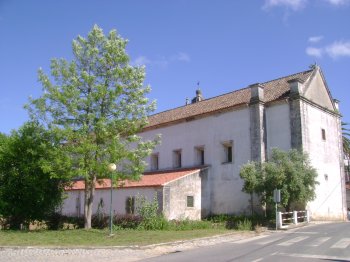
Although the history of ecclesial space point to a medieval Foundation dating back to the 12th century, the Church of Cárquere is structurally a fusion of styles that reveal crucial periods in their development as the monastic space, now linked to the Canons, now to the Jesuits. According to legend, it was founded due to the miracle, attributed to our Lady of Cárquere at the request of Bishop Egas Moniz de Ribadouro, of healing of the legs of Dom Afonso Henriques.
Mosteiro de Santa Maria de Miranda
- heritage
EM523, 202
4970-215, Miranda
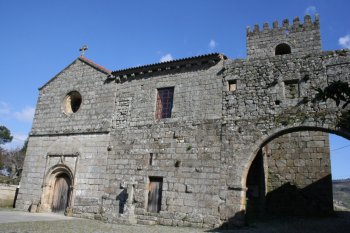
13TH century Romanesque building with contemporary changes. Highlighting the interior and the Baroque tiles, carpet type.

Mosteiro de Santa Maria de Seiça
- heritage
Rua da Nossa Senhora de Seiça
3090, Seiça
This is a Masculine Monastery from the Order of Cistercians dated from the 12th century. The façade is imposing and the towers grant it a solemn air.
Mosteiro de Santa Maria do Lorvão
- heritage
Rua Evaristo Lopes Guimarães
3360-106, Penacova
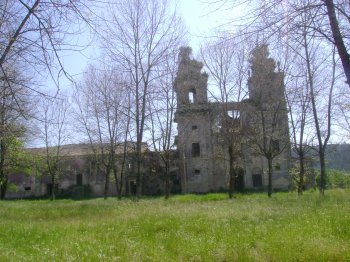
Although the first buildings date back to the 9th century, the remains that are visible today belong to buildings from the 17th and 18th centuries. The majestic Johannine-style church of Mafra and the Mannerist cloister are a special highlight of the monastery. Also, noteworthy are the tombs of Santa Teresa and Santa Sancha, the imposing baroque chair, the neoclassical organs and their grille, the paintings by Pasquale Parente and the stone and gilded altarpieces.
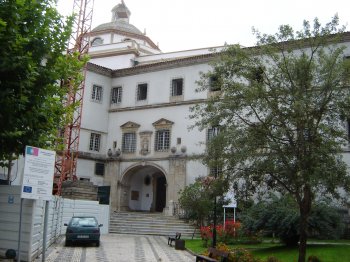
Mosteiro de Santa Marinha da Costa
- heritage
Largo Domingos Leite de Castro
4810-011, Guimarães
Convent founded in the 12th century by Queen Dona Mafalda, wife of Dom Afonso Henriques. The monastery owes its current appearance to the reconstruction that took place in the 16th century. The vault of the chancel and the cloister covered with tiles from the 18th century date from this time. The interior follows rococo and neoclassical styles. Note the choir, pulpit, organ and rococo carvings decorated with angels and mythological figures. In 1951, a fire damaged the convent part, which was restored and turned into a Pousada.
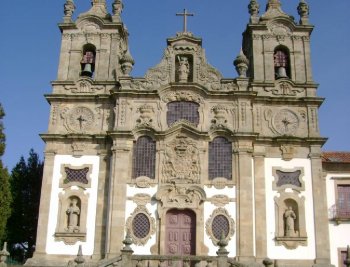
Mosteiro de Santo André de Ancede
- heritage
Ancêde
4640-021, Ancede
Of the Romanesque construction of this important monastic church, first by the Canons Regular and later by the Dominicans, we can only point out the structure of the chancel, where the rose window stands out. All the rest of the monastic set, valuable for its artistic capital and for its local and regional influence, is the work of the Modern Period. We highlight the Baroque interventions that reveal a period of space revitalization in the 17th and 18th centuries.
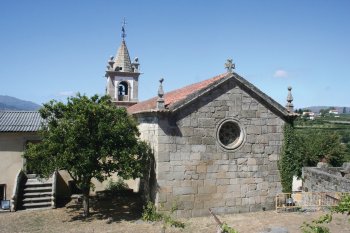
Mosteiro de Santo André de Rendufe
- heritage
Rua David Leandro da Silva, 9
1900-652, Lisboa
Dating from 1660, deserve reference the blue tiles from the 17th century, existing in the tops of the old dorms.
Mosteiro de Santo Estevão de Vilela
- heritage
EM602, 441
4580-660, Vilela
The Santo Estevão de Vilela Monastery is composed of a church and of the monastery's house. It was built even before Portugal's foundation. By the church there is the old monatery's building, composed of three aisles with a square shape. There is a coat of arms on the main entrance that stands on a lintel in a segmetal arch that ends in a partial triangular shape. In the third aisle, a special note to the manuelin chimney. Inside the temple, the high altar is golden carved. The monastery is being restored and the space will be converted into a museum …
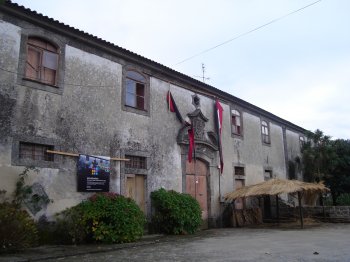
Mosteiro do Bom Jesus de Barrosas
- heritage
Largo do Bom Jesus
4650-145, Idães
A place devoted to the Holy Christ that has a traditional procession on the day of the Holy Spirit, on the first Sunday of May. The old image of the Miraculous Holy Christ, that appears and disappears according to the belief of the shepherd Domingos, is kept in the cemetery behind the church.