Explore the best places
Results for PROBLEMGO.com how to get out of jail without bail money in Portugal


Da Mouraria ao Castelo
- heritage
Mouraria - Castelo de São Jorge
1100, Lisboa
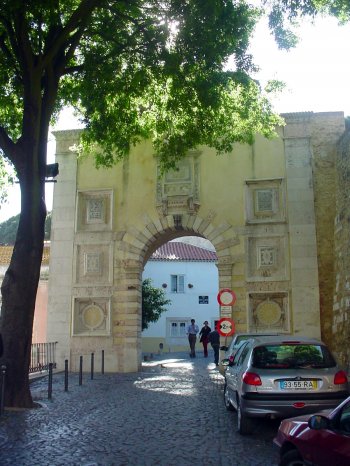
The tour begins in the Capelão Street. Go, then, through the Mouraria Street until the Senhora da Saúde Church, where you can enjoy the woodcarving altar and the beautiful glazed tiles. Enter the picturesque Mouraria Quarter climbing the small stairs of Saúde and continue by the Largo da Rosa, where you’ll find the Convent with the same name and the São Lourenço Church. Following through the largo da Achada and going up the Calçada do Marquês de Tancos you'll find the Municipal Market Chão do Loureiro, which integrates some plastic artists’ ateliers and a beautiful esplanade. Following through the Costa …
Blue Boutique Hostel & Suites
- hotels
Avenida Marginal, 6538
2765-586, São João do Estoril
Localizado no Estoril, a poucos minutos a pé da Praia da Poça e a 700 metros da praia do Tamariz, o Blue Boutique Hostel & Suites está situado numa casa centenária renovada e apresenta uma decoração elegante. Com vistas para o Oceano Atlântico, oferece alojamento em dormitórios, suites e quartos com acesso a casas de banho partilhadas. Os hóspedes têm à sua disposição uma cozinha comum totalmente equipada, onde podem preparar as suas próprias refeições. O terraço panorâmico, bem como o jardim e a zona de "chill out" são espaços apetecíveis que, a par da sala de estar, propiciam momentos …

Bairro Operário da CUF
- heritage
Rua Lavoisier - Rua da CUF - Rua Liebig
2830, Barreiro
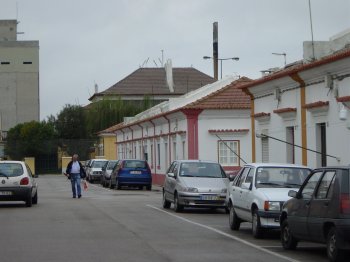
In the beginning of the 20th century, most precisely in 1907, Afredo da Silva buys a plot of ground from the Bensaúde family in the Lezíria, between the North Beach in Barreiro and the Moinhos Beach in Lavradio, and there he builds the C.U.F. factories. It started labouring in the next year with an olive husk transformation unit in order to produce soap, which employed 100 workers. In 1909 appears the first factory of sulphuric acid and super phosphate to produce fertilizers. As the century went on, the industry continued growing and this old village of fishermen and millers, with …
Sabugueiro
- country
- heritage
Sabugueiro
6270-151, Seia
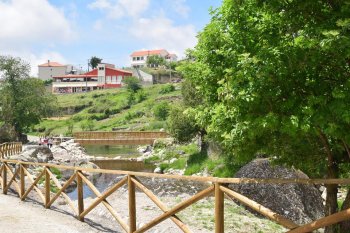
Located on a plain above the Alva river, Sabugueiro is the highest village in Portugal (an altitude of 1050 metres). It started from the shacks of sheperds that used the mountain's pastures for their sheep and their goats. The engraving on the rock by the Canariz Fountain is a testimony to the peopling of the area in remote times. Even though there are still shepherds and related activities (wool and cheese production), rural tourism has developed in the last few years and there are several typical houses currently adapted. The shpherds still move to the Douro region in the winter …
Convento da Arrábida
- heritage
Rua de São Lourenço
2925, Azeitão
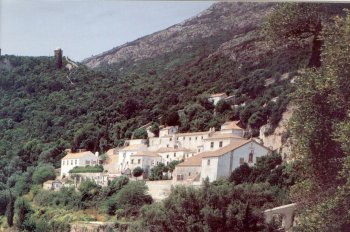
Commissioned in 1542 by Friar Martinho de Santa Maria, the Convent presents an austere architecture, being practically devoid of ornamentation. Inside, the only noteworthy features are sculptures of saints and Christs, made of terracotta and wood, placed in niches, the tiles that adorn the chapels, and also the inlaid work composed of small stones mixed with shells and shards of earthenware, used in the decoration of fountains, walls, and chapels. The ceramic and wooden sculptural pieces, stonework and flagstones, painted ceilings, and gilded woodcarving stand out. Over the centuries it underwent several renovations, and in 1863 it was acquired by …
Mosteiro de Pombeiro
- heritage
Lugar do Mosteiro
4610-640, Pombeiro de Ribavizela
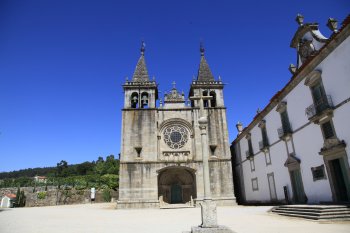
Founded in 1059 according to popular tradition, although the oldest documentary reference dates back to 1099, the Monastery of Pombeiro enjoyed privileges and justice of its own as early as 1112, as evidenced by the Charter of Couto granted on that date by D. Teresa. This monastic institution has been documented since 853, which makes it one of the oldest in the territory, although there is no material evidence of its first establishment. Located at the intersection of two of the main roads of medieval times, one that connected Porto to Trás-os-Montes and a second that connected Beira to Alto …
Igreja Paroquial de Alturas do Barroso
- heritage
Largo da Igreja
5460-010, Alturas do Barroso
The parish church, Temple of longitudinal plant, is flanked by a churchyard, walled that for a long time was used as a cemetery, still sporting the whole floor lajeado. The main façade has a portal of rectangular shape, surmounted by a round window surmounted by a belfry with two tears "founders, each of them with a Bell, crowned by two pinnacles, with ball Finial, and a cross trilobada. The interior of this church is of a great ornamental wealth. The granite stone walls are partially covered in the chancel, by a tiled wainscot, with liturgical reasons represented; one of the …

Mamoas da Veiga
- heritage
Montalegre
5470-173, Montalegre
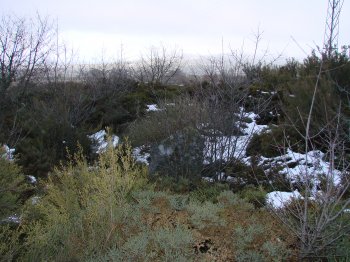
Set of five funerary structures par excellence, erected during the megalithism of the current Portuguese territory Northwest. The tumulus No. 1 is clearly visible in the landscape, on the left side of the road that connects the Montalegre Meixedo, beside an agricultural warehouse. Presents a "tumuli" high, with approximately 2\/3 meters, where they are clearly visible at least two mainstays. There are visible remains of lytic Cuirass, showing a large central depression. The tumulus # 2 is barely visible in the landscape, finding about 500 meters east of the tumulus to paragraph 1. Presents approximately 18.5 meters in maximum diameter, …
Guerreiro Calaico / Castrejo
- heritage
Rua 5 de Outubro
5460-304, Boticas
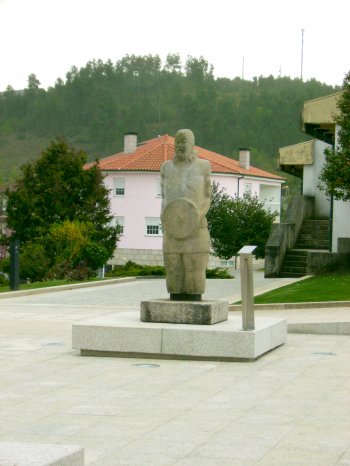
Monolith carved in granite representing the figure of a warrior, (2nd century iron age. I ad) erect and in stop position. Was found, along with other similar copy, probably in the 19th century. 18TH CENTURY (and was later, in the 20th century, found two more mindless statues) in great Castro do Lesenho, (at an elevation of 1075 meters) in Fields, parish of s. Salvador de Viveiro. This Warrior is wearing sagum (out exuberantly decorated with geometric motifs of concentric circles chained and plaids), v-neck and short sleeves, girded by a belt with four parallel veins. The head is proportionate, displaying …
Museu de Geologia Fernando Real - UTAD
- heritage
Quinta de Prados - Apartado 1013
5001-801, Vila Real
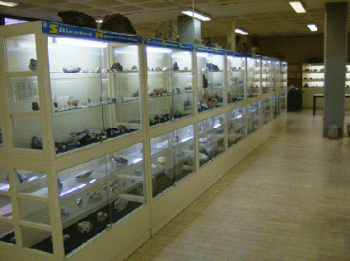
The Museum of geology at the UTAD was founded in 1985 by Prof. Dr. Fernando Real, notable geologist and Magnificent Rector of the Instituto Universitario de Trás-os-Montes that the following year would be the University of Trás-os-Montes e Alto Douro. For the creation of the Museum greatly contributed the professors that constituted the Department of geology at this time. The Museum is situated in the building of Geosciences, which constitutes the core of the campus of the University of Trás-os-Montes e Alto Douro. This museum, scientific character, has an area of approximately 250 m2. It houses collections of minerals, rocks …