Explore the best places
Results for view site today PROBLEMGO.COM Buying someones immediate bail Paphos in Portugal


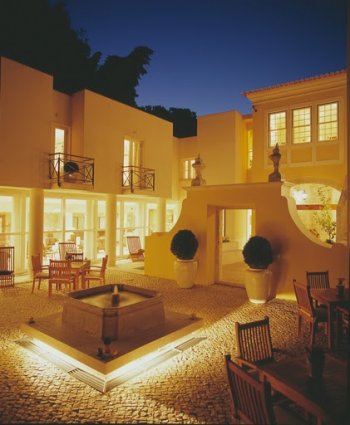
Solar do Castelo
- hotels
Rua das Cozinhas, 2
1100-181, Lisboa
Also known as Palacete das kitchens, for having been built on the site of the old kitchens of Paços da Castle, this cosy hotel, works in a villa of the 18th century, is located within the walls of the castle of São Jorge. Eco-certified Hotel since 2010, offers 14 rooms beautifully decorated and equipped with every comfort, for a refined stay, where are still visible several medieval traces.
Miradouro de São Leonardo da Galafura
- country
- leisure
Galafura
5050, Peso da Régua
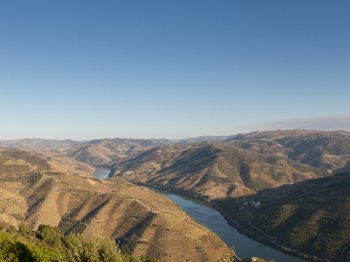
Between Peso da Régua and Pinhão, exit at Covalinhas to reach the top of São Leonardo and its chapel. From this site, known for having inspired Miguel Torga, you can glimpse the Douro Valley. The river, far below, flowing slowly toward its mouth, the rugged slopes and sharp peaks, and the verdant greenery of the nearby vineyards, which try to disguise the prevailing grayness.
Castro de Nossa Senhora da Guia, Capela e Adro
- heritage
EM de Baiões-Bordonhos (a 2 Km de Baiões)
3660-013, Baiões
Castro dating back to the Bronze age, more exactly from the 7th century BC. This is located in a hilly elevation, on top of which stands a chapel of Oracle to Nossa Senhora da Guia. At the same site were also found archaeological remains denoting the existence of a fortified village. Of the latter, very little can be seen because it was grounded in 1995, during the construction of an access road.
Casa do Forno
- hotels
Rua de São João
6060-501, Salvaterra Do Extremo
Ancient community oven belonging to the village of Salvaterra do Extremo, which served as a pillar for this unit of nature tourism. Currently, the site where work the oven works as regional bakery. On the second floor there are six bedrooms and, abroad, a nice garden with swimming pool. Here you can arrange hiking, mountain biking, all-terrain, donkey rides, canoeing, abseiling, rock climbing and slide.
Casa da Azenha
- hotels
Lugar de Rio Bom
5100-421, Cambres
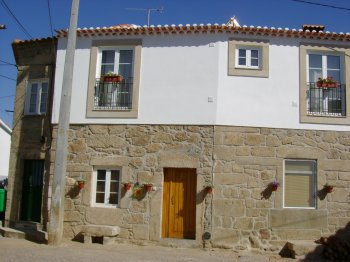
This typical solar, dating from the 17th century, is located in a wine-growing estate with approximately thirteen acres, situated in the middle of the area classified as a world heritage site by UNESCO. Features a large garden, a kitchen garden, a swimming pool and a small chapel. Offers accommodation in 5 comfortable rooms and one apartment, which houses four people. Serves meals to guests by appointment two days.
Marco Miliário do Largo da Seara
- heritage
Largo da Seara
5470-528, Montalegre
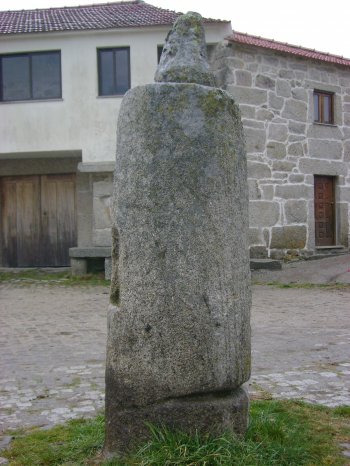
Marco enipígrafo that belonged to Via XVII of the Antonine itinerary. Originally, it was in the vicinity of the canteen of the Leiranque\/Cruz de Leiranque, site currently submerged by the Alto Rabagão albufeira. Was subsequently taken to the EN 103 and then to the village entrance of Viade de Baixo, where currently finds itself. It is a cylindrical milestone granite coarse grained, medium, with a small niche excavated the Center to have been the base of a cross.
Igreja de Santa Maria Maior
- heritage
Rua Senhor da Paciência
6200-138, Covilhã
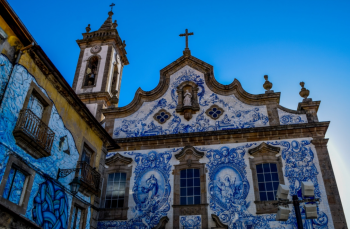
Located in the city's historic area, it is covered in white and blue tiles intended to depict the life of the Virgin Mary. It is a Neo-Baroque revivalist church with a longitudinal plan, comprising a nave, a narrower and lower chancel, a side chapel, a baptistery, and a bell tower. It was built in 1886 on the site of the former Church of Santa Maria do Castelo. Inside, the Neo-Rococo and Neoclassical gilded altarpieces are particularly noteworthy.
Necrópole de São Gens e Penedo do Sino
- heritage
Lavandeira
6360-302, Celorico da Beira
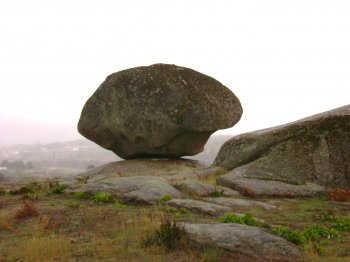
This is an ancient cemetery with four types of tombs: bathtub-shaped, triangular, anthropomorphic, and carved into movable stones. Near these graves is the Penedo do Sino, a pedunculated granite block, shaped by weathering, and well-known for its strange and beautiful balance. This site was occupied between the 1st and 2nd centuries and later between the 12th and 13th centuries, although it is believed that this necropolis dates from the 6th to the 14th centuries.
Núcleo de Arte Rupestre da Faia
- heritage
Cidadelhe
6400-191, Cidadelhe
A core composed of figures engraved in granite, representing two opposing bovids and a sequence of four bovid heads pointing toward the ground, which are associated with schematic paintings from recent prehistory. Certain painted lines add unengraved details, suggesting the hypothesis that some of the elements are Paleolithic. It is a UNESCO World Heritage Site (1998) and a National Monument by IGESPAR, part of the Côa Valley Archaeological Park.
Núcleo de Arte Rupestre de Vale de Moinhos
- heritage
EN222
5150, Vila Nova de Foz Côa
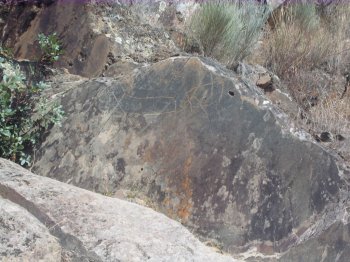
This is one of the rock art sites in the Valley of the Coa, forming a rare set of this type of art, essentially composed of stone engravings dated from the Upper Paleolithic. This core consists of two rocks that have support writing of filiform reasons. On the left bank of ribeira is a vertical panel in shale showing how central motif equidae, while on the right bank can observe various Zoomorphic representations.