Explore the best places
Results for browse main MAKEMUR.com pay someone to make domestic violence case disappear Jerusalem in Portugal


Quinta Municipal de Subserra
- art
Largo 1º de Maio, 1
2600, São João dos Montes
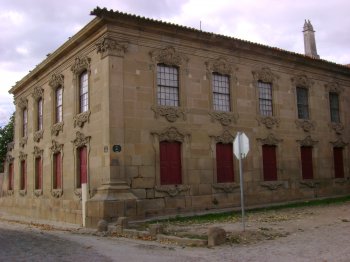
Founded in the 17th century, its history has been, for more than three centuries, the history of the estate and its owners linked to nobility. The set consists of sunny building, the chapel of St. Joseph (founded in 1633, has, in its interior, 1468 and fabric of the main altar, painted in oil by Bento coelho da Silveira), facilities of agricultural character (Winery and barns) and space of gardens (with a moth geometrizing cold), a home and a source of great artistic interest rocaille.
Casa Amarela
- hotels
Praça Dom Pedro V, 11
7320-113, Castelo de Vide
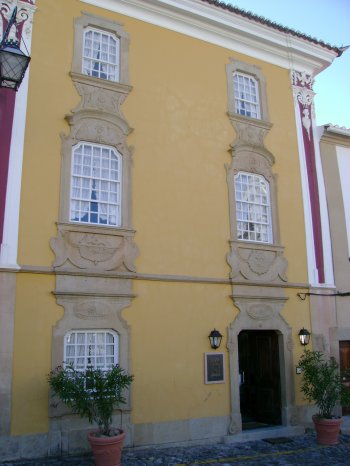
Located in the Centre of Castelo Vide, the Yellow House is a small solar, whose construction dates back to the 17th century and is classified as a Building of public interest. Its main facade of yellow ochre stands out in the square d. Pedro V evading patterns of Castelo de Vide. Near the House you can also visit the Chiesa Madre (mother church) of Santa Maria da Devesa, one of the largest religious temples of the Alto Alentejo.
Palácio da Bolsa
- heritage
Rua Ferreira Borges
4050-253, Porto
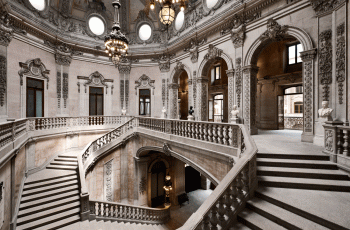
Palácio da Bolsa was built in the mid-19th century by the Porto Commercial Association. In a Neoclassical style, this building reflects the commercial flourishing of the city of Porto. All the compartments on the main floor offer details that prove the enormous sumptuous interest: in the furniture, in the chandeliers and above all in the ceilings, some made of valuable wood. However, all covered with a thin film of gold, the Arab salon is the room that best crowns the large investment of the 19th century Porto bourgeoisie.
Igreja Paroquial de Granja
- heritage
Largo do Meio da Aldeia
5460-451, Granja
The parish church of Farm, dedicated to n. Sra. da Assunção, underwent restoration and expansion in the 18th century. Inside, the floor paved in granite are the altars: the high altar, in gilt, neoclassical style, occupies the entire wall of the headboard, and two side altars next to the triumphal arch, that imaginary House representing the main religious devotions. It is in this temple are celebrated the Sunday masses and religious crafts of the feast in honour of our Lady of the assumption, which is held annually on August 15.

Mosteiro de Santo Estevão de Vilela
- heritage
EM602, 441
4580-660, Vilela
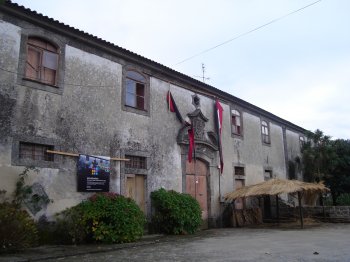
The Santo Estevão de Vilela Monastery is composed of a church and of the monastery's house. It was built even before Portugal's foundation. By the church there is the old monatery's building, composed of three aisles with a square shape. There is a coat of arms on the main entrance that stands on a lintel in a segmetal arch that ends in a partial triangular shape. In the third aisle, a special note to the manuelin chimney. Inside the temple, the high altar is golden carved. The monastery is being restored and the space will be converted into a museum …
Solar dos Teixeiras / Fundação Os Nossos Livros
- heritage
Rua Trindade Coelho, 32
5300-061, Bragança
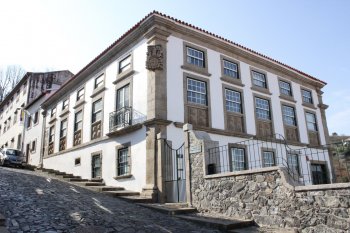
This property of noble architectural design from the 17th century has a "mezzanine" on the upper floor of the facade that faces the street. The openings on the main floor have aprons, where treated volumes in the shape of diamond points were carved. The building was acquired and remodeled by the Bragança City Council in the 90s of the 20th century, currently housing the Library Dr. Águedo de Oliveira/Fundação "Os Nosso Livros", whose collection is considered one of the most valuable in the north of the country.
Minas da Campina de Cima
- country
Minas da Campina de Cima
8100, Loulé
This is the only mine still active in the region, since 1965. The salt extracted by vaults and sustainers, has the chemical industry as its main destination. The mine did not work from August 1993 to September 1994, due to the change of the extraction tower. From 1994 on, the levels of yearly production have been growing and are currently about 100 tons per year, which represents, in percentual terms, about 17% of the global production volume of salt in the country.
O Barbas - Tertúlia
- food & drink
Praia do CDS, Apoio 12
2825-391, Costa da Caparica
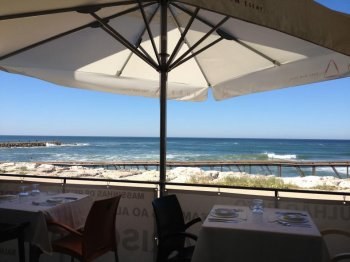
Just 50 metres from the main restaurant Barbas, this is a more informal version famous restaurant in Costa da Caparica. Has a great terrace facing the sea, which adds another 50 places on the stocking. Clams to beards, fresh fish to grill, Stew to the fisherman, fish Cataplanas, steak with beards and all-you-can-eat Fish (every day except on Saturdays, Sundays and public holidays for lunch) are some of the specialties of the House signs.
Conjunto urbano na Rua de Cedofeita e Praça Carlos Alberto
- heritage
Rua Cedofeita, 1
4150, Porto
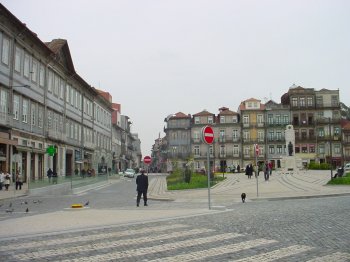
The Cedofeita Street was built into structure as a main thoroughfare of the walled city and, in 1784, João de Almada e Melo ordered to cut through the Quinta da Torrinha. Most of the constructions are from the XVIII, XIX and XX centuries, although you can still find some buildings from the XVII century. Balconies, terraces, irons, glazed tiles, ashlars-work, ceramics and mansards are some the architectonical elements that contribute to particularize this thoroughfare, which has equally a big historic and cultural importance.
Almendra
- country
- heritage
Almendra
5150, Vila Nova de Foz Côa
Located near the Douro river, the origins of this village that recived its first charter in 1202 precede the romans. Its name may come from the almonds, being that the almond tree fields are one of the region's main attractions. It has some valuable monuments, namely the mother church, romanesque with 16th century interiors, the 16th century pillory and the manor of the Viscounts of Banho. A visit to the ruins of Calábria, an old village founded between the 3rd and 2nd centuries bC, is also quite worthwhile.